Three Houses in Philates and a Letter to Gastaldi

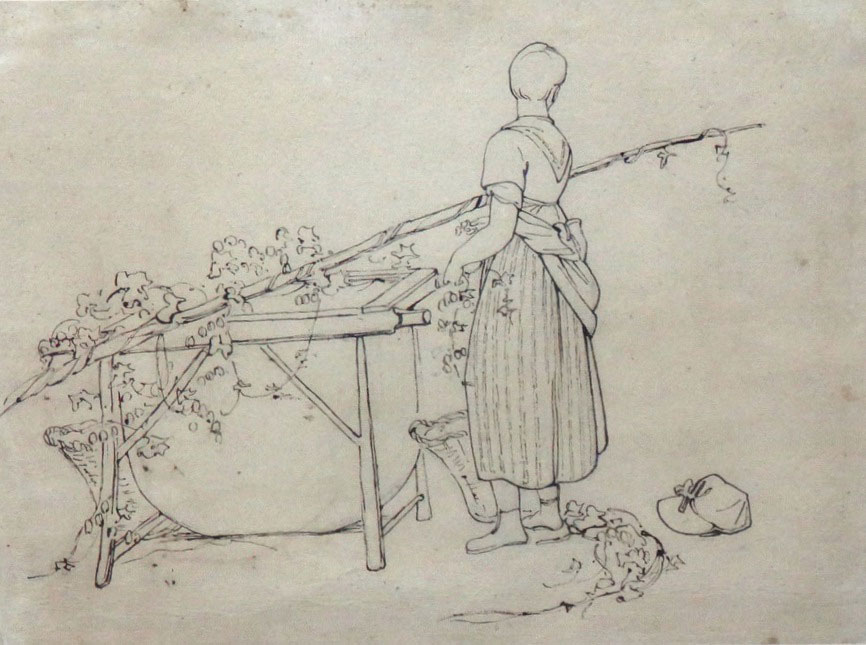
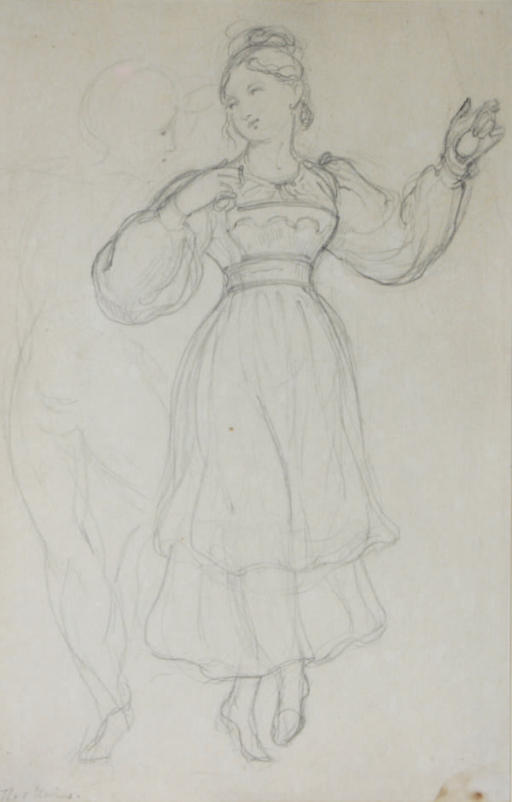
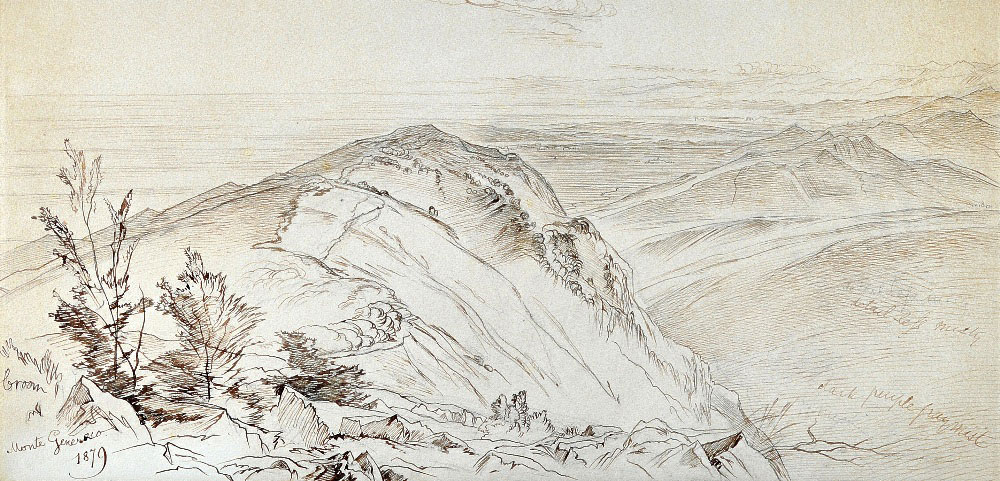
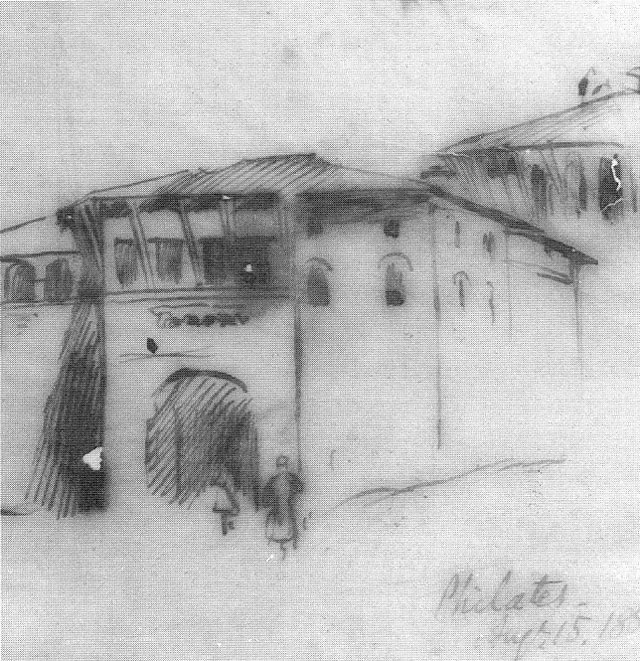
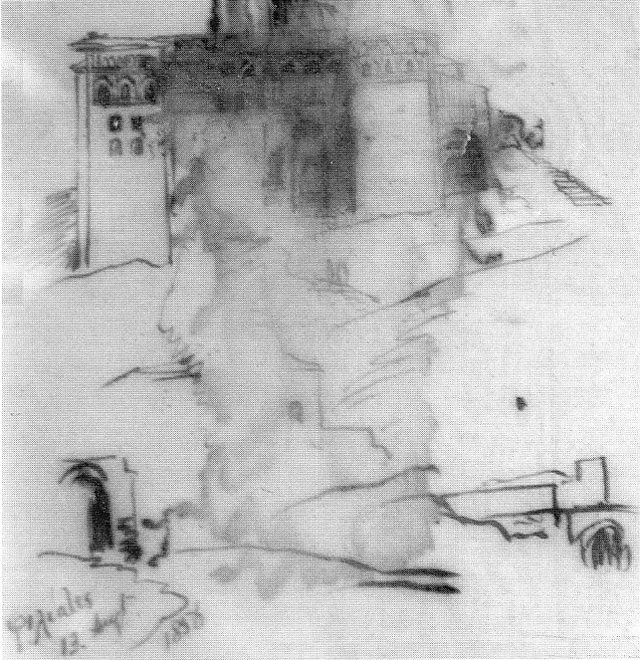
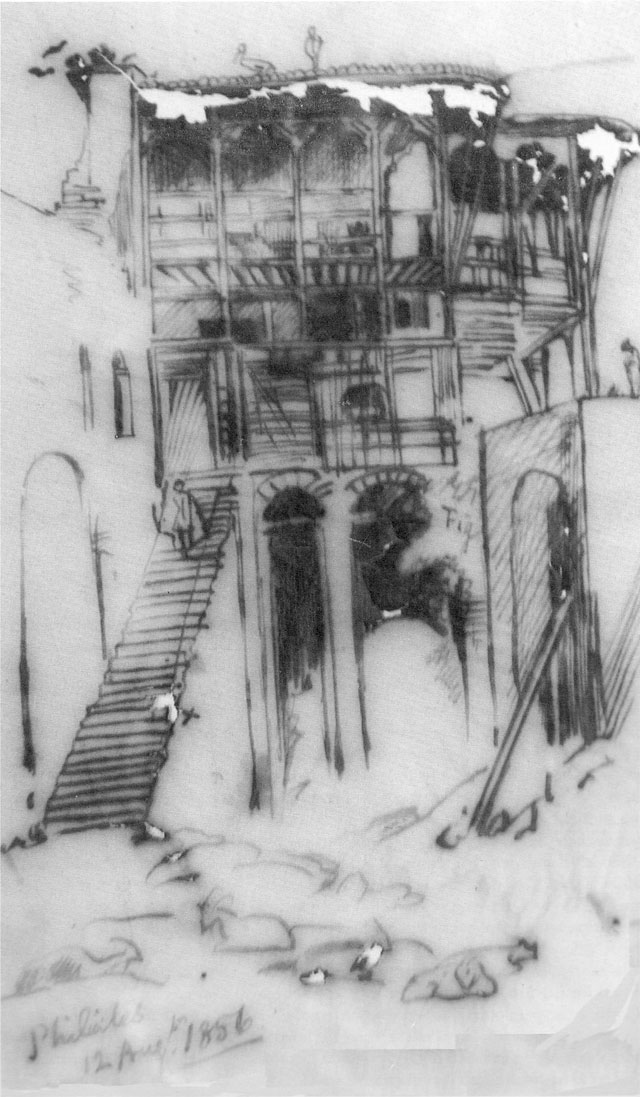
The letter  was sent to Mr. Gastaldi, the architect who designed Edwar Lear’s two houses in Sanremo some time after 1880, when the building of the second one, Villa Emily had already been concluded. Lear and Gastaldi had evidently discussed the architecture of Albania and Lear sends the three drawings below, one of which has clearly been damaged by humidity.

Villa Emily.

5 Feby.

Stimatissimo Cavre. Gastaldi,

Subito dopo la sua partenza stamattina, ho trovato quei disegni che cercava. E no ho tracciato [legeramente] tre, — gli quali lascio con queste parole.

Sono tutti di case in Albania, dal Paese Philates, — luogo vicino al paese natale di Suli — quello del mio vecchio domestico Giorgio Suliote. Vedrà subito che hanno qualche cosa del pittoresco che nella Grecia non aoccorre mai, sull’architettura de’ Greci Moderni, — di quale l’architettura degli Albanesi è tanto dissimile quanto lo è il Carattere de’ due populi.

Sinceramente

Edward Lear.

From Edward Lear: Holloway 1812 – Sanremo 1888. Edited by Rodolfo Falchi and Valerie Wadsworth. Catalogue of the Sanremo exhibition, 7 December 1997 – 11 January 1998, pp. 102-103.

Posted in Edward Lear | Tagged , , , | Leave a comment

Edward Lear Visits Captain Hornby

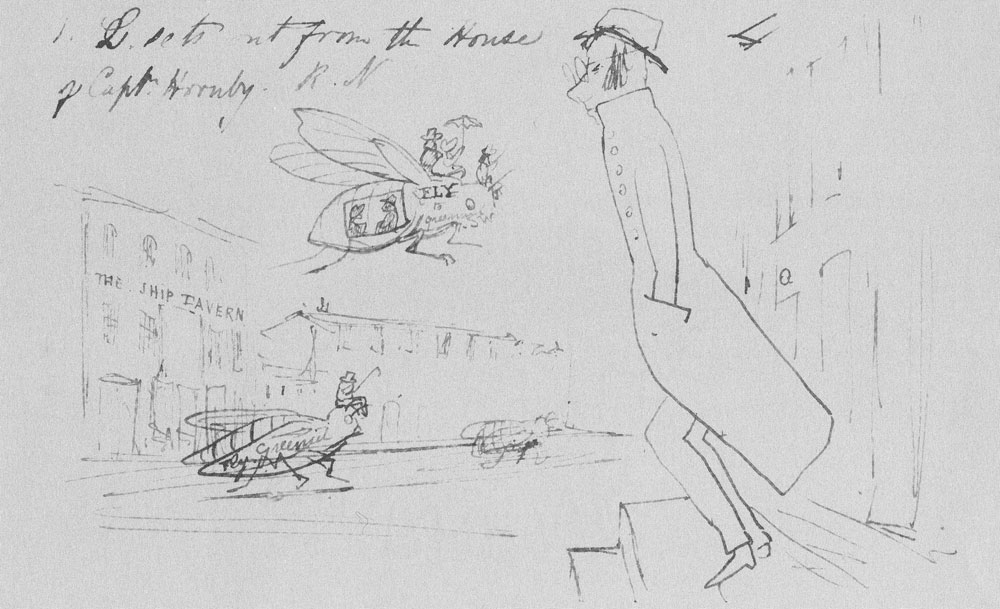
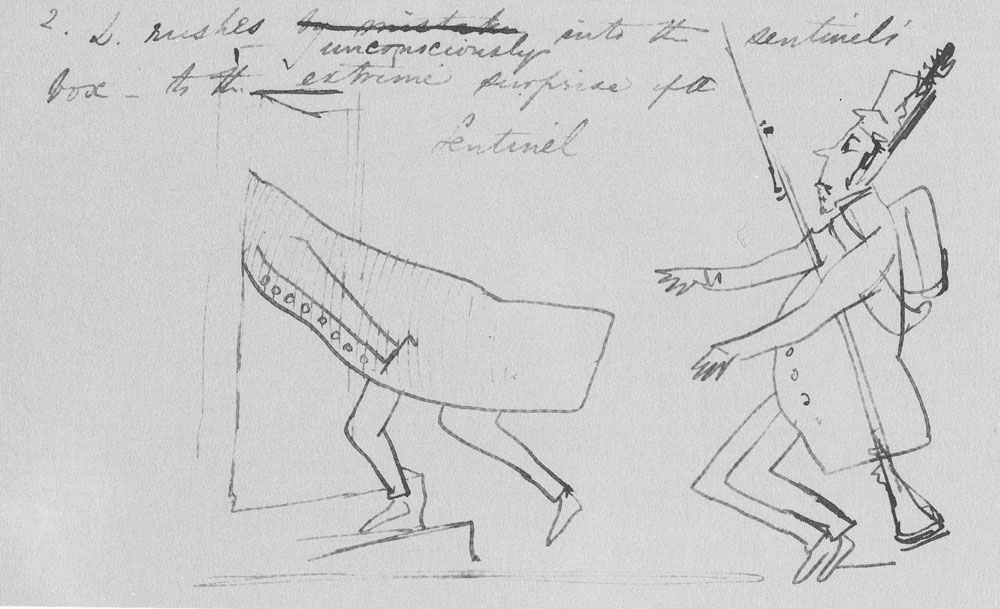
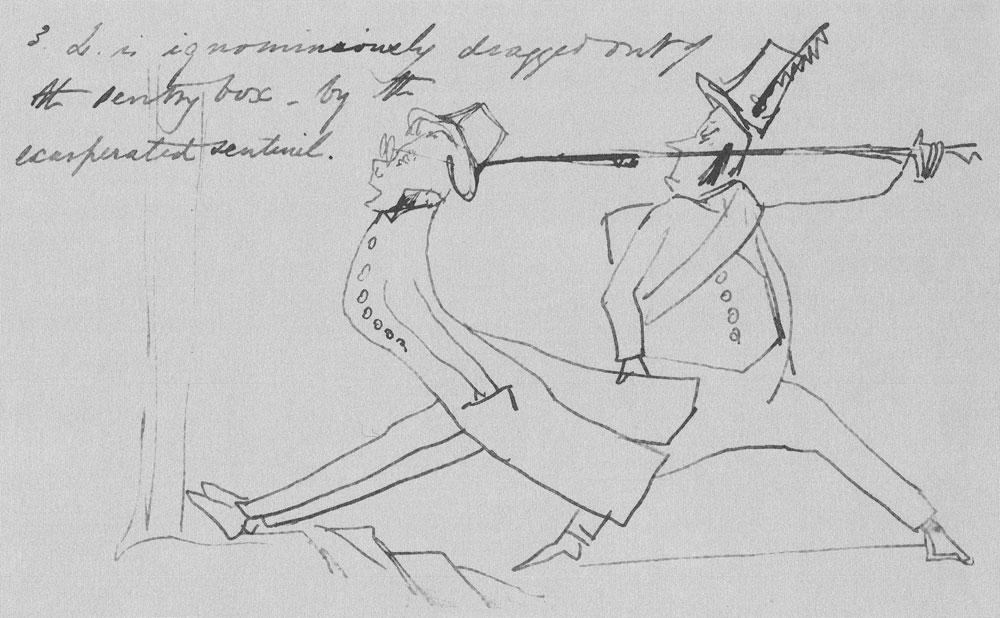
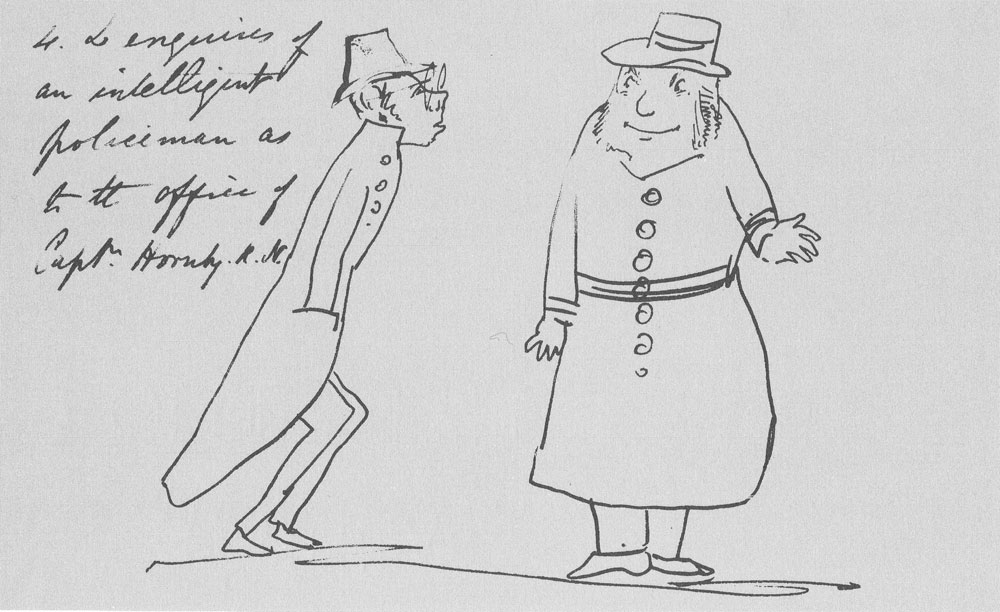
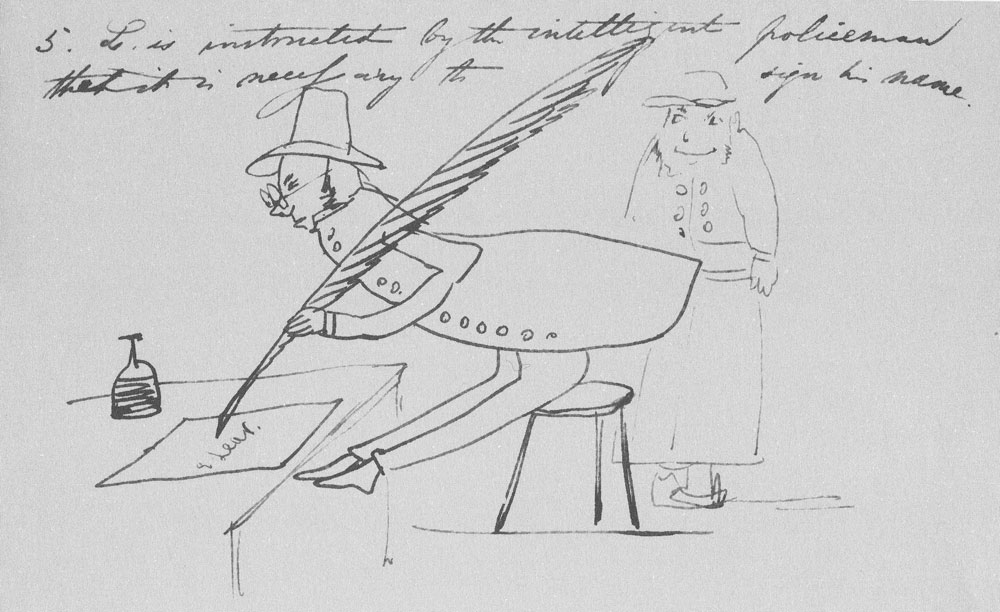
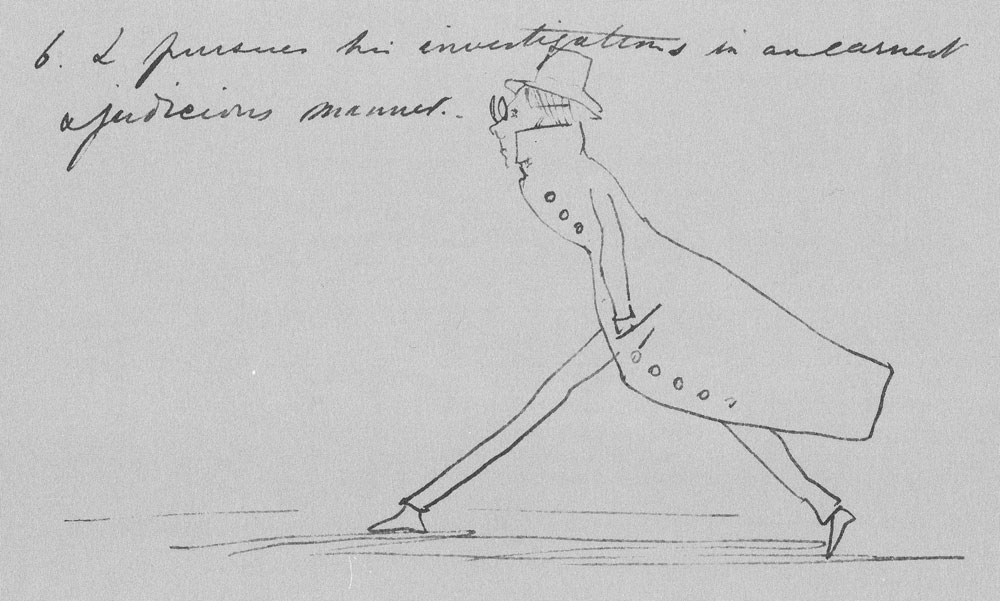
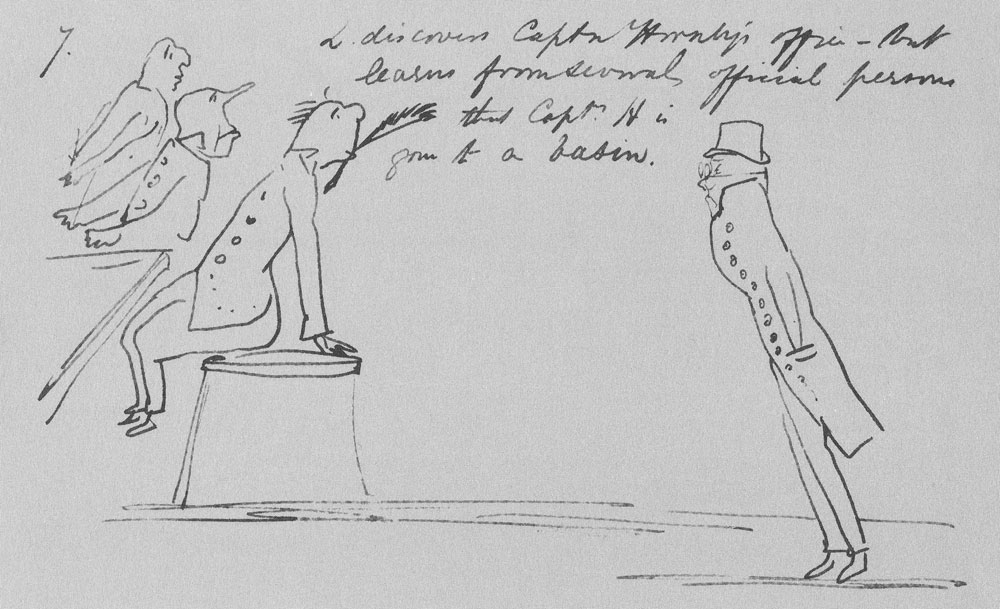
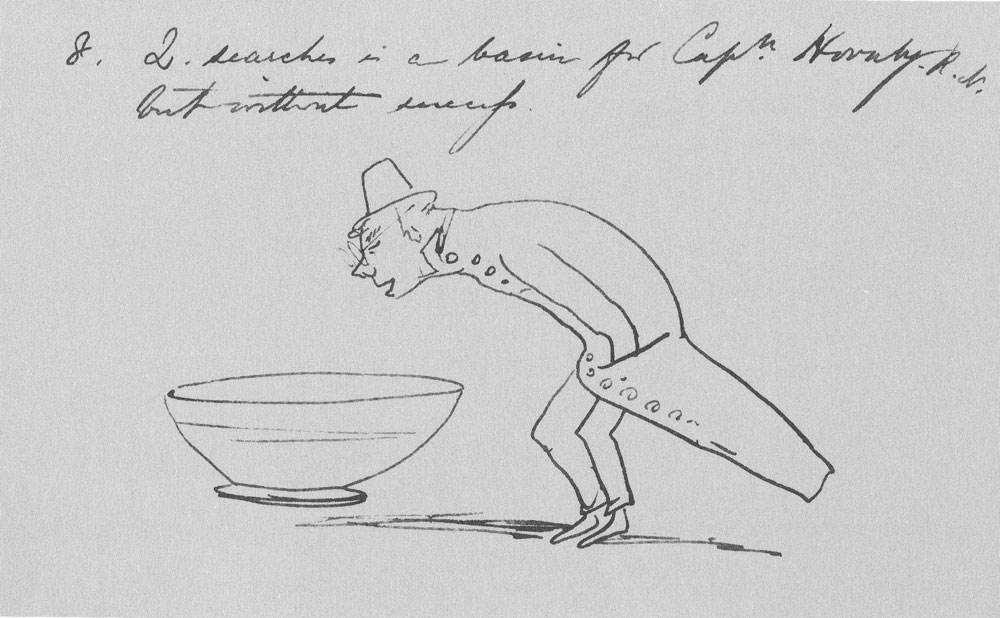
The following is one of Lear’s earliest autobiographical picture stories, from the mid 1830s according to Liebert (from whose book, Lear in the Original, the story is taken), but it was more probably drawn in 1841, when Lear was in England after four years in Italy.

To the same period also belongs a longer series of pictures illustrating the adventures with Phipps Hornby in Scotland, now in a private collection.

  1. L. sets out from the Home of Captn. Hornby, R.N.

2. L. rushes inconspicuously into a sentinel’s box, to the extreme surprise of a sentinel.

3. L. is ignominously dragged out of the sentry box by the exasèerated sentinel.

4. L. enquires of an intelligent policeman as to the office of Captn. Hornby, R.N.

5. L. is instructed by the intelligent policeman that it is necessary to sign his name.

6. L. pursues his investigations in an earnes & judicious manner.

7. L. discovers Captn. Hornby’s office — butlearns from several official persons tht Captn. H. is gone to a basin.

8. L. searches a basin for Captn. Hornby, R.N., but wtithout success.

Posted in Edward Lear | Tagged , , , , | Leave a comment

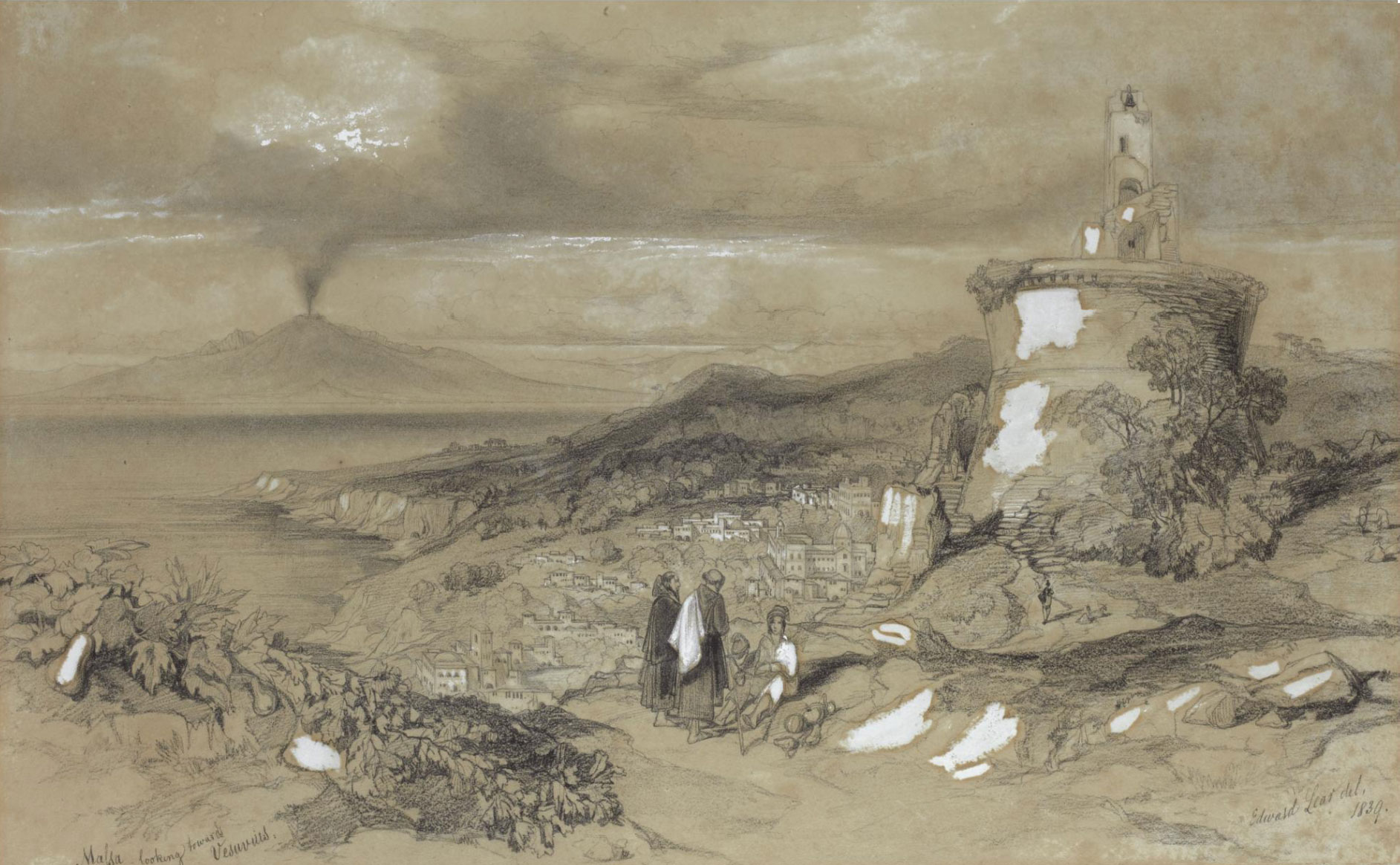
Edward Lear, Massa Looking towards Vesuvius (1839)

Edward Lear, Massa Looking towards Vesuvius.
Signed and dated l.r.: Edward Lear del. / 1839.; inscribed with the title l.l.: Massa. looking towards/ Vesuvius.;signed and inscribed on an old label attached to the reverse: Vesuvius from Massa Chalk Drawing / made for R. A. Hornby Esq / Edward Lear. Pencil heightened with white. 27 by 43 cm., 10 1/2 by 17 in.

The catalogue note reads:

The city of Massa is located twenty miles south-east of Spezia, on the Italian mainland looking over the Bay of Naples towards Vesuvius. The buildings at the foot of the hill in the present drawing may include the Ducal Palace and the Cathedral of Massa.
The present work was drawn for Lear’s close friend Robert A. Hornby (1805-57) of Winwick Hall, Warrington.  He was the son of the Reverend J. J. Hornby, vicar of Winwick, and great-nephew of the 12th Earl of Derby.  A man of independent means, he helped support Lear in his first visit to Italy in 1837.
A watercolour by Lear of The Ducal Palace Massa, Northern Italy, was sold in these Rooms on 26th March 2004, lot 132 for £8,500.

This is certainly not the Massa [Carrara] in Northern Italy as there is no way you can see Vesuvius from there: the Massa mentioned in the picture must be Massa Lubrense, near Sorrento, in the province of Naples, south of Vesuvius.

Sothebys.

Posted in Edward Lear | Tagged , , , , | 1 Comment

New to Read on Edward Lear

Pereira, Conceição. “Edward Lear ao voo do pássaro.” Forma de vida 12 (2018).

Makins, Marian W. “Latin, Greek, and Other Classical ‘Nonsense’ in the Work of Edward Lear.” Classical Reception and Children’s Literature: Greece, Rome and Childhood Transformation. Eds. Hodkinson, Owen and Helen Lovatt. London and New York: I.B. Tauris, 2018. 203-25. [Only a few pages online.]

Tigges, Wim. “Prosody as Field of Play: A Neglected Issue in the Translation of Nonsense Verse.” Jeux de mots – enjeux littéraires, de François Rabelais à Richard Millet: Essais en hommage à Sjef Houppermans. Eds. Nordholt, Annelies Schulte and Paul J. Smith. Leiden: Brill, 2018. 220-.

Posted in Uncategorized | Leave a comment

Edward Lear, Venice (1865)

Edward Lear, Venice.
Pen, ink and watercolour, inscribed “Venice Nov 11 4 pm 1865 (8)”, also with colour annotations throughout 12 x 34cms.

The Saleroom.

Posted in Edward Lear | Tagged , , , , | Leave a comment

Edward Lear, Girgeh on the Nile (1857)

Edward Lear, Girgeh on the Nile.
October 1857 (not 1859 as in the auction post, not sure on the day either)

Sold with:

Edward Lear, Figures in a Mountain Landscape.
4 June 1852.

The Saleroom.

Posted in Edward Lear | Tagged , , , , , | Leave a comment

Not by Edward Lear

Lear, Edward; Valentine; Glasgow Museums; http://www.artuk.org/artworks/valentine-84944

If, like me, you sometimes visit ArtUK to see if there is anything new by Edward Lear, you might have noticed that there are two paintings which look completely different from his other ones. A few days ago Matt Bevis wrote to ask my opinion and I confirmed that they did not look like Lear’s to me; he then contacted Stephen Duckworth who remembered that Charles Lewsen had actually identified the author of the two painting, not Edward but Charles Hutton Lear (1818-1903).

Lear, Edward; Launce and His Dog; Glasgow Museums; http://www.artuk.org/artworks/launce-and-his-dog-84943

CH Lear appears to have drawn several pencil portrait now at the National Portrait Gallery; not much information is available on him. Here is another picture in the same style:

ArtUK, by the way, has another picture by Charles Hutton Lear, which is correctly attributed, though it looks a bit more learian than the others:

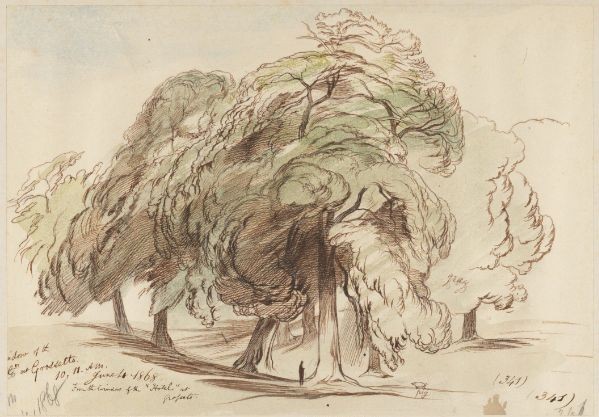
Lear, Charles Hutton; Beech Trees; Walker Art Gallery;http://www.artuk.org/artworks/beech-trees-9

This is vaguely reminiscent of Edward Lear’s two landscapes which also portray the Congreve children with their cat, posted here and here.

Posted in Edward Lear | Tagged , , , | 1 Comment

Edward Lear’s “Rich and rare were the gems she wore”

I have already discussed Edward Lear’s Irish sources herehere and here. Another fine instance is the parody in four pictures that Lear drew of Thomas Moore’s “Rich and rare were the gems she wore” from the first volume of Moore’s Irish Melodies (1807):

RICH and rare were the gems she wore,
And a bright gold ring on her wand she bore;
But, O, her beauty was far beyond
Her sparkling gems or snow-white wand.

“Lady! dost thou not fear to stray,
So lone and lovely, through this bleak way?
Are Erin’s sons so good or so cold
As not to be tempted by woman or gold?”

“Sir Knight! I feel not the least alarm,
No son of Erin will offer me harm;
For though they love woman and golden store,
Sir Knight! they love honor and virtue more!”

On she went, and her maiden smile
In safety lighted her round the green isle;
And blest forever is she who relied
Upon Erin’s honor and Erin’s pride!

What makes these illustrations (from Lear in the Original pp. 169-173) particularly interesting is that they are clearly no more than an expansion of a caricature by Thomas Hood and show that much of Lear’s early work was inspired by his punning humourous work; here is Hood’s illustration for the poem from his Whims and Oddities, in Prose and Verse (London: Lupton Relfe, 1826), facing page 13:

This was first noted by Michael Heyman, Isles of Boshen: Edward Lear’s Literary Nonsense in Context (Thesis submitted for the Degree of PhD, University of Glasgow, Faculty of Arts, Department of English Literature, 1999), pp. 32-33.

Posted in Edward Lear | Tagged , , , , , | 2 Comments

Edward Lear, Ithaca (1863)

Edward Lear, Ithaca.
Inscribed with title and dated 1 May 1863 2.30pm, numbered ‘114’, pen, ink and watercolour and inscribed with notes, 33 x 49cm. The Department of Western Art, Ashmolean Museum Oxford label verso.

Mallam’s Oxford.

Posted in Edward Lear | Tagged , , , , | 1 Comment

Edward Lear, Some Birds from John Gould’s Birds of Europe

Little Egret.

Great Black-Backed Gull, Audouin’s Gull [and] Glaucous Gull.

Great Egret.

Great Bustard.

Rock Ptarmigan.

Edward Lear’s lithographs with contemporary hand colouring, old ‘punch holes’ to upper margin, 340 x 520 mm. Originally published in John Gould’s ‘Birds of Europe’.

From The Saleroom.

Posted in Edward Lear | Tagged , , | Leave a comment