Mr Leer, Humpty Dumpty and Finnegan

There is an interesting article in the the London Review of Books (vol. 32, no. 24, 16 December 2010), “Quashed Quotatoes,” in which Michael Wood reviews a new edition of James Joyce’s Finnegans Wake. The opening paragraphs discuss Joyce’s debt to Lewis Carroll:

Lewis Carroll seems an obvious precursor of James Joyce in the world of elaborate wordplay, and critics have long thought so. Harry Levin suggested in 1941 that Carroll’s Humpty Dumpty was ‘the official guide’ to the vocabulary of Finnegans Wake. Why wouldn’t he be? He was the inventor of the portmanteau word.

Wood then notes that in 1927 Joyce wrote that he had never read Carroll until a friend “gave me a book, not Alice, a few weeks ago – though, of course, I heard bits and scraps.” A long list of Carrollian references in the Wake follows, showing that Joyce was well aware not only of Sylvie and Bruno (the book he presumably was given by the friend, according to Atherton) but of both Alice books and of Collingswood’s Life.

I have not looked into my copy of Finnegans Wake for many years, but I distinctly remember that Joyce’s method sounded quite different from Carroll’s, which at least in Humpty Dumpty’s interpretation consists in using isolated words packing two, sometimes more, clear-cut meanings: so “mimsy” stands for “miserable and flimsy,” the “Snark” is a monster consisting of parts of a “shark,” “snake,” and perhaps “snail.”

Carroll’s only extended passage containing nonsense words is the first stanza of the “Jabberwocky,” also discussed by Wood; it mixes portmanteu and pseudo-Anglosaxon words, which are then comically interpreted by Humpty Dumpty. In all instances, however, Carroll’s  invented words are discrete units, having a definite, univocal meaning, set in an English syntactic structure.

Joyce has a few passages like this:

One yeastyday he sternely struxk his tete in a tub for to watsch the future of his fates but ere he swiftly stook it out again… (p. 4)

in which we can see two distinct meanings packed in one sententece: “to wash the features of his face,” and “to watch the future of his fate,” but for the most part Joyce aims at multipying meanings without keeping a strict syntactic and narrative control over all the threads started by the phrase; given the context, in fact, the reader is invited to try all possible permutations:

to watch the features of his face
to wash the future of his fate
to watch the future of his face
to wash the features of his fate
to watch the features of his fate
to wash the future of his face

which produces a cloud of meanings, only some of which are relavant to the narrative; the others – funny as they may be – are purely ornamental.

The boundaries between words, moreover, are not always respected by Joyce, something I do not remember seeing in Carroll:

The house of Atreox is indeedust… (p. 55)

where, after a typical partmanteau combining the “House of Atreus” with the latin atrox (cruel, atrocious), a single word conflates a whole phrase, “is indeed in the dust.”

Joyce’s method is more reminiscent of several passages in Edward Lear’s letters, which Joyce might have seen, as the two volumes were published in 1907 and 1911. Here are extracts from a letter of 18 November 1858 to Chichester Fortescue:

16. Hupper Seemore Street,
Portman □. 18thNov. /58.

Coming home at 11.30, from Mr. Stanley’s, I find your Wusstussher noat. ― Thank God I ain’t to be rubbed by a beastly fiend with a wet sheet: ― But I believe you will be all the better for it. Is Ward Braham rubbed rubbing rubbable or rubbabibbabubbapbimbubabebabblllleee {115} also? ― I rote to you this morning: ― but, how the debble could your letter reach me to-night? …

Returning here, I find varicose gnoats. …

O mi! how giddy I is! ― Perhaps it is along of the cliff of Ain Giddi: perhaps of the glass of sherry & water close by ― only I ain’t drank it yet.

I wen tup two the Zoological Gardings, & drew a lot of Vulchers: also I saw the eagles & seagles & beagles & squeegles: leastwise the big bears & all the other vegetables.

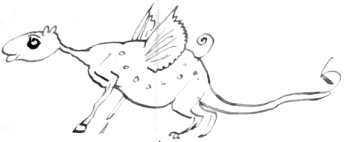
also the little dragging, who is the Beast of the Revialations.
Further instances can be seen in the letter to Woolner I posted some time ago. Of course, Lear’s main purpose here is to create a comical effect rather than to multiply the meanings.

According to James Atherton’s Books at the Wake Joyce refers to Edward Lear in a few passages, in particular

  • 65.4: “Now listen, Mr Leer! And stow that sweatyfunnyadams Simper!”
  • 275.27: “crankly hat” (Chankly Bore and Quangle Wangle Hat)
  • 406.5: “the roastery who lives on the hilli” (at 406.2 there is also “Blong’s best” which may refer either to the Bong tree or the Dong with a luminous nose)
  • 334.24: “pobbel,” and 454.35: “pobbel queue’s remainder.”

Curiously, none of these references is to works included in the only Lear book Joyce owned, an Everyman’s Library Book of Nonsense by Lear and others (it also included, for example, The English Struwwelpeter).

Readers of Joyce’s Work in Progress were quick to spot Learian echoes: Vladimir Dixon ― once thought to have been Joyce himself but now revealed as a real person ― concluded his “Litter to Mr. Germs Choice” with

I would only like to know have I been so strichnine by my illnest white wresting under my warm Coverlyette that I am as they say in my neightive land “out of the mind gone out” and unable to comprehen that which is clear or is there really in your work some ass pecket which is Uncle Lear?

No doubt a reference to Shakespeare’s “Nuncle Lear,” but it would be difficult not to see the inventor of nonsense in it.

Also in Our Exagmination, the review entitled “Writes a Common Reader” is signed  G.V.L. Slingsby, i.e. Guy Violet Lionel Slingsby, the protagonists of Edward Lear’s “Story of the Four Little Children Who Went Round the World.” Sylvia Beach tells the story behind this piece, but is wrong in citing “The Jumblies” as the source for the name:

Joyce thought an unfavourable article should be included in the volume. This wasn’t easy to find in the immediate neighborhood, where everybody I knew was strongly pro “Work in Progress.” However, I had heard one of my customers, a journalist, express herself strongly against the new Joycean technique, and I asked her if she would be willing to contribute an article to the publication, saying, rather rashle, she could go as far as she liked. This lady wrote the article entitled “Writes a Common Reader,” and she came down so hard on Joyce that I was quite displeased with “G.V.L. Slingsby,” as she signed herself, a name taken from Lear’s “The Jumblies.”

References

Atherton, James S. The Books at the Wake: A Study of Literary Allusions in James Joyce’s Finnegans Wake. SIU Press, 2009. (pp. 124 ff for the chapter on “Lewis Carroll: The Unforseen Precursor,” available on Google Books.)

Beach, Sylvia. Shakespeare and Company. U of Nebraska Press, 1991; original publication New York: Harcourt, Brace, 1959.

Beckett, Samuel and others. Our Exagmination Round his Factification of Incamination of Work in Progress. London: Faber & Faber, 1972. (Contains Dixon’s and Sligsby’s essays.)

Kolocotroni, Vassiliki, Jane Goldman and Olga Taxidou. Modernism: an anthology of sources and documents. University of Chicago Press, 1998. (p. 448 for information on Vladimir Dixon.)

Letters of Edward Lear. Edited Lady Strachey. London: T. Fisher Unwin, 1907.

Later Letters of Edward Lear. Edited by Lady Strachey. London: T. Fisher Unwin, 1911.

Posted in Edward Lear, Lewis Carroll, Limerick | Tagged , , , , , | 1 Comment

The Dong Postcard

Here is a nice postcard with on of Ivo de Weerd‘s illustrations for Edward Lear’s “The Dong with a Luminous Nose,” I got it from eBay.

Posted in Edward Lear | Tagged , | Leave a comment

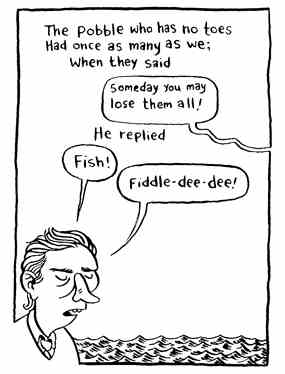
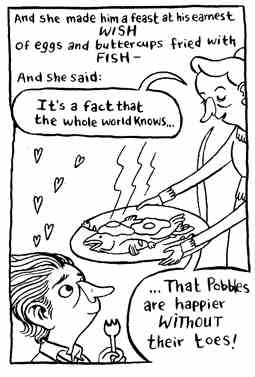
The Pobble Comic


Lucy Knisley has drawn her own comic strip version of Edward Lear’s “The Pobble Who Has No Toes.”

Meanwhile, over at The Guardian, “The Dong with a Luminous Nose” is one of “The Ten Best Noses in Literature.”

Posted in Edward Lear | Tagged , , | Leave a comment

Britain’s Audubon and Edward Lear

Booktryst: A Nest for Book Lovers has a beautifully illustrated post on Edward Lear’s difficult relationship with John Gould, “Britain’s Audubon.” The conclusion quotes Lear’s famous reaction when he heard of Gould’s death in 1881:

John Gould’s desire to be held in esteem as an artist and writer caused him to needlessly take credit where credit was not due. Upon Gould’s death in 1881, the usually affable Lear wrote, “He was one I never liked really, for in spite of a certain jollity and bonhommie [sic], he was a harsh and violent man… [A] persevering hard working toiler in his own line, but ever as unfeeling for those about him… He owed everything to his excellent wife,—& to myself, without whose help in drawing he had done nothing.”

Nancy Mattoon, the author of the post, also links to the highly-recommended Cornell University site devoted to Lear’s work as a zoological illustrator: Never Mind the Pussycat: The Ornithological Art of Edward Lear.

Posted in Edward Lear | Tagged , , , | Leave a comment

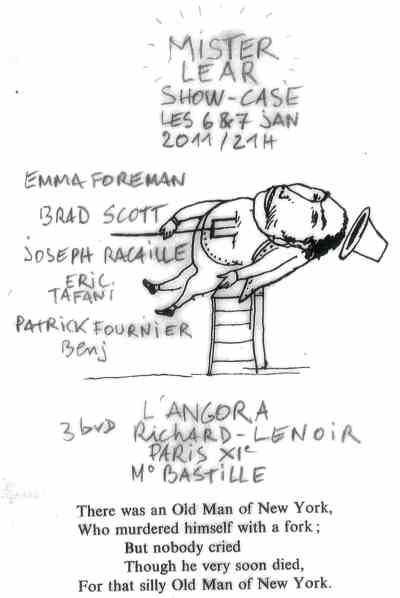
Mr Lear Show-Case

In case you are in Paris for the holidays and want to see an Edward Lear show.

Posted in Edward Lear | Tagged , , | Leave a comment

Lear the Beggar

Another letter to Thomas Woolner containing a nice self caricature of Edward Lear begging sandwiched between two views of Palermo. Notice that Lear’s beard is a bit like Garibaldi’s who had conquered Palermo on 6 June. The Expedition of the Thousand had sailed from Quarto on 5 May, just a few days before Lear visited the place on 23 May before heading back to England.

15, Stratford Place, W.,
June 25, 1860.

My Dear Uncle,

Which your letter of April 9 was very welcome & should have been replied to b4, only it came when I was all in a bussel a leaving Rome—I tried to get to you yesterday—but only reached Mrs. Martineau’s house before it was too late to retrace my steps:—but some day I shall hope to come & look you up, & meanwhile if you are passing here, I am full of small unfinished works, some of which might interest you, particklar 2 views of Palermo, with portraits of Garibaldi in the foreground, as I am on the point of taking up & down Bond St. with a box for shillings.

I saw Edward Wilson a day or two ago. My father# I have seen several times, & am as glad of his success as if I had got double myself. He is a blessed old parient he is. The best criticism I have yet heard on his picture# was last week, when a very fine gentleman objected to the “commonplace air” of the Virgin & added “No well-bred woman would ever enter a room in such a fussy manner.”—This, however absurd,—is really a fact.

I have been some days at Farringford with F. Lushington. All are pretty well there, Mrs. A. better than I had expected. Mrs. Cameron absolutely sent up a grand piano by 8 men from her house for me to sing at!!!!!!!

W. G. Clark was at a fish dinner on Fryday last at Grinidge. I hear you suffered brutally from the R.A. porters, as to Sedgwick’s bust.# What are you now about? I write in haste: but thank you for your letter nevertheless.

Yrs. sincerely,
Edward Lear.

Woolner, Amy. Thomas Woolner, R.A. Sculptor and Poet. His Life in Letters. New York: E.P. Dutton, 1907. 196-7.

Woolner would go to Lear’s rooms on 26 May.

Posted in Edward Lear | Tagged , , , , , | Leave a comment

Edward Lear, Thomas Woolner, and Edward Wilson

Edward Lear first met Edward Wilson in Rome in February 1860, when the latter brought him a letter from his friend and PRB fellow Thomas Woolner. That same night he wrote to Woolner, obviously in a very good mood, one of his humorous letters:

94o V. Condotti, Roma,
February 16, 1860.

My Dear Woolner,

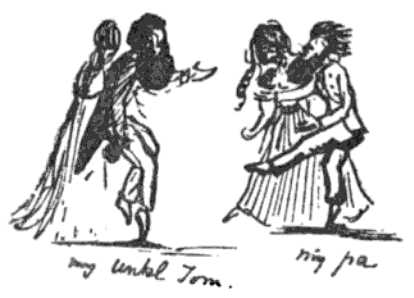
o my deerunkel [Lear called William Holman Hunt “pa or, more often, “daddy” and Woolner “uncle”]—Mr. Edward Wilson has brought me your letter of Jany 19th this afternoon, at 4 p.m. So I walked round the Borghese villa with him, & thought him a very nice fellow;—& if he hadn’t been so, I should have seen what I could of him: for your sake unkel. I have asked him to dine tomorrow, tête-a-tête, & shall feed him with stewed beef & maccaroni & you may depend on my doing all I can for him, as far as my little possible goes. For in 10 days (his limit of time here) much cannot be done. With regard to Naples & other parts of Hitterly, I fear I can do less. . . . Tell my pa he is a nasty unnatural old brute of a parient, as lets his own flesh & blood pine & fret away in furrin parts, without his never writing nothink to them. I am immensely glad you give such a good account of dead Daddy—& long to hear of the picture being finished. I approve of both your dancings, . . . a couple of little apes as you both of you be! For all that I wish you were both of you here. I really do wish you could come before I go hence and am no more seen in Rome, for I hate the place more & more & more & more. I heard of your being at Farringford from Mrs. Tennyson. . . . Don’t you delight in Tithonus? I am glad you went over to Swainston: Sir J. Simeon has done himself & his religion credit by his good & manly letter. Thank you for what you say of my pictures: it is a really great pleasure to know that Fairbairn likes his Petra so much. . . . Dear me! I wish you could come out here for a little time . . . . you might see all Rome so quietly as you never would have another roppertunity of doing. So might Pa. I am glad to hear of your doing Sir W. Hooker & Sedgwick . . . my plans are much changed since I came here, and I find I must put off Palestine till Autumn. And thus I am going on with paintings of Palermo, Dead Sea, Parnassus. . . . Beirût, & Damascus, with some drawings,—But I also wish to paint the Seeders of Lebanon from the big Seeders at Sir J. Simeon’s before I come to town. I am convinced of this: a man cannot too perpetually & too wiggorously keep a beginning & a setting forth of new themes for work: if so be he goes on to finish them. After I’ve done all the above toppicks, I trust to go to Jerusalem & after that perhaps to the troppicle regents, & the Specific highlands and never comes a Hewropean trader & a lustrous creeper in a flag sliding over summer trailers which accounts for the same.

O my belovydunkel, my eyes are tired with the light, and my’ ed is a akin: so I can’t right any maw, beinng half asleep. Give my love to my dear pa, & to Brother Bob Martineau, & to my Grandfather Maddox Brown, which I always keep seeing his picture of “Work” before me.—(o my!) . . . Good-bye my dear boy. I am truly glad you are going on so well. Write me a line by post some day for it is a pleasure to hear of you.

And believe me,
Dear Woolner,
Yours affly.
Edward Lear.

Do write & send me the address of your Studio.—I hope though, you’ll get a block of marble for the little Fairbairns soon.

Woolner, Amy. Thomas Woolner, R.A. Sculptor and Poet. His Life in Letters. New York: E.P. Dutton, 1907. 185-6.

In the diaries Lear dates Wilson’s arrival on 17 February 1860:

At 4½ one Mr. Edward Wilson of Melbourne brought me a letter from T. Woolner, ― so I walked round the Borghese with him & asked him to dine tomorrow. Woolners letter is very nice.

Lear’s reaction to Wilson was less than enthusiastic; on 24 February he wrote:

Mr. Wilson came ― & took on hisself [sic] to lecture me for not going out, overwork, Hugh Miller &c. &c. ―: to which I thought ― o ass! ― but said nothing. ―

They saw each other sporadically in Rome, and Lear was a bit offended when, meeting Wilson in Tivoli, the Australian seemed surprised of Lear’s unwillingness to leave Giorgio, who had just heard of his little daughter’s death, alone: “Met Wilson, who seemed to think it odd I could not join his party: he is potius aper” (6 April). “Potius aper” being Lear’s way to define someone “rather a bore,” via the Latin for “rather a boar.”

At the end of the year Lear annotated in his diary while staying in Oatlands to paint the “Seeders of Lebanon:”

Edward Wilson ― a nice & kind letter, asking me to a dinner at the Crystal Palace as a farewell. I wrote an answer ― No: ― but I am sorry I can’t convey to Edward Wilson what I feel about him: a kind hearted man: ― yet we did not pull well together. ―― (2 October 1860.)

More on Edward Wilson: Australian Dictionary of Biography, Wikipedia, T. Woolner’s bust of Wilson at the State Library of Victoria and relative entry,

Wilson, Edward. Rambles at the Antipodes: A Series of Sketches of Moreton Bay, New Zealand, the Murray River and South Australia, and The Overland Route. London: W.H. Smith and Son, 1859 (Google Books).

Posted in Edward Lear | Tagged , , , , | 1 Comment

The Sprout and the Cabbage

The Sprout and the Cabbage went to sea
In a suitable egg shell boat.
The waves were so high
They thought they would die,
But viscosity kept them afloat.
The sprout cried out: “Oh, Cabbage, my dear!
Wrap your green leaves around me!
Hold on to me tight, and all through the night,
We’ll stay safe in this treacherous sea!”
But the cabbage replied, as they lurched to one side:
“Steady! You lecherous lout!
My life would be wrecked, if my family suspect
I’m at sea with a sex- crazed sprout!”

The Sprout, thus chastised,
Feared their boat might capsize,
And made no further advance.
When the weather had calmed
He declared himself charmed
By the cabbage’s virginal stance.

Then the moon appeared, with the stars above
And the Sprout serenaded his true Cabbage love:
“Oh Cabbage!” he sang, as he strummed his guitar
“What a beautiful big round Cabbage you are!”
The Cabbage’s heart, like the sea had before,
Pounded and swelled – could this be l’amour?
“Oh kiss me, oh kiss me!” the Cabbage declared,
And the Sprout leapt to do as the Cabbage now dared.

So the Sprout and the Cabbage spooned through the night
As the moon shone down a silvery light.
“My veggie! My dear!” they both called out.
“Oh Cabbage! Oh, Cabbage!” “Oh, Sprout! Oh, Sprout!”

In the morning, they woke, side by side
“Oh, Cabbage, my love!” the enraptured Sprout cried;
“Marry me Cabbage, and away we will go,
To a large open field, and there we will grow,
And ripen and bloom and have lots of seed,
There with each other, for that’s all we need!”

But the Cabbage replied “That’s all very fine,
But there’s things I must have, if you want to be mine!
Like quince, and mince, and a runcible spoon,
And shoes for a dance, by the light of the moon!
And money and honey, and a little pig’s ring!
So you’ll have to do more than just strum and sing!
To get all we need will cost a few bob;
I’m afraid, Sprout, it means, you’d best get a job!”

Sprout sadly sighed, for a working life
Was the price he must pay for his dear Cabbage wife.
And so, every day, he slaved away,
For the rent of a small double room.
But then every night, to their endless delight,
They danced by the light of the moon.
Yes, Cabbage and Sprout, each night they went out
And danced by the light of the moon.

This parody of Edward Lear’s “The Owl and the Pussy-cat” was posted last July by Martin Brown on his Cabbagefactory blog; more Learish and much nonsense material is available.

More on Martin Brown, and more.

Posted in Edward Lear | Tagged , , | Leave a comment

The Frog and the Heron: A Different Sort of Romance

The following poem by Peter Newell,  in Harper’s Young People, vol. XIV, 1893, p. 824,  shows that the theme of interspecies sexual-sentimental relationships would be used at least until the end of the century. Given his choice of a title, Newell might have been inspired by Du Maurier’s strip, “The Frog and the Duck: A Romance,” after all Punch collections were widely available; however, his ending is both more cynical and more realistic.

A LITTLE ROMANCE

It was a Frog and Heron fair
One evening chanced to meet,
The bird had brought her bill along,
And Froggie’d brought his feet.

And since they neither one could speak
The tongue the other knew,
They could not well converse at all,
And so the Heron blew

A pretty tune upon her bill,
While Froggie danced with glee.
He understood her music sweet,
His merry tripping she.

Full soon they fell in love, and ere
The rising of the sun
The Heron gobbled Froggie up,
And now the two are one.

Posted in Comics, Edward Lear, Peter Newell | Tagged , , , , | 1 Comment

The Sanity of Nonsense. Round the World with Edward Lear

Bidding a farewell to fiction
Of the fashionable type,
Whether based on drug-addiction,
“Triangles” or merely tripe,
Healthier recreation choosing,
Simpler fare and better cheer,
I propose to go a-cruising
Round the world with Edward Lear.

Tell me not the thrills that Argo
Gave, or modern liners give:
I shall sail as supercargo
In the Jumblies’ super-sieve,
Where I’ve booked a berth umbrageous
On the Quangle-Wangle’s Hat,
Next to Dong and quite contagious
To the frisky Bisky Bat.

On the coasts of Coromandel,
Where the oblong oysters grow,
I shall hum the works of Handel
To the Yonghy-Bonghy-Bo;
Or contribute variations
On the banjo and the bones
To the dolorous lamentations
Of the Lady Jingly Jones.

There I’ll hold harmonious parley
With the foes of common sense ―
Aunt Jobiska, Uncle Arly,
Priests of “sweet desipience”;
And discuss with them quite frankly
Should the fearsome Cummerbund
And the perilous Hills of Chankly
Bore, be visited or shunned.

Cutlets (veal) shall grace our table
From the Orient Calf of Tute;
(Strange that Brewer’s Phrase and Fable
On the subject should be mute!)
While to lubricate our throttles,
When we reach that City, Tosh,
We shall ship a billion bottles
Of the peerless Attery Squash.

Lastly, in my helicopter,
Freed from all internal ills
Thanks to the judicious Propter
And his Nicodemus Pills,
I shall watch the toeless Pobble,
Unembittered by his pain,
Homeward delicately hobble
O’er the Great Gromboolian Plain.

*  *  *

Though, more potent influence raining
Stars may swim into our ken,
Though new creeds succeed in gaining
Mastery of the souls of men;
None is surer of translating
Young and old into a sphere
Purer, more exhilarating
Than the Lunacy of Lear.

C.L.G.

The Times (London, England), Thursday, 16 June 1938, p. 19; issue 48022.

Posted in Edward Lear | Tagged , , | Leave a comment