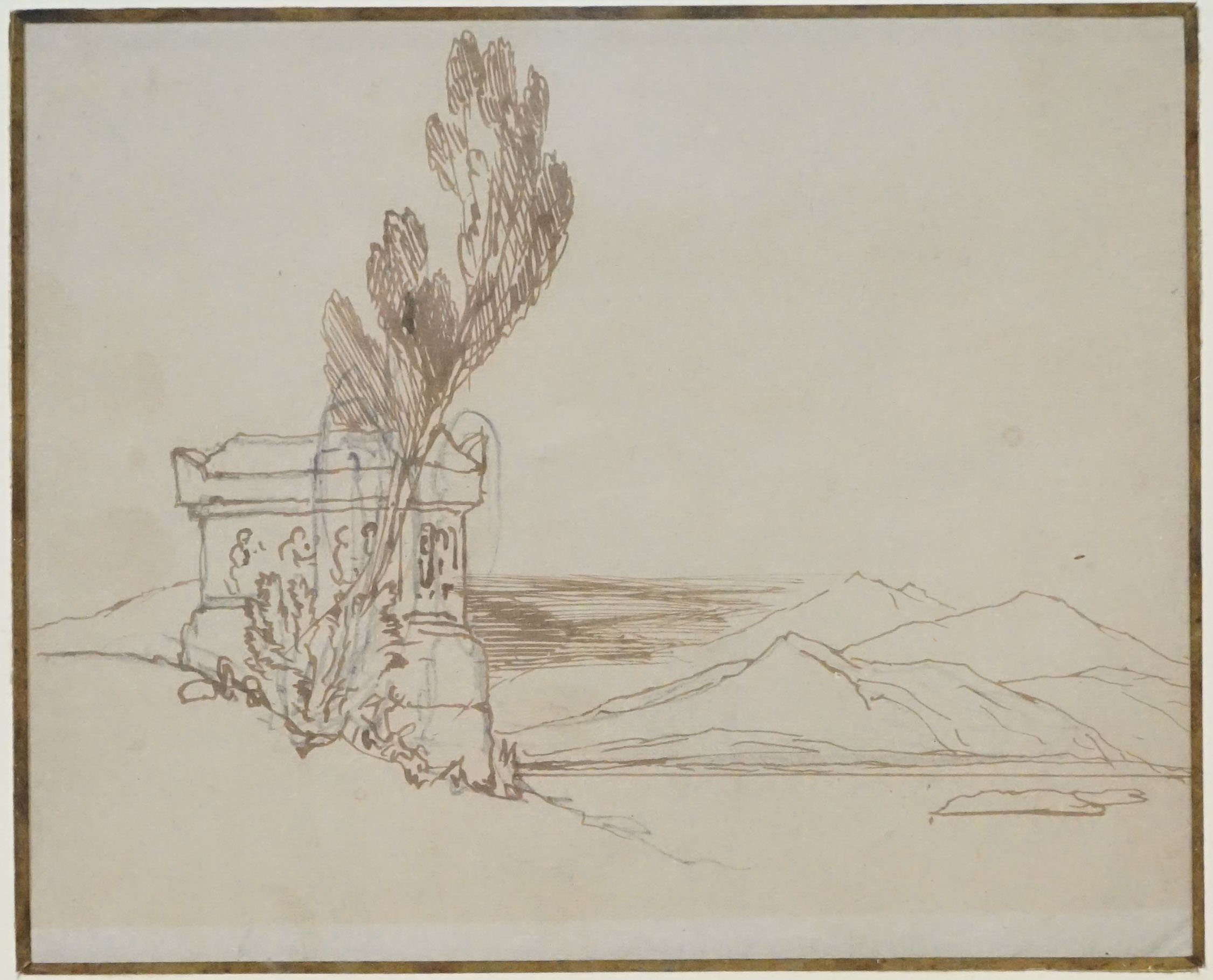
Edward Lear, Landscape scene with figures in the foreground.
Pen and ink, signed lower right ‘ E Leer’ and further inscribed ’15 March 1838′, 9 x 12cm and another, landscape, pencil, pen and ink, unsigned, 9.5 x 12cm.

Edward Lear, Landscape scene with figures in the foreground.
Pen and ink, signed lower right ‘ E Leer’ and further inscribed ’15 March 1838′, 9 x 12cm and another, landscape, pencil, pen and ink, unsigned, 9.5 x 12cm.

Edward Lear, From Monte St Angelo.
Sepia ink and pencil with faint annotations, 8.5 x 15cm.
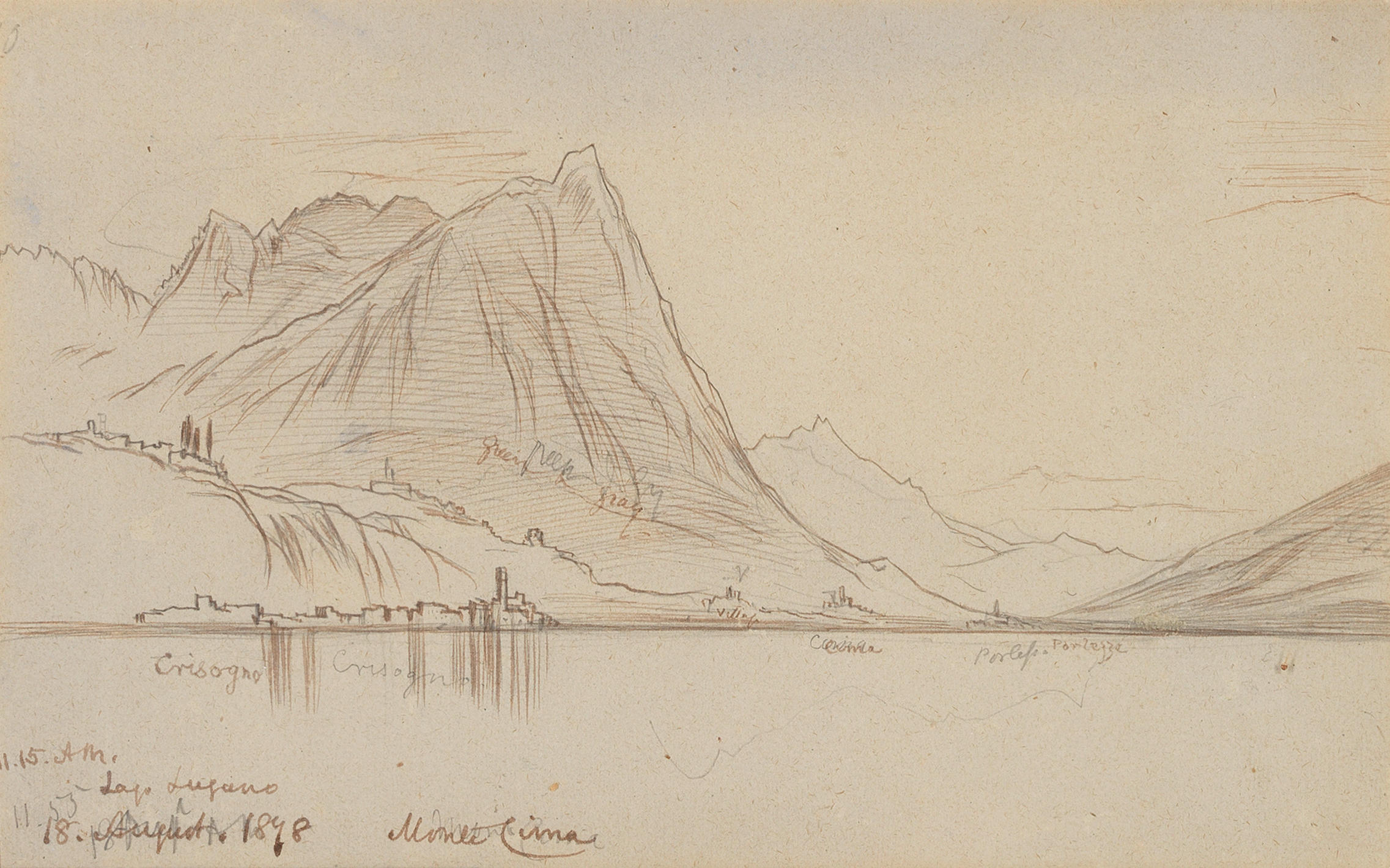
Edward Lear, Sketch of Monte Cima and Lake Lugano.
Signed, inscribed and dated ’11:15am/ Lake Lugano/ 18 August.1898, Monte Cima’ (lower left), annotated throughout. Pencil, pen and ink. 16.5 x 26cm (6 1/2 x 10 1/4in).
Provenance
Anon. sale, Bonhams, London, 2 November 1995, lot 84.
[I cannot see the signature anywhere, and 1898 is obviously wrong as a date, it looks rather like 1878]

Edward Lear, Monte Generoso, 1848.
Inscribed and dated ‘Monte Generoso/9.AM. August 2.1848’ (lower left), annotated throughout. Watercolour over traces of pencil. 40.3 x 55.5cm (15 7/8 x 21 7/8in).
Provenance
Anon. sale, Bonhams, London, 2 November 1995, lot 82.
Dough Harris informs me that the limerick book I discussed here, Bosh by W.S. (London: Bickers & Son, 1876) is now available online at Google Books.
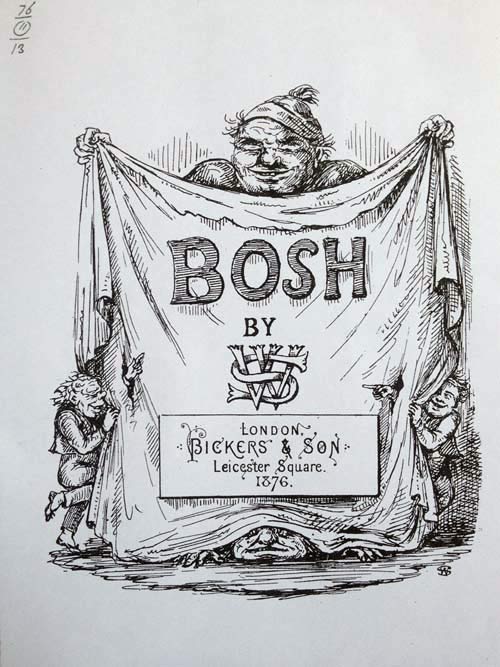
According to Bob Turveys’s The Secret Life of Limericks (2025, chapter 5) W.S. was “the famously idle Reverend Walter Sneyd (1809-1888).”
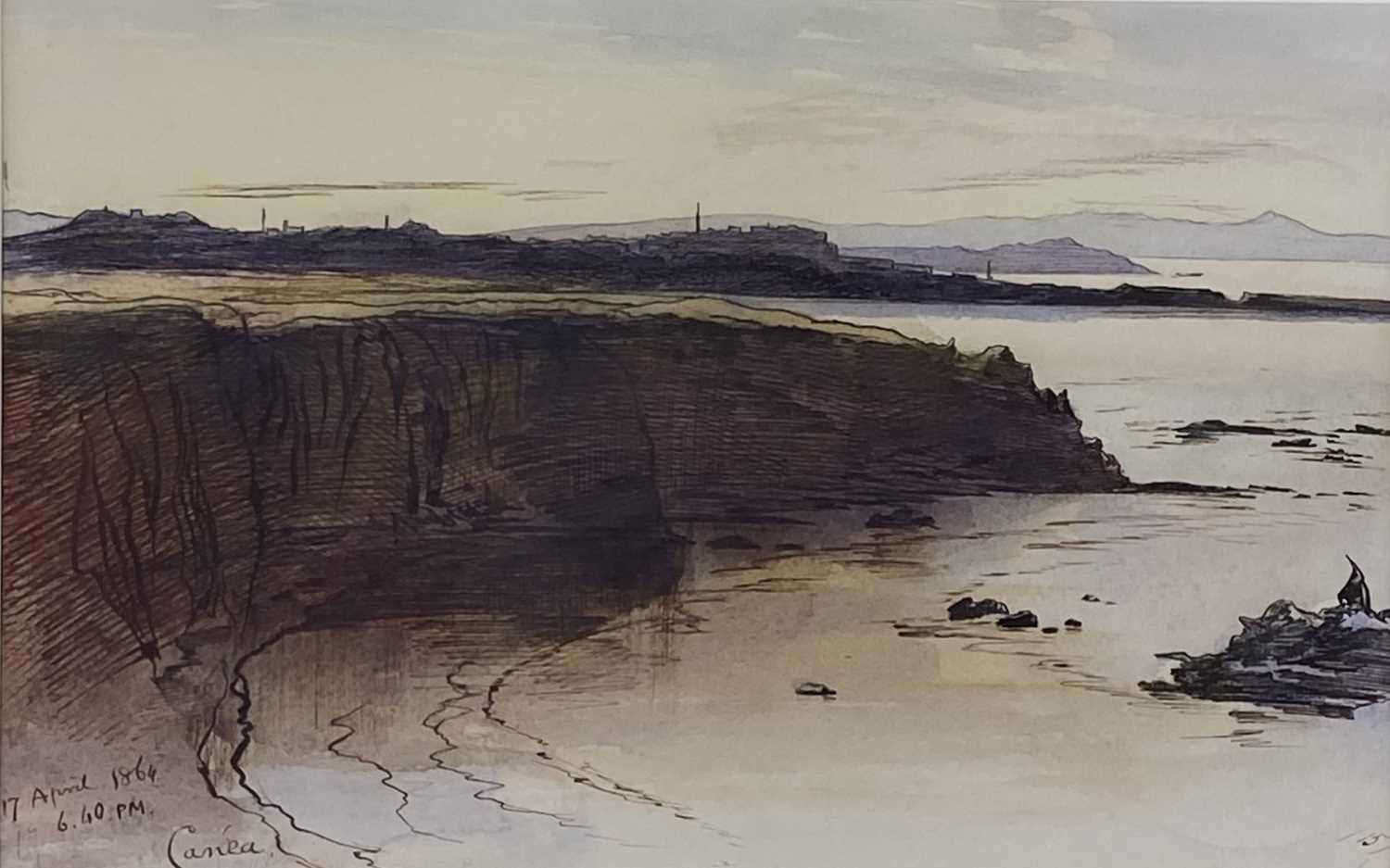
Edward Lear, Canea, Crete.
Dated 17 April 1864 6.40 pm and titled lower left, watercolour and ink, 21.5 x 34.5 cm, frame 43 x 56 cm.
Provenance
Collection of Peter Roberts, purchased from Maurice Edward Dear, Southampton and label for Craddock & Barnard, London
Peter Roberts was born in Shropshire and brought up in the market town of Shrewsbury. He attended the Priory Grammar School before leaving for Cambridge University where he studied Classics and English. He qualified as a teacher, working first at Rydal School in North Wales before being appointed Head of English at Oundle School in 1982 where he remained until his retirement in 2007. Later in life he returned to his roots in Shropshire and spent his time pursuing his love of the arts, and built up a very carefully curated collection of antique furniture, antiquarian books and in particular, 19th Century English Watercolours. Roberts had a keen eye and focused on some of Britain’s best loved landscape painters such as David Cox, John Varley, Paul Sandby, Peter de Wint and William Leighton Leitch.

Edward Lear, Voidomatis river, Zagori region, Epirus.
14 April 1857. Watercolour and ink on paper.
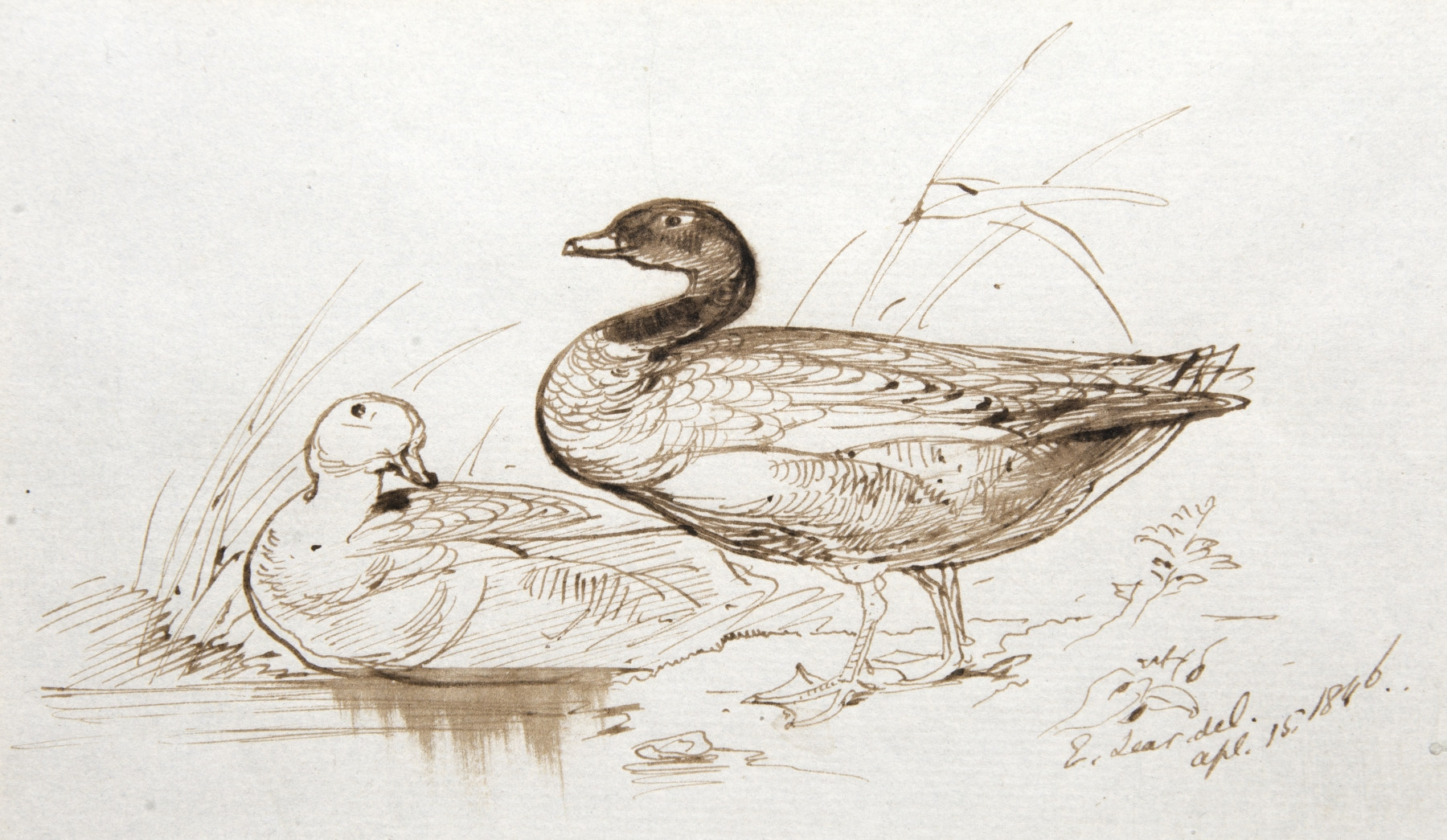
Edward Lear, Two Geese.
Pen and ink. 3 ¾ x 5 ¾ inches.
Provenance
Fanny and George Coombe of Peppering House, Burpham, Sussex, and by descent;
Luke Gertler Collection
Edward Lear made the present drawing for the family of his childhood friend, Fanny (née Drewitt), of Peppering House, Burpham, Sussex, and her husband, George Coombe. Dated ‘Apl 15 1846’, it was probably produced on a rare visit to England, during the years in which Lear was living in Italy. In the same month, the first volume of his Illustrated Excursions in Italy – which he dedicated to his patron, the Earl of Derby – was published in London by Thomas M’Lean, and this led to his being appointed drawing master to Queen Victoria. Earlier the same year, he had also launched himself as a comic poet, with A Book of Nonsense, which comprised the illustrated verses that he had composed for Derby’s children.
Lear had initially made his name as an ornithological draughtsman, in issuing Illustrations of the Family of Psittacidae, or Parrots in parts between 1830 and 1832. His work would continue to feature birds both serious and humorous, including a duck in his poem, ‘The Duck and the Kangaroo’ (circa 1865), and the limerick, ‘D was a Duck’ (from the comic alphabet, ‘A was an Ant’ of 1867), and a goose in ‘G was a little old Goose’ (from another comic alphabet, written in about 1880). The present fowl are more likely to be geese rather than ducks, as is indicated by the shape of their beaks and the length of their necks.

Edward Lear, Rustic Still Life.
Inscribed ‘Amalfi’ and dated ‘July.11.1838’. Watercolour with oil and pencil. 5 ¼ x 7 ½ inches.
Exhibited
‘Chris Beetles Summer Show’, 2021, No 25.
Early in 1837, a group of subscribers, led by the Earl of Derby and his cousin, Robert Hornby, commissioned Edward Lear to go to Rome to produce drawings (and, at the same time, to improve the state of his health). It would be his third trip to the Continent, but his first to Italy. He left England in July that year, and arrived in Rome in the December. Apart from two visits to England in 1841 and 1845-46, he then remained in Italy for a decade.
Each summer of that decade, Lear would travel to a different part of the country. In May 1838, he made a slow journey to Naples in the company of fellow artist, James Uwins. On their arrival, they found that they were staying in the same hotel – the Hotel de La Ville de Rome – as Samuel Palmer and his wife, Hannah, who were in the middle of their Italian honeymoon. However, Lear found Naples ‘all noise, horror – dirt, heat – & abomination’ (as he expressed in a letter to John Gould in the following year, on 17 October 1839). So, after a few days, he and Uwins moved on.
Travelling in a south-easterly direction, they settled at Corpo di Cava, a village situated at the head of a high wooded valley looking down to the Bay of Salerno. It had been the haunt of artists since the time of Poussin and Rosa, and James Uwins’ uncle, Thomas Uwins RA, had painted there 10 years before, which may have prompted his and Lear’s visit. There they established a daily pattern of walking and sketching, punctuated by some longer expeditions, including that, in the middle of June, to the classical ruins of Paestum, which dominate the coastline about 30 miles south of Salerno.
Late in June, Lear and Uwins moved from Corpo di Cava to Amalfi, on the coast west of Salerno, and stayed for three weeks at the Albergo Cappucini, until 18 July. The visitors’ book reveals that they overlapped with Achille Vianelli and Ercole Gigante, two landscape painters of the School of Posillipo. It was following their return to Corpo di Cava in late July that Lear produced Collecting Water, Corpo di Cava. This shows Lear experimenting with oil – on paper – for the first time, sometimes purely and sometimes in conjunction with other, water-based media. His decade in Italy is defined in part by his decision to take seriously to oils. He and Uwins finally left Corpo di Cava at the beginning of August, in order to stay in Sorrento, on the southern extreme of the Bay of Naples. At the end of the month, they began their slow return to Rome.

Edward Lear, A rest on the way to Pisa.
Signed with monogram and dated 1861 and 1863. Watercolour with bodycolour. 6 ¼ x 10 ¼ inches.
Literature
Vivien Noakes, Edward Lear 1812-1888, London: Royal Academy of Arts, 1985, pages 126-127, catalogue number 39.
Jenny Uglow, Mr Lear. A Life of Art and Nonsense, London, Faber & Faber, 2017, pages 316-318.
This painting of Pisa is probably one of a series of drawings that Lear referred to as his ‘Tyrants’. Jenny Uglow mentions in her biography, Mr Lear. A Life of Art and Nonsense, that by the early 1860s and distressed by the lack of sales of his large paintings, he embarked on a series of smaller ones. ‘Taking sixty sketches from his many travels, he made thirty small mounts and thirty larger. He stuck his paper onto these and for the next two days he made thirty outlines a day, giving each one a number: within a fortnight he was calling these his “Tyrants”‘. In a sketch planning how he hung the finished paintings, this Pisa drawing is clearly identifiable as number 33 which he hung on the Southside wall of his gallery.
 A Blog of Bosh