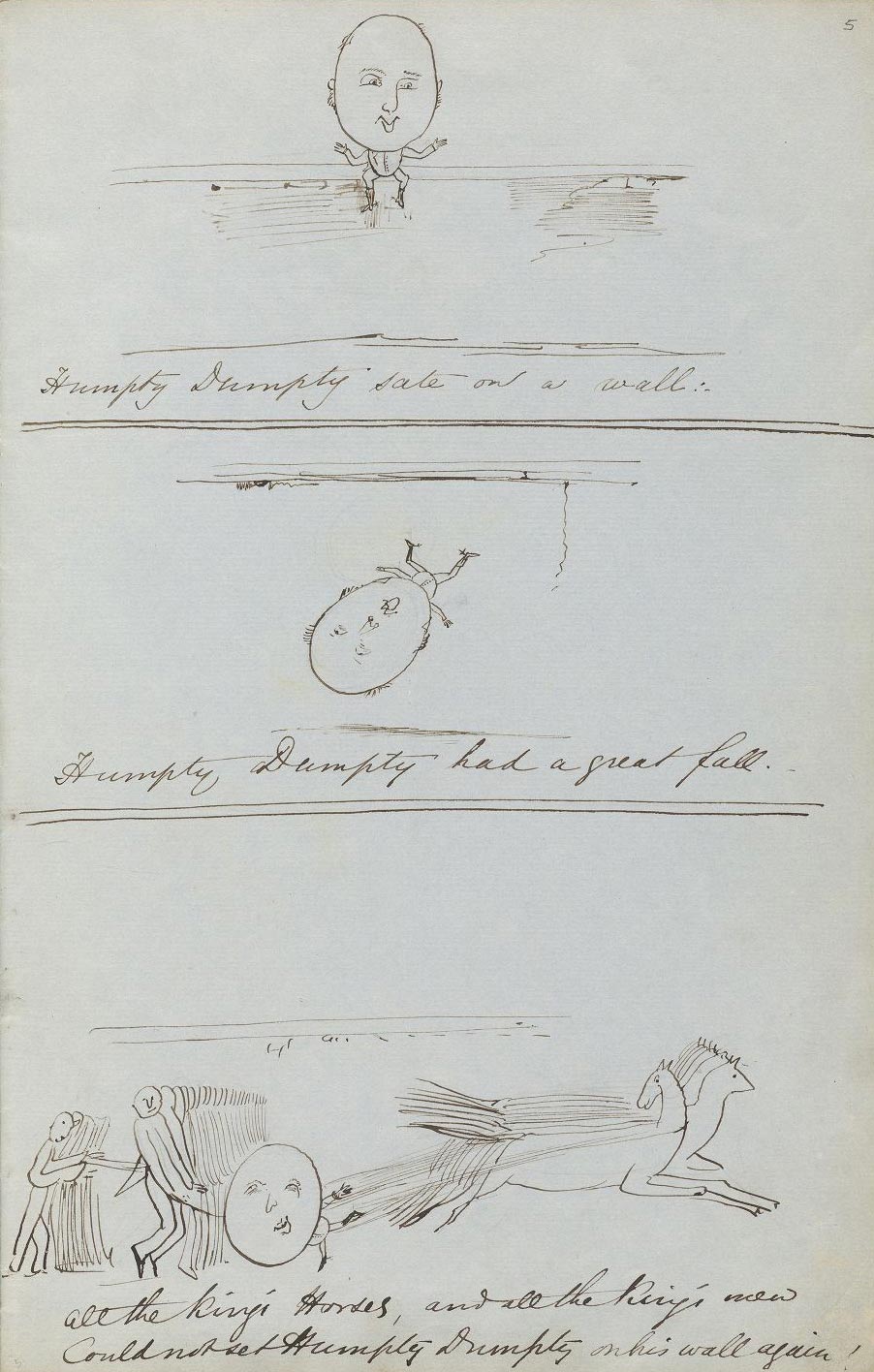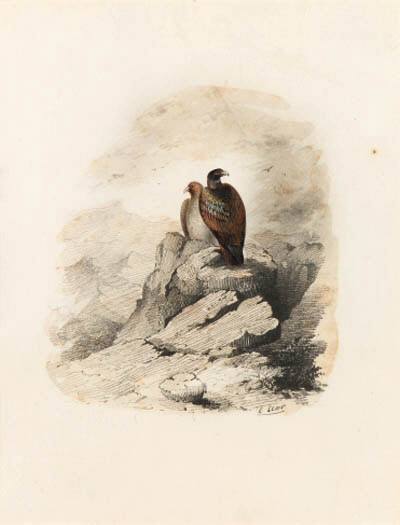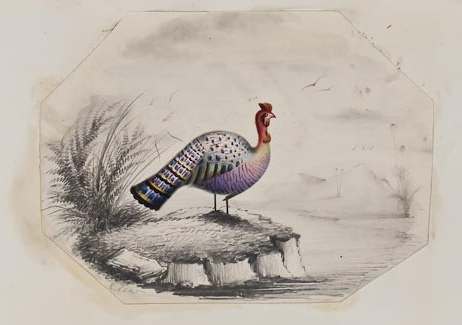
Edward Lear Bicentenary: A Request

Less than a year now before Edward Lear’s 200th birthday. I forgot to post about his birthday this year, but Lear himself did not mention it in his diary for 12 May, he was probably still too depressed after Ann’s death. He had referred to his 48th birthday on 12 May 1859, while visiting Liguria with Giorgio.

I occasionally get enquiries about events planned to celebrate the anniversary and have to admit I do not have much information. I have heard of a few exhibitions which are being prepared, but nothing definite.

  1. There should be an unofficial Festival of Nonsense at Newquay Zoo, which will include an exhibition of other artits’ illustration of Lear’s works.
  2. The Corfu Blues blog announced “an exhibition of about 50 of Lear’s Corfu paintings, sketches and watercolours of Corfiot landscapes” in Corfu in May-June 2012.
  3. There might be an exhibition “relating Lear and Carroll” in Brazil in 2012.

If you know of any other events (exhibitions, conferences, books etc.), or have more information on these, please let me know either by e-mail or in the comments. I will keep everybody updated.

It would also be nice to have an online celebration, any ideas?

Posted in Edward Lear | Tagged , , | 3 Comments

The Earliest Recording of The Owl and the Pussy-cat

The Library of Congress has just launched a new site, National Jukebox, which makes historical recordings available. Among the many jewels is also the Haydn Quartet version of “The Owl and the Pussy-cat.”

In a previous post, I had dated this version to 1904, later than a 1902 recording by the Columbia (Peerless) Quartet. If the data on the National Jukebox site is correct, and it sure is the most reliable source I have, this recording was made on 14 September 1901 and so is the earliest.

The site also features a second version, or a new edition of the previous recording, dated 1908, and states that the music was composed by Reginald de Koven, who has several other songs listed.

An interesting note also tells us something ‘regarding the composer of this selection. In 1901 a certain H.W. Cardew copyrighted music for the poem by Edward Lear, but the music on this record is the melody of “The tailors’ chorus” from de Koven’s “Robin Hood,”‘ so the music was not expressly composed for the poem, but rather the poem was adapted to the music. You can listen to a section of tracks from Robin Hood here, but “The Tailors’ Chorus” is not included.

The song must have been quite popular, and the new dating makes it almost certain that this is what Boggs the Optimist sings in the first panel of the 29 December 1901 strip by “Brad” Bradford (click to see the whole strip):

Cardew’s two volumes of Edward Lear arrangements, no performance of which is available as far as I know, are listed in the Musical Scores page. More Archie & Boggs strips are available at Barnacle Press.

Posted in Comics, Edward Lear, Podcasts | Tagged , , , | Leave a comment

Santa Claus, Jr.

I thought I would keep this for Christmas, but since Edward Lear’s Diaries are taking so much of my time and I’m working on a long post I’m sure you will love, here comes:

“Santa Claus, Jr.” by Wallace Irwin, illustrated by Peter Newell, from The Saturday Evening Post of 2 December 1911, p. 22.

Posted in Peter Newell | Tagged , , | Leave a comment

The Provident Centipede

Carolyn Wells, “The Provident Centipede.” The Metropolitan Magazine, vol. 22, no. 6, September 1905, p. 751.

Posted in Limerick | Tagged , | 2 Comments

Thumbnail Studies in Un-natural History

Bob Addams, “Two Thumbnail Studies in Un-natural History.” The Metropolitan Magazine, vol. 22, no. 6, September 1905, p. 740.

Posted in Comics, Nonsense Lyrics | Tagged , , | Leave a comment

The Educated Love Bird

(Not translated from the Italian)
by Peter Newell

I teach-a da bird an’ a blow-a da ring,
An’ ‘e fly into eet an’ ‘e roost an’ ‘e sing!
An’ whn-a da ring ‘eet is not-a in sight
Da bird ‘e just spread-a ‘ees wing an’ make flight.

From The Metropolitan Magazine, vol. 22, no. 6, September 1905, p. 716.

Posted in Peter Newell | Tagged , | Leave a comment

Vivien Noakes: More Obituaries

The Telegraph published a long article on 11 March: it contains a view of Edward Lear I do not think Vivien would have shared.

Below is the text of the Times’ obituary, which Charles Lewsen has kindly sent me:

Vivien Noakes Obituary
The Times, 4th March 2011

Acclaimed biographer of Edward Lear who sparked a modern -day revival of interest in the work of the Victorian poet and watercolourist
In April 2008 when Dr Vivien Noakes arrived in Albania to give a lecture on Edward Lear, her visit was reported on the front pages of the country’s newspapers. Lear may be remembered by many primarily as a writer of nonsense verse and limericks, but his true importance was as a painter and travel writer. He was a particularly fine watercolourist. In 1848 he travelled in Albania and Macedonia, a journey that resulted in his Journals of a Landscape Painter in Albania, giving Western Europeans their first information about that wild land. Her new edition in 2008 made Noakes a very welcome visitor to the country.
Vivien Noakes was the world authority on Lear, and she was also noted for her work on Isaac Rosenberg. the poet and playwright who was killed in the First World War. She was born in 1937 in Twickenham, the daughter of Marcus Langley, FRAeS, an aeronautical engineer, and his wife, Helen Oldfield Box. She was brought up in Reigate, Surrey, and educated at Dunottar School there, but she also spent some of her childhood around Malvern, and she and her husband returned to that area towards the end of her life. With five A levels she went up to Harris Manchester College, Oxford, as a mature student. There she won a first in English and then moved to Somerville where she was a senior scholar and lecturer, and took her DPhil.
She had hoped to become a medical doctor, but she went instead to St Thomas’ Hospital to train as a nurse. That was not for her and she worked for a time in the Brewing Industry Research Foundation, but this was cut short by marriage. Her parents moved into a tlat owned by the parents of the future portrait and landscape painter Michael Noakes. On catching sight of the new neighbour through a window, he announced that she would be his wife, a boast that he made good three vears later in 1960. Their first home together was a converted stable block in Reigate.
Three children followed, and she thought that she might write in the intervals of their upbringing. She also found work as a freelance interviewer for the BBC programme Town & Around, and later became a fairly frequent broadcaster. The first literary project she considered was a biography of Tennyson but this was abandoned when, in 1965, she and the children happened to watch a Blue Peter programme on Lear’s bird paintings, thus setting the course of much of the rest of her life. The earlv interest was not wasted, however; in 1988 she gave the annual memorial address to the Tennyson Society.
Her authoritative biography, Edward Lear: The Life of a Wanderer, first appeared in 1968 and was greeted with great acclaim. According to Anthony Lane in The New Yorker: Mrs Noakes is the First Lady of Lear studies. She is as indispensable to devotees of Lear as Ellmann was, and still is, to devotees of Joyce,” while the artist and cartoonist Ronald Searle called it “a magnificent biography, and as constantly fascinating as Lear himself’. The book has been republished frequently, most recently in 2006. Numerous other books on Lear’s life, letters, paintings and poetry followed.
Noakes was guest curator of the major Lear exhibition at the Royal Academy in 1985, which went on to the National Academy of Design in New York. She was also a consultant on Lear’s paintings and manuscripts to all the leading London auction houses. She won an enviable reputation for the unusual generosity with which she shared her knowledge and researches. On the occasion of a Lear seminar in the Lake District, she lent a lecturer her notes, allowing him to keep them for the best part of a year. (The ‘seminar’ was the exhibition of Lear’s 1865-6 landscape paintings done in the English Lake Dstrict and Ireland. The curator was Charles Nugent, whose superb catalogue can still, I think, be ordered from the Wordsworth Centre.)
She herself lectured at many universities and museums ill Europe and the United States, including Harvard and the Yale Centre for British Art.
Her interest in the First World War began in childhood. since the family did not forget an uncle who had died in it. As a child she was taken on battle-field tours of the Western Front, during which they would read the Great War poems.
Rosenberg, a Jewish East Ender who had attended the Slade School of Fine Art and signed up for service in the Suffolks and the Royal Lancashire Regiment, despite his poor health and pacifism, wrote his best work in the trenches, but was largely overlooked by anthologists.
A biography by Jean Moorcroft Wilson finally appeared in 1975. when F. R. Leavis conceded that Rosenberg was “hardly known”, and thereafter there were numerous publications on him, concluding with Noakes’s 2004 edition of the poems and plays. and four years later the first volume to be published in the new 21st-Century Oxford Authors series, which presented all his surviving writings, including letters, and paintings and drawings. According to the reviewer for the TLS: “Noakes has not sought to expand the body of Rosenberg’s work, though her magnificent graft over very complicated and scrappy manuscripts has brought into print in full detail a mass of fragmentary material which will take time to digest. Her commentary is a model of erudite discretion.”
In 2006 she published an important addition to studies of war literature. Voices of Silence: The Alternative Book of First World War Poetry. This looked beyond the well-established names – and even Rosenberg – to take in poems printed in newspapers and journals, trench and hospital magazines, individual volumes of verse, gift books. postcards, and an illicit manuscript magazine put together by conscientious objectors.
She was a Fellow of the Royal Society of Literature, judging several of its prizes for writers, and was a member of the Oxford First World War Poetry Steering Committee. She also sang with the Royal Choral Society under Sargent and Willcocks.
A book of a different sort, The Daily Life of the Queen: an Artist’s Diary (2000), compiled with illustrations by her husband, was destined to be among her most popular works. Michael Noakes, a past president of the Royal Institute of Oil Painters and a member of the Royal Society of Portrait Painters, has been described as the only royal portraitist to perfectly capture the Queen’s expression, and the couple were given good access to record her activities. formal and informal, over a year.
For many years she was also working on a novel inspired by the Great War. at first to be called The Wild Honey, and later Echoing Footfalls. Her family hope that it may be possible to reconstruct her plans for the book from her most recent draft. Vivien Noakes had a great gift for friendship. She adored entertaining and was a consummately unflustered hostess. Each Christmas for more than 30 years she organised much enjoyed neighbourhood open days at their house in Hamilton Terrace, St John’s Wood, from midday to midnight.
There were also parties to celebrate her husband’s new work before it was sent to exhibitions. Similar parties continued at new year after their move to Malvern. She had been looking forward to a Caribbean cruise on which she and her husband were to lecture, but in November she had cancer diagnosed, and this was followed by a stroke. Vivien Noakes is survived by her husband of more than 50 years, and their daughter and two sons.
Vivien Noakes, writer and authority on Edward Lear, was born on February 16, 1937. She died of cancer on February 17, 2011. aged 74

Lives remembered
Vivien Noakes
The Times, 18th March 2011

Patrick F. Lees, chair of governors, Quintin Kynaston School, writes: For several years until 2006 Vivien Noakes (obituary, March 4) supported Quintin Kynaston School, advising the governors’ curriculum committee and as a governor herself. Her highly individual professional tife enabled her to be insightful on matters ranging from the teaching of literature, stimulating interest in art, the interplay of these in the role of visualisation in overcoming dyslexia, to the challenges of self-employment as a career path.
Her warmth, decency and compassion were evident to all. Her contrib-ution was characterised further by a depth and subtlety of thought that was often disguised by her natural modesty and generous inclusivity.
The strands of her thinking on how to develop young people were clearly illustrated in her work on Edward Lear: the power and pleasure of imagery and imagining, the sense to be gleaned from the non-sense that is actually said, the humorous debunking of pomp and the roles of chance and striving in attaining social acceptability and prosperity.

Posted in Edward Lear | Tagged , | 1 Comment

New Articles on Edward Lear

I have recently added two articles on Edward Lear to the Studies on EL page, and they are both freely available:

  • Ponterotto, Diane. “Rule-Breaking and Meaning-Making in Edward Lear.” Revista Alicantina de Estudios Ingleses 6 (1993): 153-61. Read
  • Waltrick do Amarante, Dirce. “Edward Lear e seu ‘nonsense’ errante.” Aletria – Revista de Estudos de Literatura 20, no. 2 (2010): 133-39.
Posted in Edward Lear | Tagged , | Leave a comment

Peter Newell, Needledee and Needledum

Peter Newell, Needledee and Needledum: A Funnygraph Record by Peter Newell, from The Ladies’ World, April-May 1914.

Posted in Peter Newell | Tagged , , | 1 Comment

More Edward Lear Auctions

At Belgravia Auction Gallery, with an estimate of €8,000-12,000, Selmun Palace:

At Christie’s, for a lousy £1,500-2,000, you can get Lucknow, pen and ink, “signed with monogram and inscribed ’42, Lucknow 8pm.'”

Posted in Edward Lear | Tagged , , , | Leave a comment