[I wrote this short article for The Upside-Down World of Gustave Verbeek: The Complete Sunday Comics 1903-1905, edited by Peter Maresca, foreword by Martin Gardner. Palo Alto, CA: Sunday Press Books, 2009, where it appeared under the title “Verbeek’s Loony Lyrics and the Nonsense Tradition.” The book is still available, together with other very nice collections of early comic strips. The latest, Society is Nix, recently reviewed in the NY Times, is of particular interest for nonsense-lovers.]
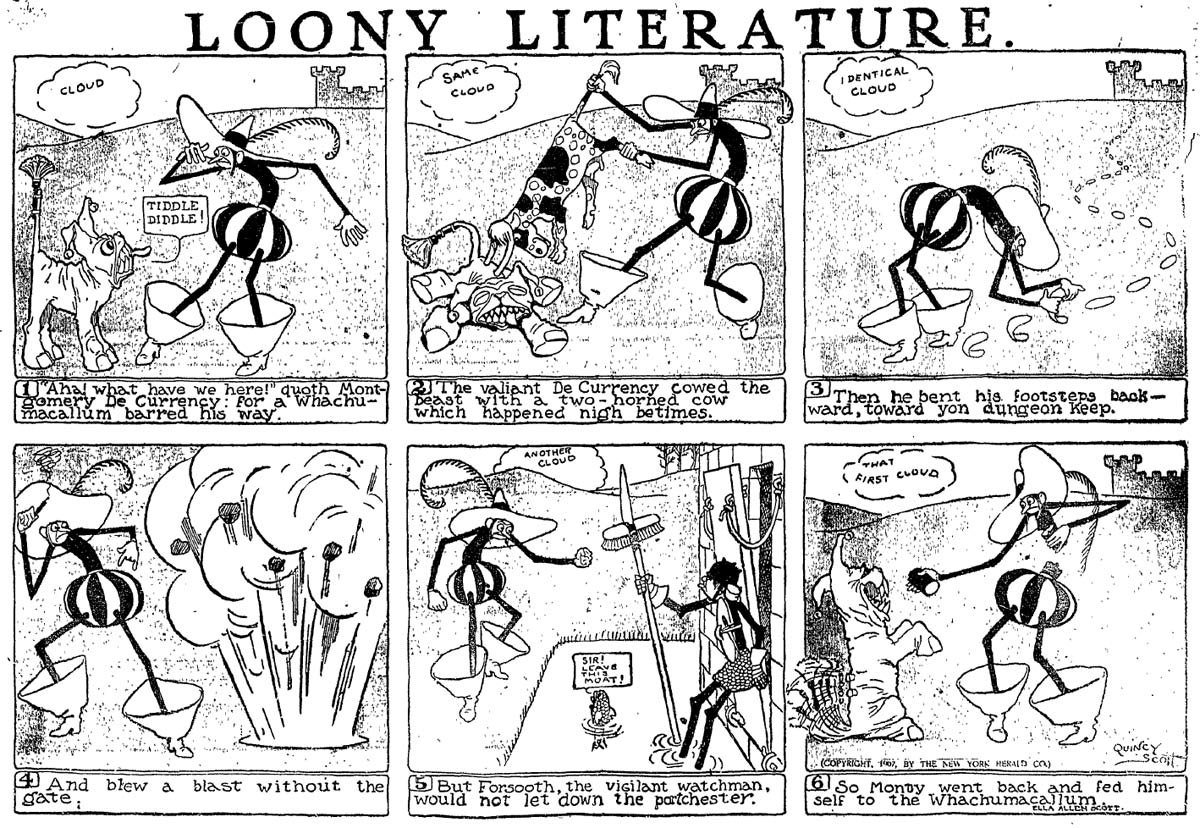
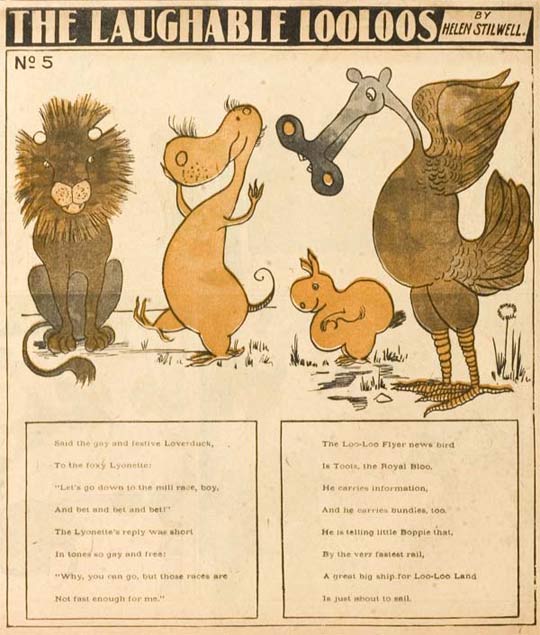
Gustave Verbeek’s last contribution to the Sunday supplements, The Loony Lyrics of Lulu (July 17 – October 23, 1910), followed in the tracks of previous l-alliterating nonsense strips such as The Laughable Looloos (1906) and Loony Literature (1907). While taking advantage of a recurring fad for reader-contributed limericks, the strip also looked back to Edward Lear, whose Book of Nonsense (1846) had marked the beginning of Victorian Nonsense and popularized the limerick. This association of nonsense techniques and contemporary trends had always been a characteristic of Verebeek’s production.
Nonsense literature and newspaper comics share a predilection for rigid structures ― a six-panel strip and a five-line limerick both exploit their limited space as a stage for endless variations on a formula. Like comics, moreover, the Nonsense of Edward Lear and Lewis Carroll was almost invariably narrative, while the new American school of Nonsense ― which included successful humorists such as Guy Wetmore Carryl, Carolyn Wells, Gelett Burgess and Peter Newell ― often limited itself to descriptions of unlikely creatures.
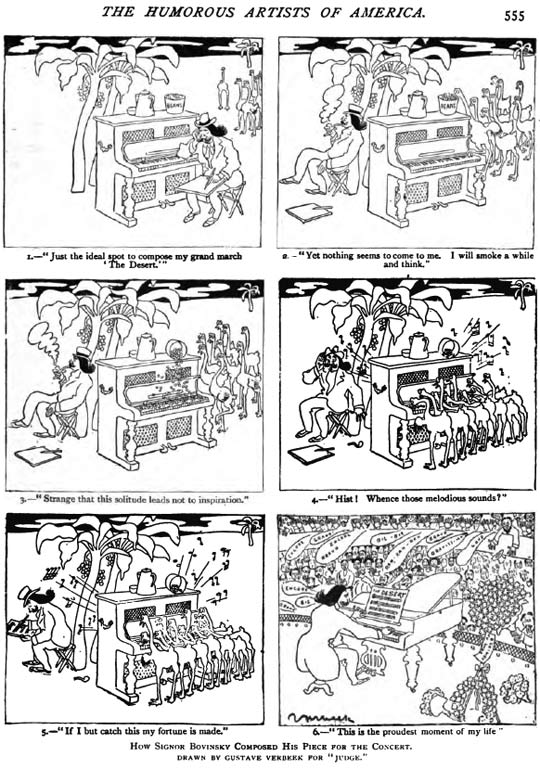
Verbeek belonged to this later generation, shared their interests and used the same themes; in a long three-part article in the Strand, “The Humorous Artists of America” (March-May, 1902), he is mentioned last, as the most cosmopolitan, and a follower of Caran d’Ache. The sequential page chosen as a sample of his production ― one from a series for Judge and the only one of its kind in the whole survey ― emphasizes his early interest in graphic storytelling. It is therefore not surprising to find that his three strips for the New York Herald all turned traditionally single-panel techniques ― double-sided images, mixed animals and limericks ― into narrative devices.
The Upside-Downs were meant to captivate and surprise the newspaper’s middle-class readers, who expected more than the pranksters proliferating in other newspapers: Verbeek dropped the balloon, which he had used in his previous strip for the New York World, Easy Papa (May 25, 1903 ―February 1, 1903), and used reversible images to tell a simple story.
Inspiration for this virtuoso novelty comic probably came from the sheets of Joge-e ― two-way pictures ― popular in mid-19th-century Japan, and from western satires dating back to the 18th century, revived in Upside Down, or, Turnover Traits from Original Sketches by the Late William McConnell (1868), and brought to America by Newell with his two Topsys and Turvys (1893 and 1894).
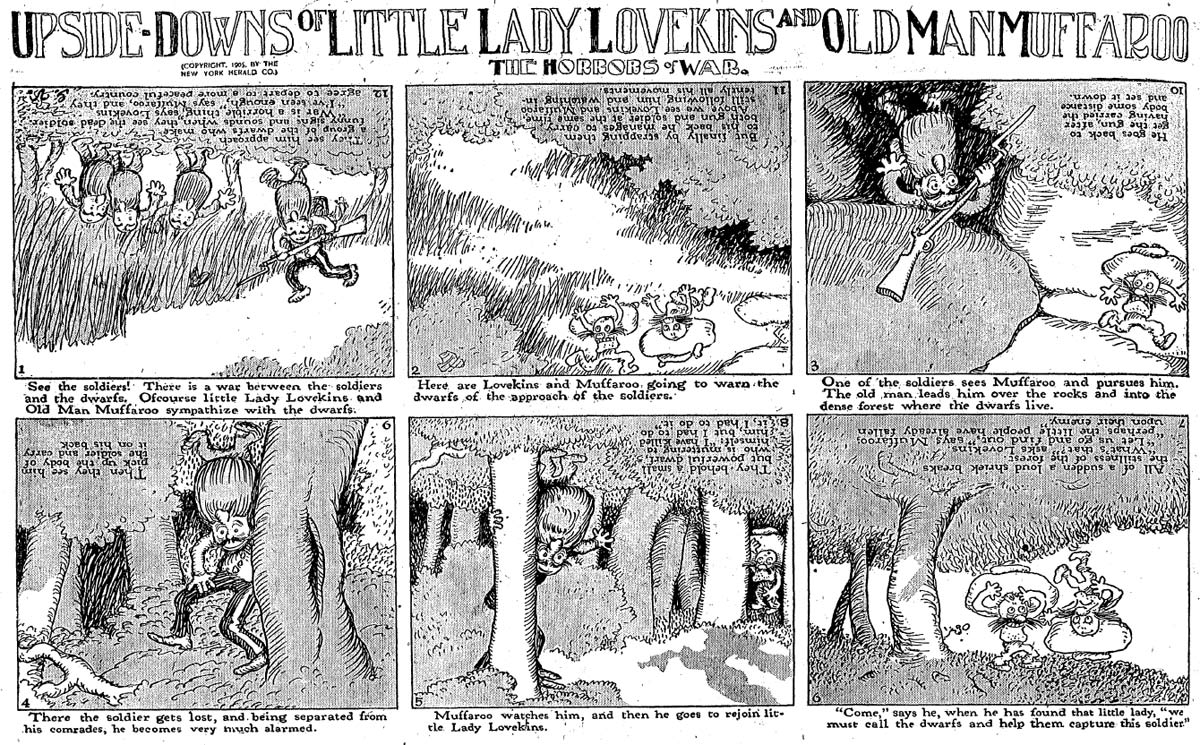
While the new Nonsense writers and illustrators stressed their protagonists’ cuteness, most explicitly perhaps in Newell’s wildly successful Pictures and Rhymes (1900), in the Upside-Downs and The Terrors of the Tiny Tads the recurrent, unjustified violence is reminiscent of Victorian Nonsense, whose most memorable characters ― Carroll’s Humpty Dumpty, for instance, or Lear’s oppressive “they” ― were often antagonistic and unpleasant. The pranks featured in many of the early comics often involve aggressive behaviour, but never bloodshed as in the “Horrors of War” episode of the Upside-Downs (January 15, 1905).
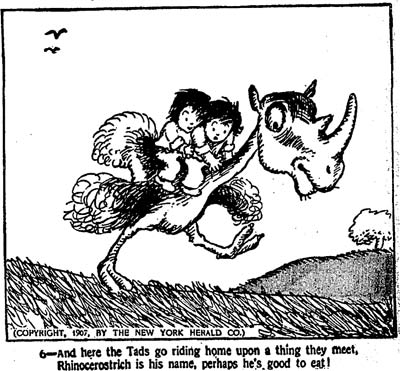
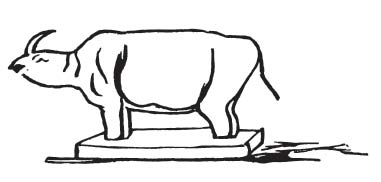
Just as Lear’s “they” do not hesitate to “smash” the “Old Man” who danced a quadrille with a raven, the Tads are always happy to kill and feed on the animals they meet, even when they are not threatening. The unfortunate destiny of the Rhinocerostrich (June 16, 1907), who takes them home only to be eaten, is remarkably similar to that of the equally helpful rhino in Lear’s “Four Children Who Went Round the World:” they, “in token of their grateful adherence, had him killed and stuffed directly.”
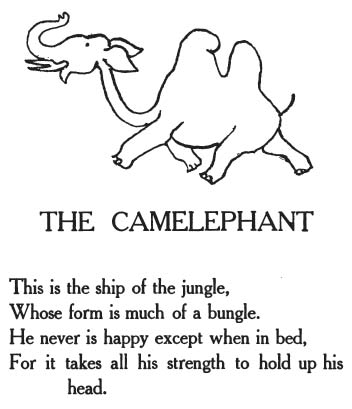
Verbeek’s captions ― like Lear’s and Carroll’s language ― are very explicit in their uncanny terseness, the Tads hunt an inoffensive Camelephant (January 5, 1908): “Bang, bang! and bang! and bang, again! He’s dead as he can be! / And now they chop him into bits and make a fricassee”.
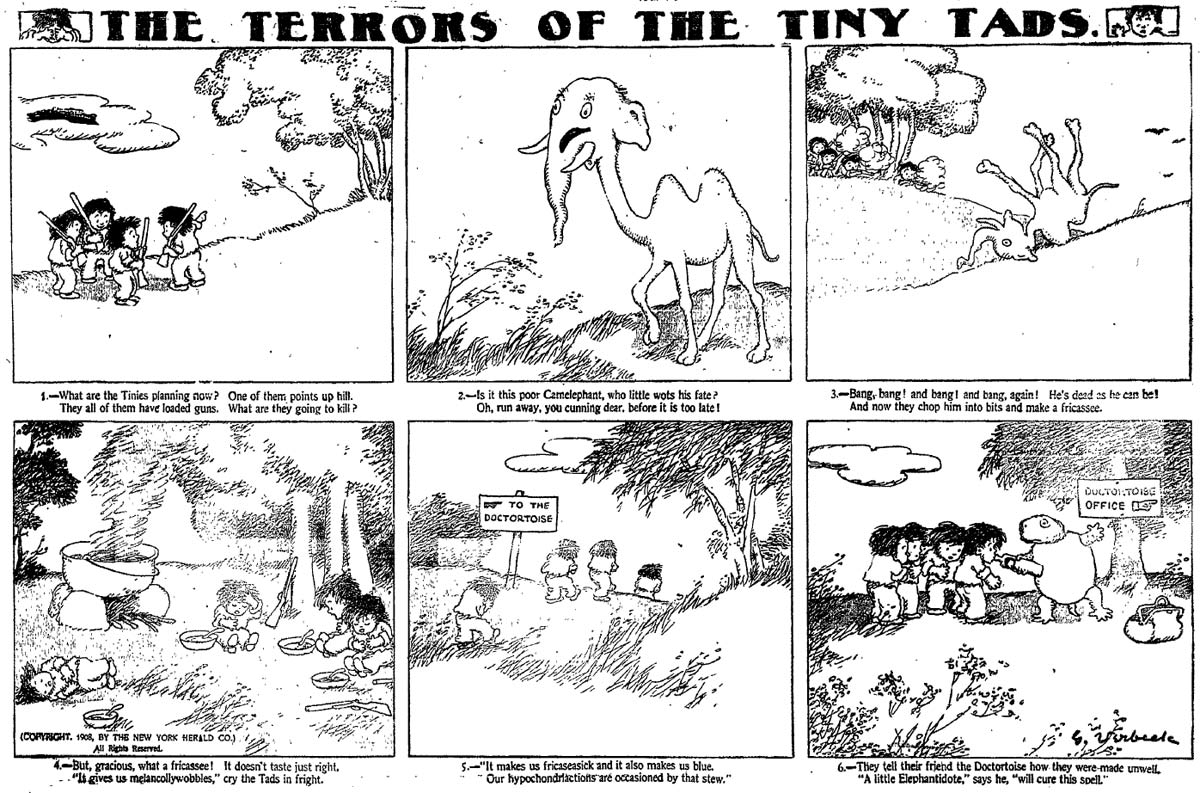
These “jumbled beasts” ― the real protagonists, given the Tads’ lack of personality ― descend from the linguistic inventions in Lear’s “Nonsense Botanies” and Carroll’s Through the Looking-Glass (1872): chapter 2, “Looking-Glass Insects,” with its verbal hybrids illustrated by Tenniel, is Verbeek’s ultimate source, probably filtered through Kenyon Cox’s Mixed Beasts (1904), where several of the Tads’ creatures ― the camelephant itself, for instance ― make their first appearance.
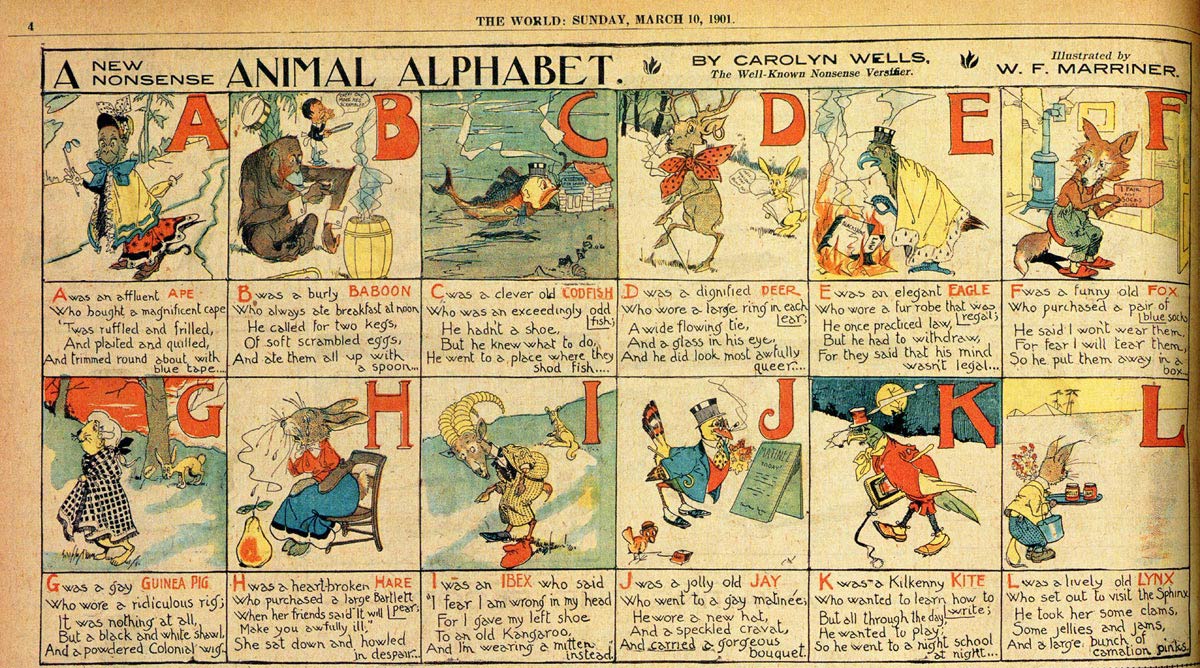
Verbeek had also contributed to Carolyn Wells’s Folly for the Wise (1904) which included a section entitled “Compound Zoology,” in which animals such as the “Mint-Julepard” and the “Neck-Tiger” were described in short poems, mostly limericks. The five-line poem appeared regularly in the comic supplements: Wells herself had published a New Animal Alphabet in the World (1901); the idea had been used, among others, by DeVoss Driscoll in his stylish Animal Antics (1903-04) and applied to fantastic creatures by J.P. Benson in The Woozlebeasts (1904-05).
In The Loony Lyrics of Lulu Verbeek took the single-panel association of limerick and animal and again placed it within a narrative frame: Lulu composes a limerick while her father unsuccessfully tries to capture the beast described in it ― the limerick, traditionally relegated to the captions, is moved into the balloons, which the artist brings back for the occasion.
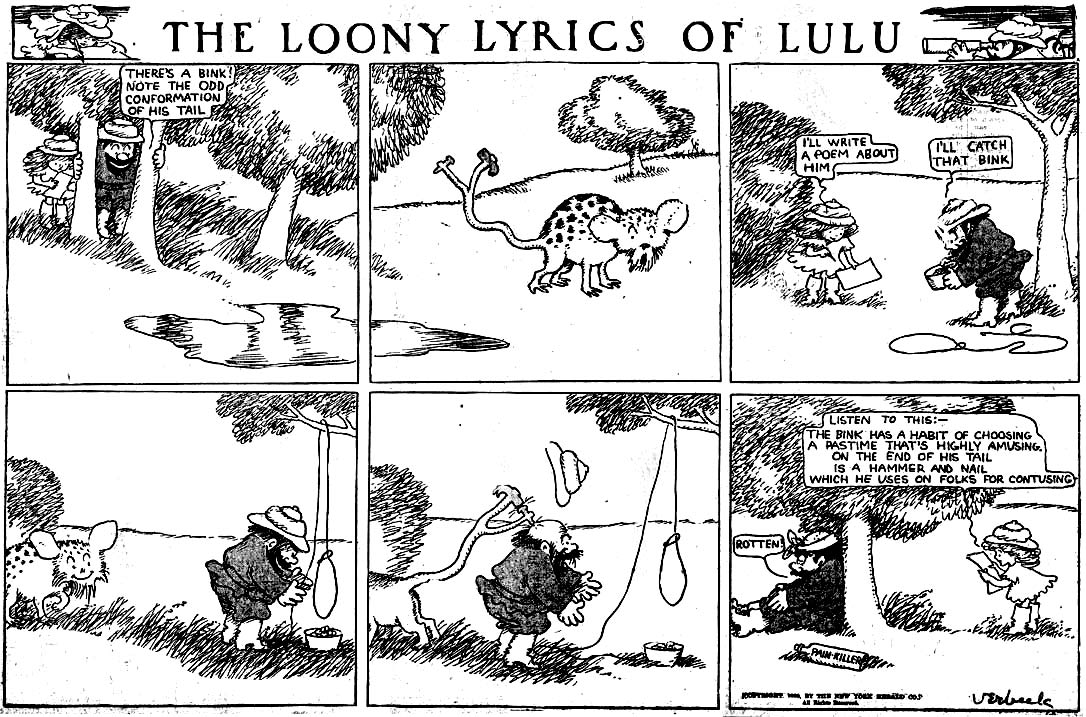
Lulu’s lyrics and the dialogue are delightfully incongruous but her adventures no longer contain the violent scenes of his earlier strips, the hunter is fooled but never seriously hurt. By 1910 the Tads themselves had evolved and their rounded, cutified figures had nothing in common with the wiry teenagers of the early episodes; they had even almost completely given up hunting. Times were changing and the disturbing experiments of Nonsense were no longer welcome in the comics: time for adventurous cartoonists to move on.




 A Blog of Bosh