JP Benson’s Woozlebeasts

wb_1904-09-11-col-s

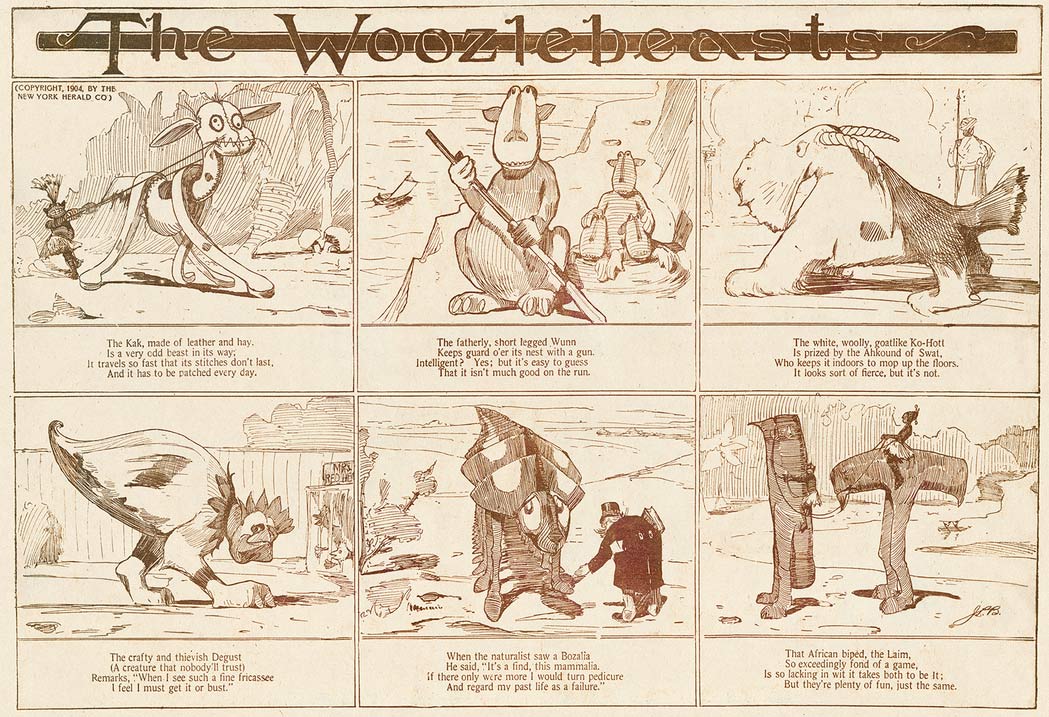
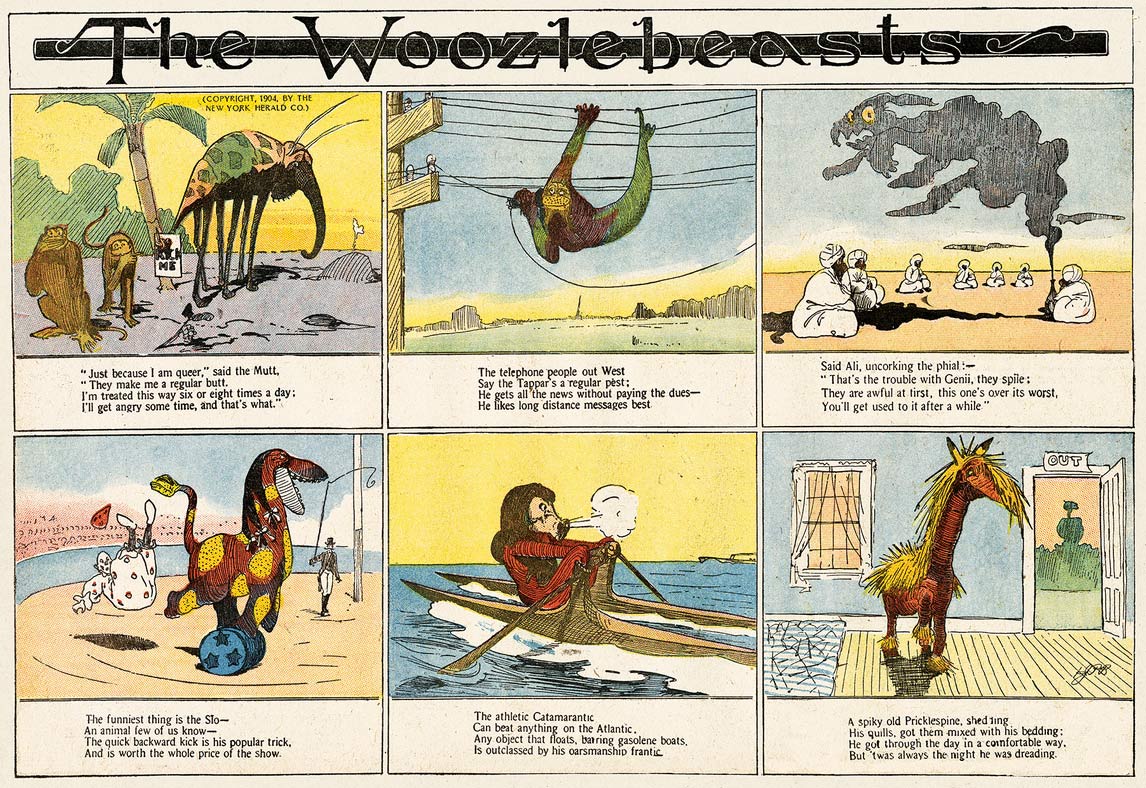
A rare example of a coloured Woozlebeasts strip by John Prentiss Benson (11 September 1904). On nonsenselit.org you will find the full run of the newspaper strips, in black and white, as well as the 1905 book published by Moffat, Yard & Co.

Below is another instalment (18 September 1904), as posted by Peter Maresca at Origins of the Sunday Comics: a blog presenting a new strip from the early days of newspaper comics every day.

wb_1904-09-18-s

Posted in Comics, Limerick | Tagged , , , | Leave a comment

Limericks!

A quick note on a few studies on the limerick I have read or re-read recently.

Scheepers, Christoph, et al. “Listening to Limericks: A Pupillometry Investigation of Perceivers’ Expectancy.” PLoS ONE 8.9 (2013): e74986.

The abstract appears to confirm what limerick lovers, at least those who appreciate the Nonsense kind, already know, i.e. that rhyme is the dominating parameter, but of course the essay says much more and deserves to be read in full:

What features of a poem make it captivating, and which cognitive mechanisms are sensitive to these features? We addressed these questions experimentally by measuring pupillary responses of 40 participants who listened to a series of Limericks. The Limericks ended with either a semantic, syntactic, rhyme or metric violation. Compared to a control condition without violations, only the rhyme violation condition induced a reliable pupillary response. An anomaly-rating study on the same stimuli showed that all violations were reliably detectable relative to the control condition, but the anomaly induced by rhyme violations was perceived as most severe. Together, our data suggest that rhyme violations in Limericks may induce an emotional response beyond mere anomaly detection.

In a similarly scientific perspective, limericks are mathematically analysed by Kevin Jones in “Self-similar syncopations: Fibonacci, L-systems, limericks and ragtime” (2000), and you can read comments on the essay here. Do you want to know what a real Fibonacci poem (or Fib) looks (or sounds) like? Read this short description.

“How Come the Translation of a Limerick Can Have Four Lines (Or Can It?)” is the captivating title of Gideon Toury’s 1999 article from Word, Text, Translation: Liber Amicorum for Peter Newmark, eds Gunilla Anderman & Margaret Rogers. Clevedon etc.: Multilingual Matters, 1999, 163-174.

Bob Turvey has published two interesting articles on the fortune of the form:

“Kipling and the Limerick.” Kipling Journal 77 (2003): 8-20.

“The Limericks of Algernon Swinburne.” The Journal of Pre-Raphaelite Studies 20 (2011): 63-72.

If you enjoy this kind of thing, here is the umpteenth rewriting of Lear’s “nonsense rhymes;” one advantage is that much of it can be read on Google Books: Edward Lear and My Father. Compiled by Barbara Whitehead. Bloomington: Author’s House, 2014.

More original is Jim Puder’s attempt to rewrite some of Lewis Carroll’s poems as limericks in “The Forgone Limericks of Lewis Carroll.” Word Ways 44.1 (2011). I posted the four original Carroll limericks and a short note here. Puder’s article asks, but does not answer, the right questions:

Why did Carroll publish no limericks as an adult? Did he fear that if he did, he might be seen as trying to emulate Lear? Or had he simply come to regard the limerick as being too hackneyed a verse form to have any artistic currency? The question is an intriguing one, but the focus of this article is upon another speculation of likely interest to limerick devotees, namely this: supposing that the adult Carroll had produced limericks for publication, what might they have looked like?

Another Carroll limerick I had never seen is also presented:

Happily for posterity, Carroll did inadvertently bequeath to it one limerick penned in adulthood. In books and other items given by him as gifts, he was in the habit of inscribing short poems to the recipient, among which may be found this undated verse addressed to a Miss Vera Beringer:

THERE was a young lady of station,
‘I love man’ was her sole exclamation;
But when men cried, ‘You flatter,’
She replied, ‘Oh! no matter,
Isle of Man is the true explanation.’

Posted in Limerick | Tagged , | 1 Comment

Tolkien’s Nevbosh Limerick

From Joan Acocella’s “Slaying Monsters,” in The New Yorker for 2 June 2014, a review of the recently published translation of Beowulf by J.R.R. Tolkien:

Tolkien was a serious philologist from the time he was a child. He and his cousin Mary had a private language, Nevbosh, and wrote limericks in it. One of their efforts went:

Dar fys ma vel gom co palt “Hoc
Pys go iskili far maino woc?
Pro si go fys do roc de
Do cat ym maino bocte
De volt fact soc ma taimful gyroc!”

(“There was an old man who said ‘How / Can I possibly carry my cow? / For if I were to ask it /To get in my basket / It would make such a terrible row!’ ”)

According to Michael D.C. Drout’s J.R.R. Tolkien Encyclopedia: Scholarship and Critical Assessment, New York: Routledge, 2007 p. 222:

Tolkien, with his cousin Mary Incledon, disguised French, English and Latin to create Nevbosh, or the New Nonsense, in which they wrote limericks.

It seems that this was not the first invented language Tolkien used since, according to this page which also provides a “Nevbosh Wordlist,” it came after Mary and Majorie Incledon’s Animalic, which he learnt.

The full story is told by Arne Zettersten in J.R.R. Tolkien’s Double Worlds and Creative Process: Language and Life. New York: Palgrave Macmillan, 2011, pp. 70-71:

The two cousins [Mary and Marjory Incledon] had already begun to construct a simple private language, which they called Animalic. Mary and Ronald continued to work on new inventions of words and the result was a completely new language, which was more advanced, and which they calle Nevbosh, or New Nonsense. Unfortunately, there is not much left of Nevbosh except a limerick, which is recorded in Tolkien’s essay, “A Secret Vice,” from 1931.
…
Tolkien points out in his essay that Nevbosh is mainly based on English, but that many words are changed or distorted. The creators of Nevbosh, Mary and Ronald, were children, without any conscious knowledge of the relations between sounds and concepts in language…
Tolkien also states in his essay that the dominance of English in Nevbosh might give the impression of being a “code.” He does not find this type of language interesting, but languages that are unrelated to traditional languages or school languages stimulate a deeper interest in him.

And on page 72 of the same book, in the context of a discussion of a picture letter, another Tolkien limerick is presented:

Tolkien also engaged in constructed alphabets during his school period. These had code symbols that corresponded to every letter in the english alphabet. A code letter from August 8, 1904 from Ronald to Father Francis survives in the Tolkien Collection at the Bodleian Library…
The letter ends with the following limerick to Father Francis:

There was an old priest named Francis
Who was fond of “cheefongy” dances
That he sat up too late
And worried his pate
Arranging these Frenchified Prances.

Posted in Limerick, Nonsense Lyrics | Tagged , , , | Leave a comment

Edward Lear, Philae

EL_Philae-s

Edward Lear, Philae.
Signed with monogram (lower right). Oil on paper laid down on canvas. 13 3/8 x 21 ¼ in. (34 x 54 cm.)

Lear visited Philae twice, in late January and early February 1854 and in January 1867.

Christie’s.

Posted in Edward Lear | Tagged , , , , | 1 Comment

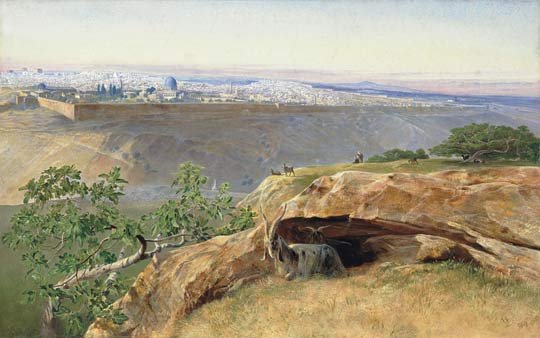
Edward Lear, Jerusalem Looking North West (1859)

EL_Jerusalem-s

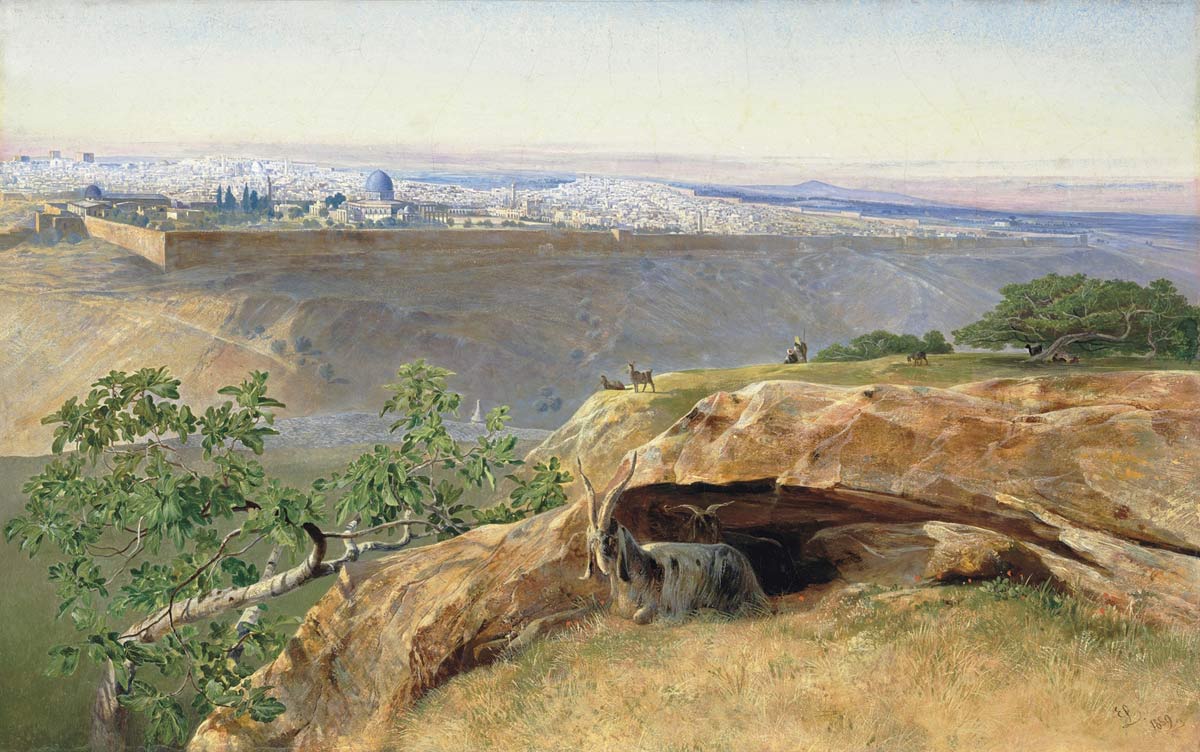
Edward Lear, Jerusalem looking North West.
Signed with monogram and dated ‘EL /1859’ (lower right) and inscribed ‘Jerusalem looking North West’ (on the stretcher) and with inscription ‘Jerusalem looking North West/Painted by Edward Lear from drawings/made there in 1858 for Lord Clermont/Edward Lear 1858 9’ (on a label attached to the reverse). Oil on canvas. 18 ½ x 29 ¾ in. (47 x 75.5 cm.)

This is one of four oil paintings of Jerusalem painted in the immediate aftermath of Lear’s visit there in 1858. It has rarely been on public display. Its south-east viewpoint differs from the north-east position from which the three others were taken. These three were made for Lady Waldegrave (Christie’s, London, 29 July 1977, lot 174); Sir James Reid (Christie’s, New York, 26 January 2011, lot 61) and Bernard Husey-Hunt (Strachey, op. cit., 1907, nos. 148, 149, 152). Some years later, in 1865, a commission from Samuel Price Edwards resulted in the largest of his paintings of Jerusalem (Strachey, op. cit., 1907, no. 218; Ashmolean Museum, Oxford).

Jerusalem, with its powerful biblical associations, was the goal of many artist-travellers to the Near East in the 19th century. Edward Lear, aware of the particular veneration in which the city was held, wrote as early as 1848 of his desire to visit it: ‘How I wish someone would pay my way to Palestine; I should like to see Jerusalem of all things’. After two earlier attempts had failed, his journey was eventually enabled by a commission from Lady Waldegrave, one of the most loyal of his patrons. He reached the city on 27 March 1858, and the next day, Palm Sunday, explored the country immediately outside the walls: ‘We crossed the Kidron & and went up the Mount of Olives – every step bringing fresh beauty to the city uprising behind’ (Lear’s Diary, 28 March 1858, cited in V. Noakes, 1985, p. 149). The city was crowded with Easter pilgrims however – ‘the universal hubbub throughout the place prevents any quiet plan or reasoning’ (Letter to Ann, 30 March 1858, cited in V. Noakes, Edward Lear: The Life of a Wanderer, London, 1979, p. 155) – and he decided to continue his journey south to Petra.

Returning to Jerusalem on 20 April, Lear set about gathering sketches for Lady Waldegrave’s painting, bewildered by the ‘endless histories & poetries’ that the landscape evoked. He had difficulty finding a suitable position outside the city from which to make his sketches but eventually ‘stumbled on an oblique North-East view’. He pitched his tent on the Mount of Olives and spent a fortnight studying every detail of the view, also obtaining photographs to use for later reference. Such painstaking attention to detail emulated the efforts and some of the Pre-Raphaelite methods of his friends William Holman Hunt and Thomas Seddon who, four years earlier, had spent several months camped outside the city.

From this point, as he explained to Lady Waldegrave, could be seen ‘the site of the temple & the 2 domes, – and it shews the ravine of the valley of Jehoshaphat, on which the city looks: – and Absalom’s pillar – (- if so be it is his pillar – ) the village of Siloam, part of Aceldama, & Gethsemane are all included in the landscape. … add to all of which there is an unlimited foreground of figs, olives, & pomegranates, not to speak of goats, sheep & huming beings …’ (Noakes, 1988, p. 151). Although some way further to the South, the present view includes many of the same features, but by placing particular emphasis on the fig-tree and goats in the foreground, Lear enhances its interest. Its lower and closer viewpoint also enables parts of the city to be seen with greater clarity. The contrast between local detail and the wider landscape is further emphasised by the soft afternoon light, throwing the rocky terrain of the foreground into relief against the valley and the city beyond.

Lear took great pains with both this and the commission for Lady Waldegrave, and was rewarded by the appreciation of his patrons, writing later to his friend Chichester Fortescue (soon to be Lady Waldegrave’s husband): ‘I delight in the knowledge of Lord & Lady Clermont constantly enjoying my pictures: – they are a placid duck-like couple…’ (16 February 1862, Strachey, op. cit., 1907, p.227). Thomas Fortescue, 1st Baron Clermont (1815-1887) was Chichester Fortescue’s elder brother, and owned three further paintings by Lear.

We are grateful to Briony Llewellyn for providing this catalogue entry.

Christie’s.
Posted in Edward Lear | Tagged , , , , | 2 Comments

Edible Clothes Redux

When I posted two of George Cruikshank’s caricatures which might have inspired Edward Lear in writing “The New Vestments” I forgot to link to this great article on Lear’s poem by Carol Rumens in the Guardian of 30 December 2013: Edward Lear’s The New Vestments: the artistry of an extraordinary suit.

Posted in Edward Lear | Tagged , , , | Leave a comment

Edward Lear, View of Florence (1861)

EL_Florence-s


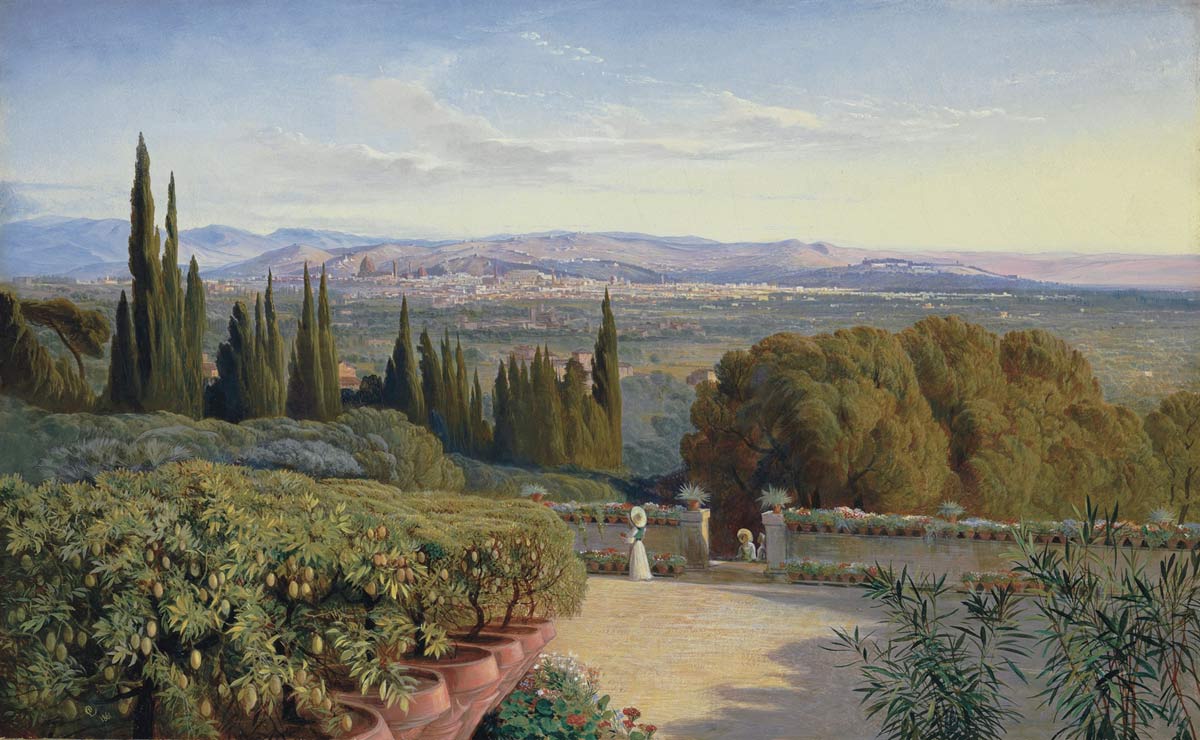
Edward Lear, View of Florence from Villa Petraja.
Signed with monogram and dated ‘EL /1861’ (lower left). Oil on canvas. 18 ½ x 29 ¾ in. (47 x 75.5 cm.)

‘At present I am at work ferociously on the Petraja & I must say it promises well. I worked on the large lemon trees in pots all yesterday, & to-day must fidget over the houses all the long hours. No life is more shocking to me than the sitting motionless like a petrified gorilla as to my body & limbs hour after hour – my hand meanwhile, reck peck pecking at billions of little dots & lines, while my mind is fretting & fuming, through every moment of the weary days work.’ Lear’s letter to his friend Chichester Fortescue, written on 29 August 1861, reports on his progress with his painting of Florence from Villa Petraja. It expresses, with the typically quirky humour for which he is widely known, the painstaking efforts with which he strove to complete his oil paintings to the satisfaction of his clients. By late September he had ‘made the view from Villa Petraja all but a reality’ and by 12 October it was finished (L.E.L., 1907, pp. 189, 196, 199).

The painting of Florence from the gardens of the celebrated Medici Villa La Petraja had been commissioned by the prominent whig-Liberal political hostess Frances, Countess Waldegrave (1821-1879), a staunch supporter of Lear’s and for whom he made six other paintings (including Jerusalem from the Mount of Olives, Sunset, see lot 9). Then married to the elderly but well-connected George Harcourt, she was surrounded by younger admirers and the particular focus of the affections of Chichester Fortescue, who had introduced her to Lear.

Lear was in need of change after the death of his beloved eldest sister Ann, who had been a substitute mother to him since his early childhood, and he welcomed the opportunity to travel to Italy. Reaching Florence on 8 June 1861, he spent the rest of that month making sketches, writing in colourful terms to William Holman Hunt: ‘Plumpudding – treacle, weddingcake, sugar, barleysugar, sugar candy, raisins & peppermint drops would not make a more luscious mixture in the culinary world, than Florence & its Val d’Arno does as Landscape’ (cited in V. Noakes, 1979, p. 184). Evidently he had a sweet tooth, as his diary records ‘the usual four ices’ eaten on his way home (cited in P. Levi, 2013, p. 183). Lear had long admired Holman Hunt and had spent a summer in 1852 at Clive Vale Farm near Hastings watching him paint. Although Lear was no longer painting in the open air by the early 1860s, his Villa Petraja has Pre-Raphaelite resonances, particularly in the attention to naturalistic detail in the foreground. This emphasis on local colour often presented him with a problem of transition between near and far in his landscapes, but Lear resolves it here with a weighty bank of trees in the middle ground, providing a magnificent foil to the campaniles and domes of the distant city.

Lady Waldegrave was pleased with the painting and when Lear wrote to her with his condolences after the death of her husband he expressed his pleasure that she now had the picture ‘of Petraja where you so lately were together…. It seems to me that in converting memories into tangible facts, recollections & past time as it were into pictures, lies the chief use & charm of a painter’s life’ (5 January 1862, L.E.L., 1907, p. 216).

We are grateful to Briony Llewellyn for providing this catalogue entry.

Christie’s.
Posted in Edward Lear | Tagged , , , | Leave a comment

Edward Lear, Anadoluhisari (1848)

EL_Bosphorus-s

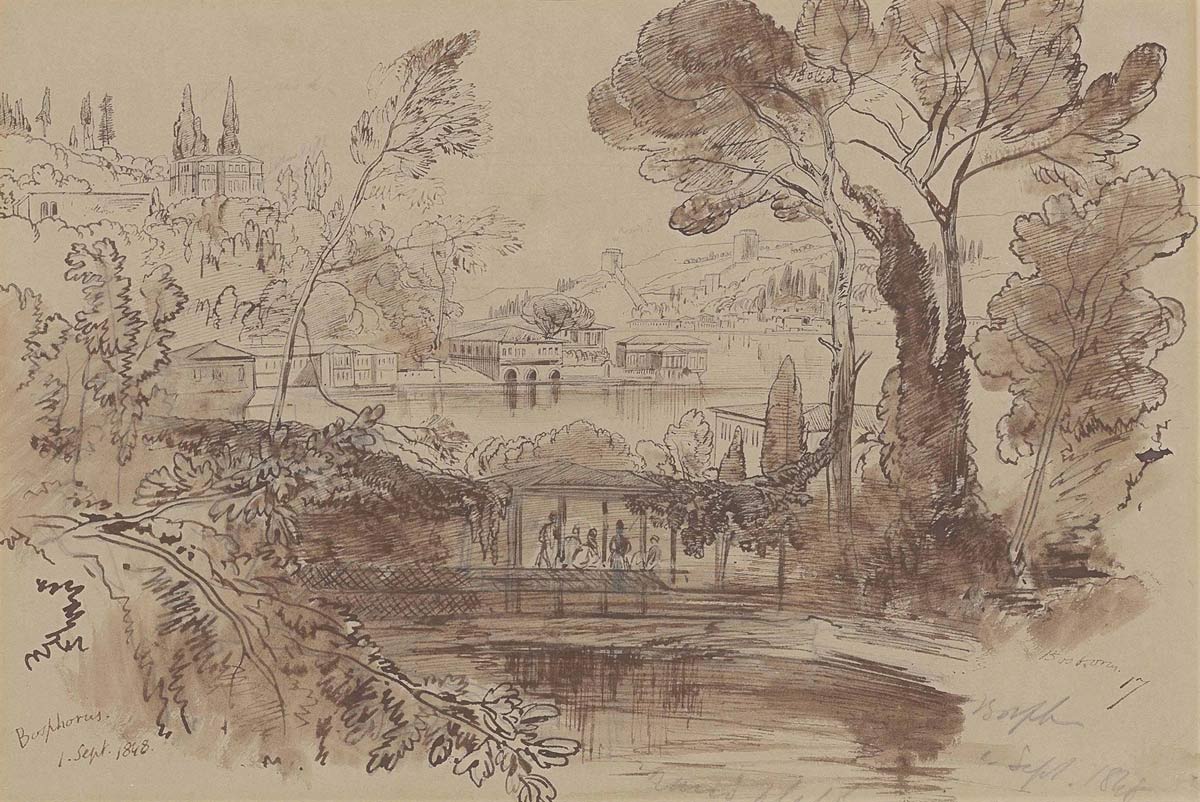
Edward Lear, Anadoluhisari, Istanbul, on the Bosphorus.
Inscribed and dated ‘Bosphorus./1. Sept. 1848′ (lower left) and again in pencil (lower right) and numbered ’17’ (lower right) and further inscribed with colour notes. Pencil, pen and brown ink and brown wash on paper. 10 ¾ x 14 in. (27.4 x 35.4 cm.)

Lear visited Constantinople in 1848 as the guest of Lady Canning, the wife of the British Ambassador in Turkey, setting off from Corfu with the Cannings on 30 May 1848 and travelling by way of Athens where he fell ill. Anadoluhisari is the fortress on the Anatolian side of the Bosphorus and gives its name to the Quarter around it. It was built between 1393 and 1394 by Ottoman Sultan Bayezid as part of the preparations for the 2nd Ottoman Seige of Constantinople which took place in 1395. It is the oldest architectural structure in Istanbul.

Christie’s.

Posted in Edward Lear | Tagged , , | Leave a comment

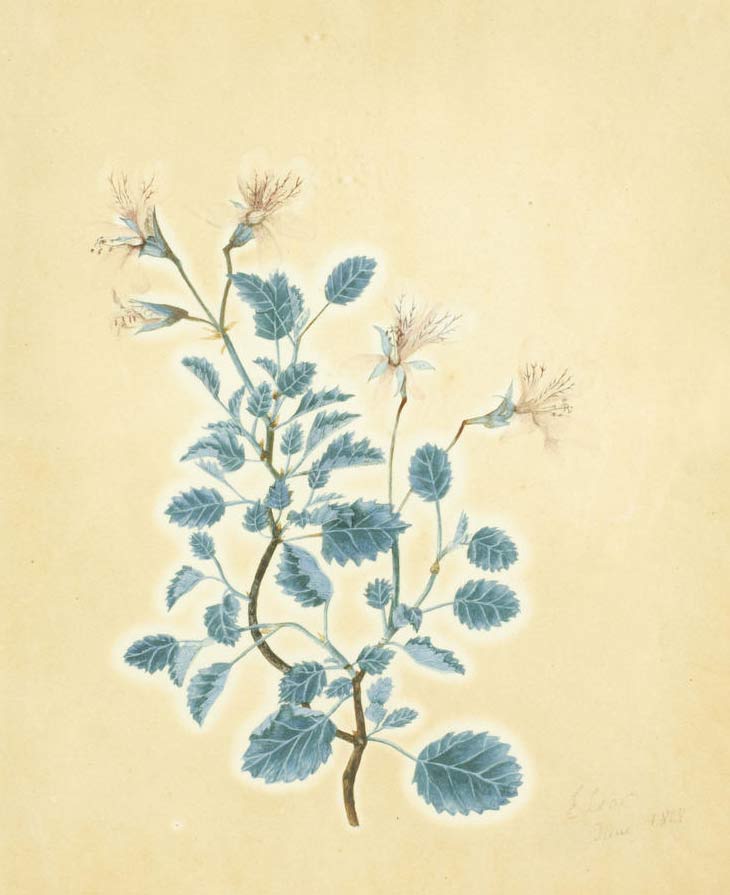
An Early Botanical Study by Edward Lear

el-bot-s

Edward Lear, An early botanical study.
Signed and dated “June 1828.”

To be auctioned at Bonham’s.

Posted in Edward Lear | Tagged , , | Leave a comment

An Edward Lear Society, at Last

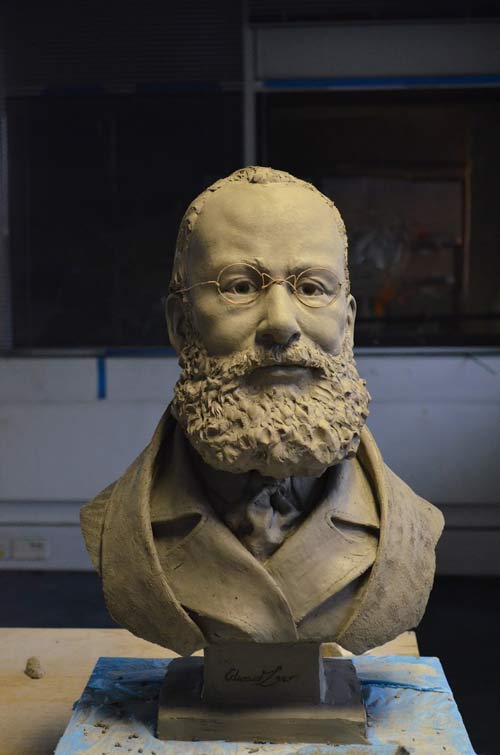
After a long incubation, I first heard about plans for it about two years ago, I am pleased to announce that the Edward Lear Society has finally seen the light of day with a very nice website, where you will find information on Edward Lear and the society itself: here is the form to become a member, with previews of the society’s initiatives.

Click on the picture for more images of the bust.

Click on the picture for more images of the bust.

Mr Derek Johns, one of the founding members, also e-mailed me to report on the first event:

Last Friday evening [30 May 2014]‎ at the Anagnostiki Reading room in Corfu,  the bronze bust of Edward Lear was unveiled after opening speeches by George Poulimenou of the Committee, Spiro Flamburiari and a short lecture on the life and artistic works of Lear by myself. The evening finished with a song cycle of works by the Corfiot composer Napoleon Lambelet whose fame was greater in London and especially at the Coliseum,  then in Corfu sung by the leading Soprano on the island Rosa Cappon. She finished the evening off with a rendition of Edward Lear’s the Owl and the Pussycat. Approximately 120 people attended this special evening.

Posted in Edward Lear | Tagged , , , | 2 Comments