An English exercise book from his junior year at Quarry Bank—neatly covered in brown paper and titled MY ANTHOLOGY—demonstrates what pains he [John Lennon] would take if his enthusiasm were aroused. Quotations from classic poems like Longfellow’s Song of Hiawatha and Tennyson’s “Morte d’Arthur” are framed by watercolor cartoons showing a remarkable maturity of line and grasp of perspective as well as their unmistakable scatty humor. Porky kept the book to show future generations of juniors the standard they should aim for.
Two comic artists, one British, one American, were to have a profound influence on John’s style. He loved the intricate, scratchy technique of Ronald Searle, whose sadistic St. Trinian’s schoolgirls were modeled on Searle’s guards as a Japanese prisoner of war in Burma. And, thanks to Aunt Mimi, he became a devotee of James Thurber, both the writings for The New Yorker and the cartoons, whose surreally wavering lines were a product of Thurber’s own near-blindness. John later said he began consciously “Thurberising” his drawings from about the age of fifteen.
He kept a special exercise book for caricatures of his teachers and classmates, organized with a meticulous care that would have astonished Quarry Bank staff other than Porky Burrows. Pete Shotton (“A Simple Hairy Peters”) popped up repeatedly, with his pale curls and rosy face, shaking a baby’s rattle or peeping from a garbage can. There was even a portrait of the artist himself, wearing his hated National Health glasses and self-deprecatingly captioned “Simply A Simple Pimple Shortsighted John Wimple Lennon.” In this case, “Wimple” did not mean a medieval veil but was the name of a character in one of John’s favorite radio programs, Life with the Lyons.
The book was passed around among John’s cronies each time a new character was added to it. Harry Gooseman was once even allowed to take it home overnight to show to his family. John liked to regard it as a campaign of subversion that would bring authority’s direst wrath on his head if it were ever discovered. In fact, Quarry Bank’s teachers were no less sorely in need of some comic relief than the boys, and they tended to laugh just as loudly if they chanced to see his lampoons of them. One summer term, during preparations for the school’s fund-raising garden fête, he even found his subversion co-opted to official ends. Half facetiously he proposed decorating squares of card with caricatures of his teachers, then pinning them up for people to throw darts at—but to his amazement, the idea was accepted. The game attracted a large crowd and Shennon and Lotton were later commended for raising more money than any other stall, despite having kept back £16 of the take for themselves.
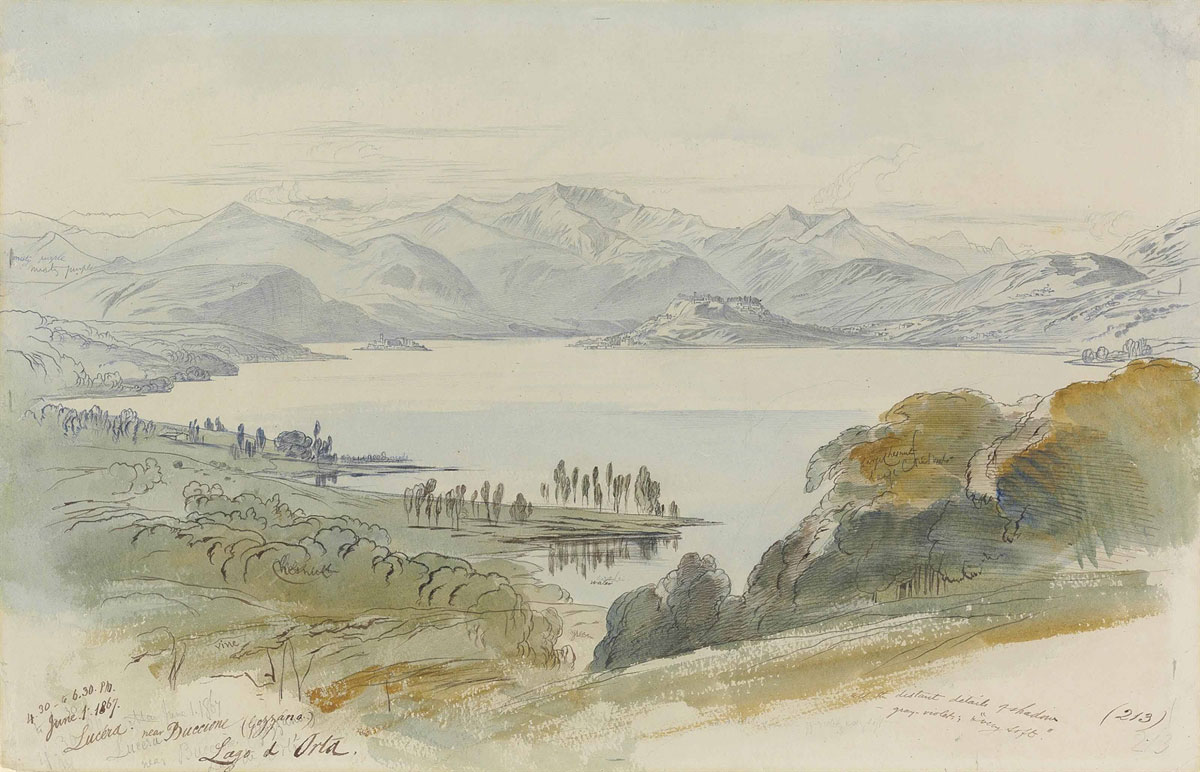
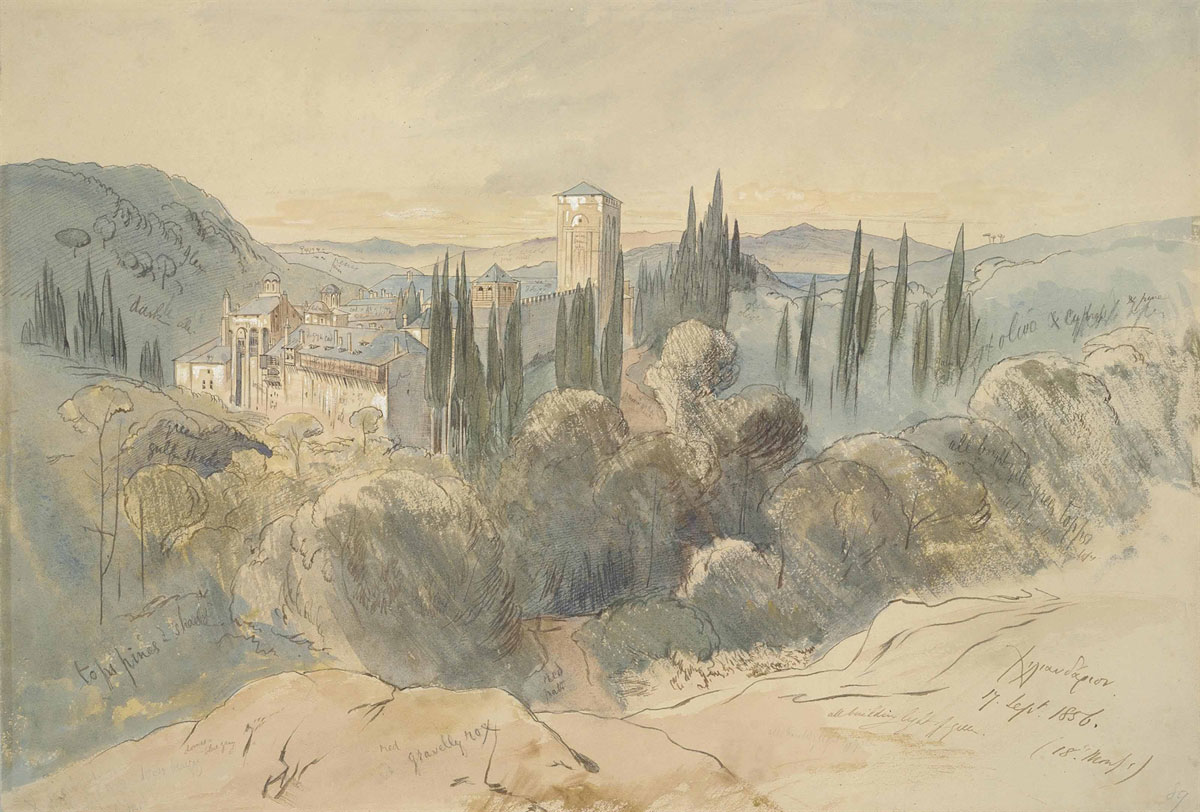
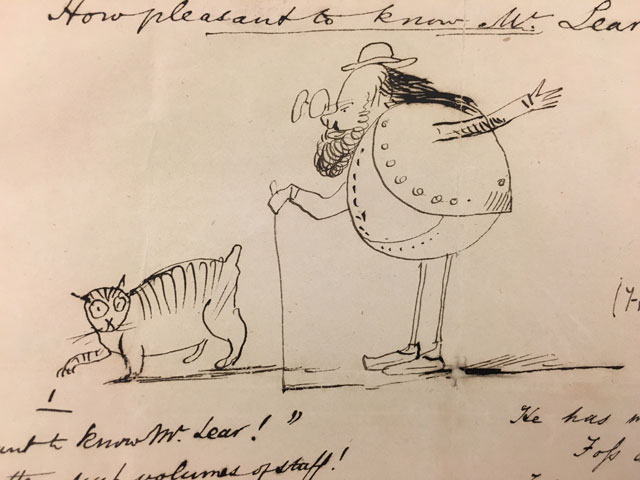
Even the po-faced early fifties had not quite extinguished a time-honored British trait, handed on from Lewis Carroll and Edward Lear to W. S. Gilbert and P. G. Wodehouse—that of using all one’s intelligence to be unbelievably silly. Until John reached his teens, he was like a prospector, panning through the drab shale of logic and common sense that constituted his daily life at Quarry Bank and Mendips for those few stray, gleaming nuggets of absurdity. The school library introduced him to Stephen Leacock, Canadian author of “nonsense novels” like Q: A Psychic Pstory of the Psupernatural and Sorrows of a Supersoul, or the Memoirs of Marie Mushenough (Translated out of the Original Russian by Machinery). Early children’s television programs featured occasional appearances by “Professor” Stanley Unwin, a pious-looking man who told fairy stories in innuendo-laced gibberish, such as “Goldiloppers and the Three Bearlodes.” English lessons at Quarry Bank provided an unexpected seam in the Middle English of Geoffrey Chaucer’s Canterbury Tales (“When that Aprille with his shoures soote…”) so often like Stanley Unwin speaking from the fourteenth century.
All this was mere marginalia, however, in comparison with The Goon Show, which had begun its first series on BBC radio in 1951 but hit full stride in 1953, the year of Queen Elizabeth II’s coronation. Scripted almost single-handedly by a sometime jazz musician named Spike Milligan, it superficially harked back to the Second World War (Goons had been Allied prisoners’ nickname for their German guards) and to a Conan Doyle-esque world of spies, intrigue, and derring-do. But in content, it was mold-breakingly anarchic, a mélange of demented voices and lunatic situations such as had never before been offered to a British audience, least of all on the sanctified airwaves of the BBC.
Together with a little-known variety comedian named Peter Sellers, Milligan created a gallery of characters who often seemed to have only the most nodding acquaintance with the human race—the decrepit Colonel Bloodnok, the quavery duo of Henry Crun and Minnie Bannister, the moronic Eccles, the supersmooth Grytpype-Thynne, the whining hermaphrodite Bluebottle. Embedded in the madness like hooks in blubber were jibes against previously inviolable national institutions such as the army, the church, the Foreign Office, and even the BBC itself (which the corporation, amazingly, never noticed).
The Goons’ most besotted fans were middle-class preadolescent schoolboys, those overserious war babies who had hitherto believed the oppressive sanity of life to be everlasting. For John, between 1953 and 1955, they were the brightest spot in his whole existence. Nothing could unstick him from the wireless on evenings when the cut-glass voice of announcer Wallace Greenslade presaged another Milligan free-form fantasy such as “Her” (a parody of H. Rider Haggard’s She) or “The Sinking of Westminster Pier,” featuring Minnie and Henry as oyster-sexers, with frantic musical interludes by Dutch harmonica player Max Geldray. John could do the voices and catchphrases of every character, from Minnie’s senile gurgle to Bluebottle’s scandalized shrieks of “I do not like dis game,” “Dirty, rotten swine!,” and “You deaded me!”
[…]
While interviewing him in late 1963, the American author Michael Braun had picked up some of the nonsense writing he still compulsively turned out in spare moments between composing, recording, and performing. Braun’s publishers were the old established house of Jonathan Cape, at that time being shaken up by a new young editorial director named Tom Maschler. When Braun happened to show him a selection of John’s output, Maschler instantly spotted a potential literary chart topper.
Rather than over the boozy lunch with which publishers traditionally woo prospective authors, he met John at a convention of the Beatles’ Southern Area Fan Club. The Beatles stood behind a metal grill while the fans lined up to pass autograph books and gifts through an aperture at the bottom. John was amazed that anyone, other than his old Mersey Beat mates, would want to publish his work. At the same time, he made Maschler feel rather foolish, as the publisher has recalled, “for taking his frivolity seriously.” A contract was drawn up through Brian Epstein, whom Maschler expected to demand some impossibly vast advance against royalties; instead, the sum agreed was just £10,000.
The backlog of poems, parodies, and playlets in John’s possession did not constitute enough for even the slimmest hardback book. He therefore had to buckle down to a new, unavoidable kind of homework as well as do more concentrated drawing than he had since leaving art college. Maschler acted as his editor, making regular trips to the Lennons’ flat in Emperor’s Gate. Though the place, in his recollection, always seemed “full of noisy children,” John took the consultations seriously and always found a quiet corner where they could work. One day, Maschler brought a new book on Cape’s list by the cartoonist Mel Calman, hoping that John might supply a quote for its jacket. John’s only comment was, “Why don’t you suggest he takes up the guitar?”
They finally settled on thirty-one pieces, illustrated by the same octopoid grotesques that had once populated Quarry Bank school’s “Daily Howl.” Through the blizzards of Goonery could be discerned pastiches of Enid Blyton’s Famous Five (“Gruddly pod, the train seemed to say…We’re off on our holidays….”) and Robert Louis Stevenson’s Treasure Island (featuring “Long John Saliver” and “Blind Jew”), even fragments of Bible-study inculcated by St. Peter’s Sunday School (“Yea, though I walk through the valet of thy shadowy hut I will feel no Norman….”)
Favorite targets cropped up everywhere and, in that pre-PC era, remained free of editorial blue penciling—Partly Dave, who “leapt off a bus like a burning spastic”; Eric, who “lost his job teaching spastics to dance”; Michael, who was “debb and duff and could not speeg”; the “coloured man,” who “danced by, eating a banana or somebody”; Little Bobby, whose “very fist was jopped off and he got a birthday hook.” There was even a description of a drug trip, still in the voice of an objective satirist: “All of a southern, I notice boils and girks sitting in hubbered lumps, smoking Hernia, taking Odeon and going very high. Somewhere 4ft high but he had Indian hump which he grew in his sleep….”
John drew up a list of possible titles, among them The Transistor Negro; Left Hand, Left Hand (a play on Osbert Sitwell’s autobiography, Left Hand, Right Hand, which he was probably the only pop musician to have read); and Stop One and Buy Me (ice cream carts in his boyhood used to carry the invitation Stop Me and Buy One). In the end, Maschler opted for the more straightforward John Lennon: In His Own Write. The book was produced in an elegant pocket hardcover format, designed by Robert Freeman, its dark blue cover showing John in his trademark cap. Paul McCartney contributed a foreword, affectionately recounting how he had first met the author, “drunk” at St. Peter’s Church fête.
The book was a simultaneous popular and critical triumph, selling out its first printing of fifty thousand copies on publication day, March 23, and spurring even the most highbrow reviewers to Beatlemania of their own. As a writer, John was compared with Lewis Carroll, Edward Lear, and James Joyce, and as an illustrator, with James Thurber and Paul Klee. The Times Literary Supplement, a separate publication from the daily Times and normally even stuffier, said In His Own Write was “worth the attention of anyone who fears for the impoverishment of the English language and of the British imagination.” In America, where it was published by another prestigious house, Simon & Schuster, equally high-flown comparisons gushed forth. Tom Wolfe, writing in Book World, called John a “genius savage” like Artemus Ward, Mark Twain, and Brendan Behan and, later in the same article, a “genius of the lower crust.”
As with song lyrics later, John firmly resisted all attempts to find classical literary influences or cerebral subtexts in his stories and verses, even where they were most obviously present. But he could not hide his pleasure at so resounding an independent achievement. “There’s a wonderful feeling about doing something successfully other than singing,” he admitted. “Up to now [the Beatles] have done everything together, and this is all my own work.”
The critiques that flooded in from every intellectual compass point even included one in Hansard, the daily official record of parliamentary debates. In the House of Commons, Charles Curran, Conservative MP for Uxbridge, read out three verses of “Deaf Ted, Danoota and Me” in support of an attack on current standards in state education. The author, Curran acknowledged, had “a feeling for words and storytelling” but was in “a state of pathetic near-literacy” comparable to H. G. Wells’s Mr. Polly. The Conservative member for Blackpool, Norman Miscampbell (his real name, not a John coinage), responded with a fellow northwesterner’s loyalty: “It is unfair to say that Lennon of the Beatles was not well educated. I cannot say which, but three of the four went to grammar school, and as a group are highly intelligent, highly articulate and highly engaging.”
As might be expected, John’s new status as a published author impressed his literary-minded Aunt Mimi more than all the Beatles’ musical triumphs put together, even if the book in question did consist of drawings and poems like those she once used to fling into the dustbin.
[…]
Following the success of In His Own Write, John had contracted with Tom Maschler at Jonathan Cape to produce a sequel for publication the following year. Having now used up all his student and Mersey Beat material, he had to start this second book from scratch, which gave the project an unpleasant flavor of school homework. To limber up, he began reading Chaucer, Edward Lear, and his other supposed stylistic influences, even making a stab at James Joyce’s nonsense epic, Finnegans Wake. “It was great, and I dug it and felt as though [Joyce] was an old friend,” he reported. “But I couldn’t make it right through the book.”
Cape duly received a further batch of prose, verse, and black-and-white illustrations, mostly wrought amid the splendor of his Kenwood den. However painfully extracted, the material this time was both more ambitious and funnier, with noticeably less schoolboyish harping on physical disability or race. “The Singularge Experience of Miss Anne Duffield,” featuring the great detective “Shamrock Wolmbs,” caught the authentic tone of a Conan Doyle Sherlock Holmes story as well as turning “Elementary my dear Watson” into “Ellafitzgerald, my dear Whopper” and “recuperated” into “minicoopered.” “Cassandle” was a well-observed parody of the Daily Mirror’s columnist W. F. Connor, aka Cassandra, even down to the line drawing of Connor that headed his column. A poem, “The Wumberlog (or The Magic Dog),” evidently inspired by Lewis Carroll’s “The Hunting of the Snark,” ran to seven printed pages.
There was a topical commentary on the “General Erection,” in which “Harrassed Wilsod” had defeated “Sir Alice Doubtless-Whom” (Sir Alec Douglas-Home, pronounced “Hume”) and the “Torchies” (Torchy the Battery Boy was a children’s television character) “by a very small marjorie.” No great faith in the new prime minister was evident, despite his generosity with MBEs: “We must not forget to put the clocks back when we all get bombed, Harold….” The book was called A Spaniard in the Works after another of its prose offerings, the story of Barcelover-born car mechanic Jesus El Pifco (a foretaste of larger sacrilege to come). The cover picture showed John in a cape and wide-brimmed Spanish hat, somewhat resembling the trademark for Sandeman’s Port. Lest the pun in the title should not be clear enough, his right hand flourished a large spanner.
British publication was on June 24, coincidentally just after a Beatles European tour that had included shows in two Spanish bullrings. To promote the book, John made the rounds of highbrow arts programs, both radio and television, often reading extracts as well as answering questions. He admitted that A Spaniard in the Works had been hard work of a very different kind from touring, songwriting, and recording. “I could only loosen up to it with a bottle of Johnnie Walker…. We [the Beatles] are disciplined but we don’t feel as though we are. I don’t mind being disciplined and not realising it.” Had he plans to try writing at greater length, say in a novel? “The Sherlock Holmes seemed like a novel to me, but it turned out to be six pages…. I couldn’t do it, you know. I get fed up. And I wrote so many characters in it, I forgot who they were.”
Philip Norman, John Lennon: The Life. New York: HarperCollins, 2009.