Edward Lear, Howara (1849)

Edard Lear, Near Ain Howara, Sinai Peninsula.
Extensively inscribed, dated ’19 January 1849, 4.30 pm’, pen and ink. 19.7 x 40.2 cm. (7 3/4 x 16 in.)

Lear’s first visited Egypt in January 1849, he spent a week in Cairo before setting out for Sinai, he travelled down the west coast of the Sinai peninsula before turning inland towards the mountains.

Bonahms.

Posted in Edward Lear | Tagged , , , , | Leave a comment

Why, How, and When to Write on Edward Lear

Matt Bevis, who has edited Edward Lear and the Play of Poetry with James Williams (now available in paperback), published several essays and posted lectures on Edward Lear (search for his name on the blog) has now published a personal memoir of writing on him for Poetry magazine: you can read “Some Birds” here.

Posted in Edward Lear | Tagged , , | Leave a comment

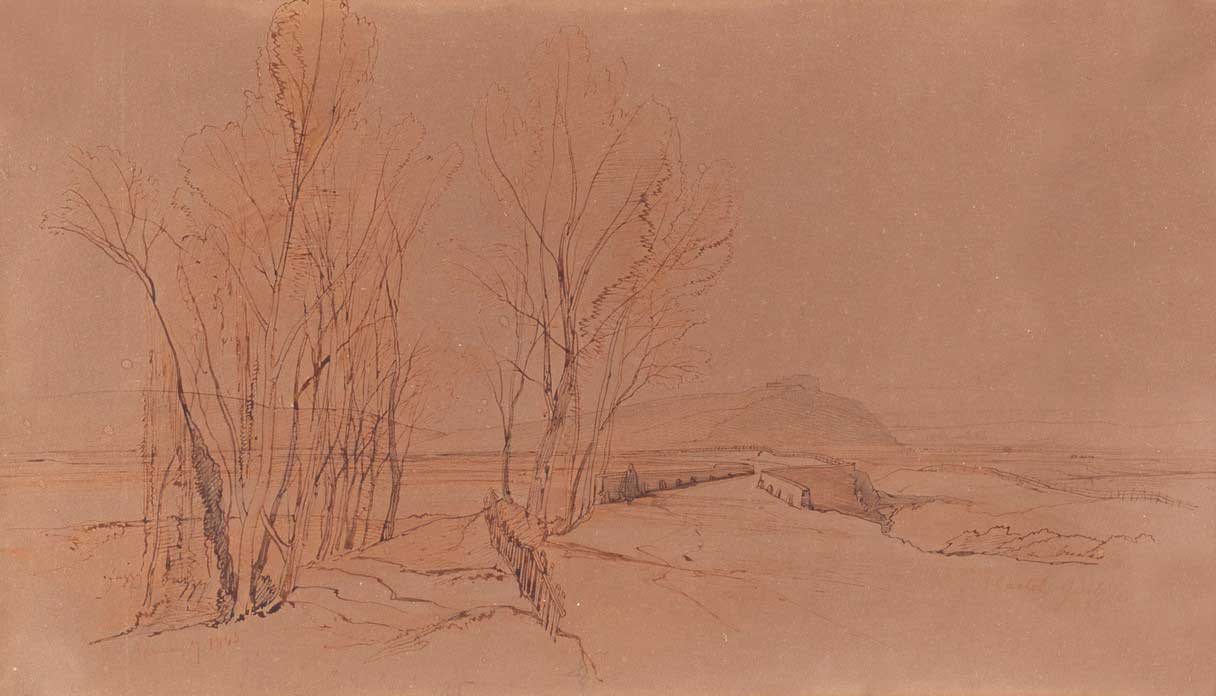
Edward Lear, Castel Giubileo (1845)

Edward Lear, Castel Giubileo.
Jan 7th 1845/brown ink, 21.5cm x 38cm.

“Castel Giulrile”, as it is called in the auction, does not exist as far as I know, while Castel Giubileo, which can be read even though not very clearly as it is written in pencil, is nowadays on the outskirts of Rome, the area where Lear was at the time.

The Saleroom.

Posted in Edward Lear | Tagged , , , | Leave a comment

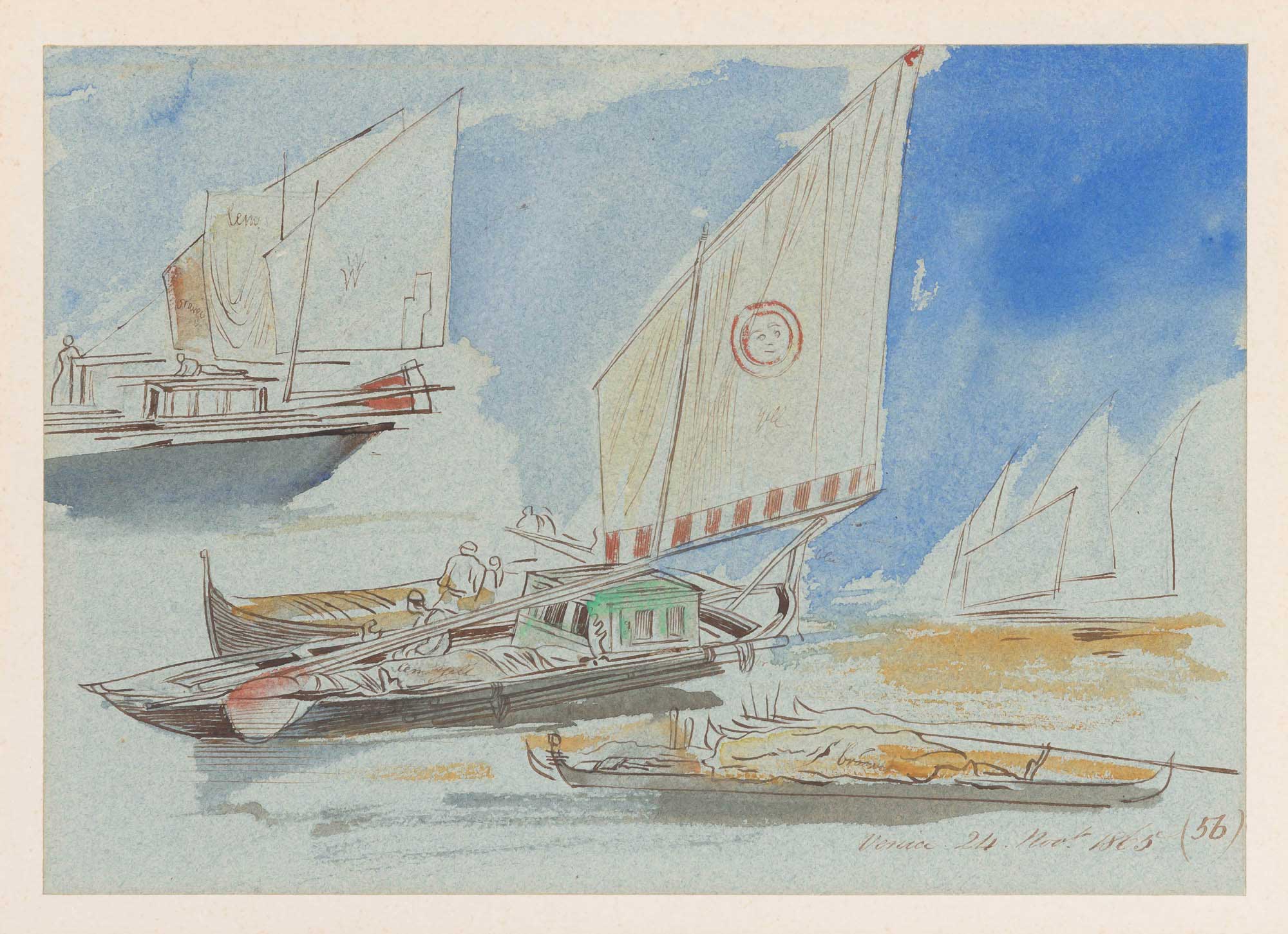
Edward Lear, Sailing Barges, Venice (1865)

Edward Lear, Sailing Berges, Venice, 1865.
Inscribed and dated Venice 24. Nov. 1865 (56) (lr). Ink, watercolor and gouache with traces of pencil on light blue/gray paper. 7 x 10 inches (17.8 x 25.4 cm).

Provenance
Thos. Agnew & Sons, Ltd., London, no. 29431

Doyle.

Posted in Edward Lear | Tagged , , , , | Leave a comment

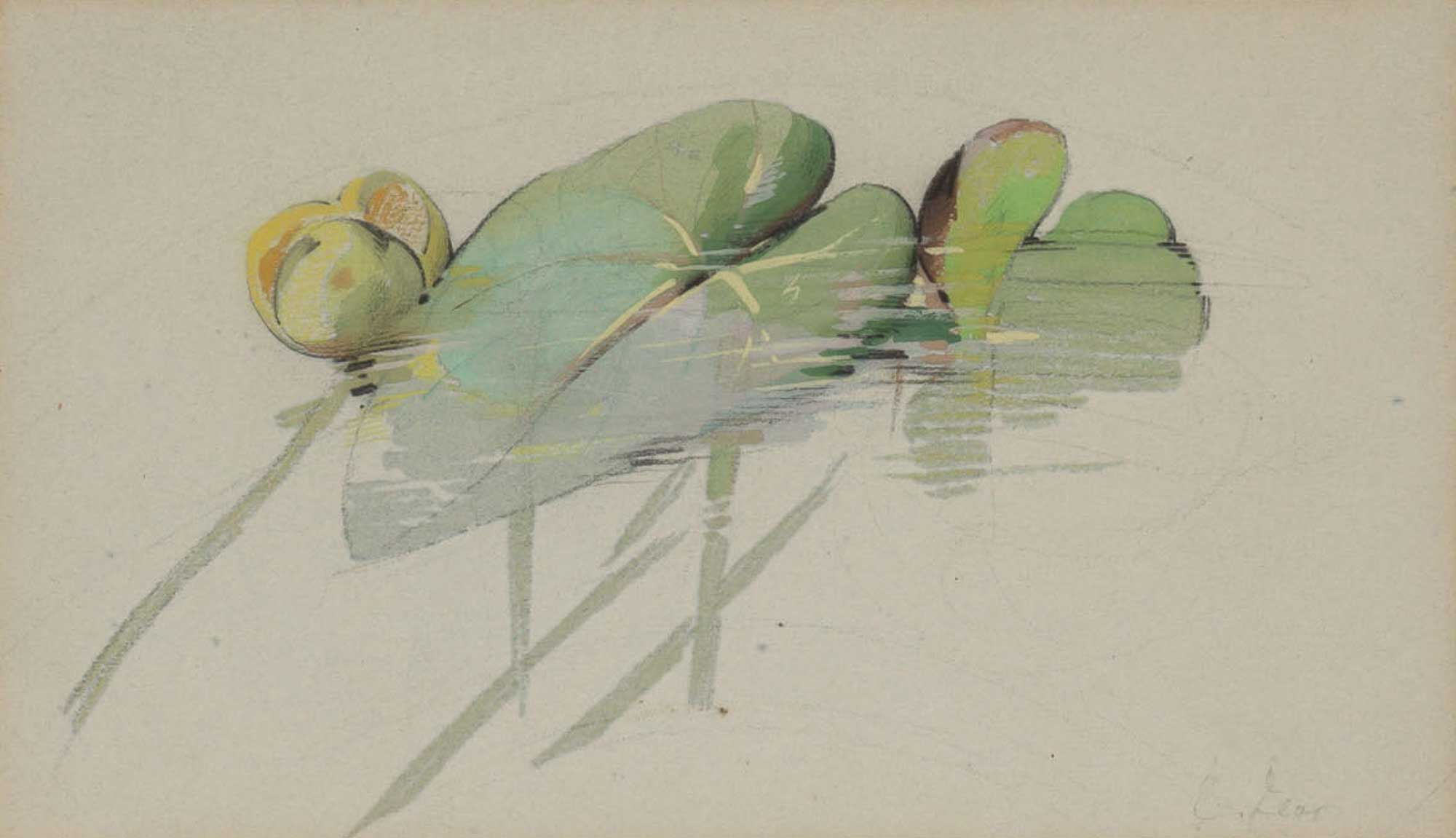
Edward Lear, Waterlily

Edward Lear, Study of a Waterlily.
Signed E. Lear (lr). Watercolor on paper. 5 7/8 x 10 1/8 inches.

Provenance
The Little Gallery, London
Ellinor Newsom, sister of the artist

Doyle.

Posted in Edward Lear | Tagged , , | Leave a comment

Edward Lear, Finale (1864)

Edward Lear, ‘Finale between Bologna and Modena, Italy.’
[Note: this is certainly not “Finale Emilia,” near where I live and with no harbour (no sea here, unfortunately!), it is certainly Finale Ligure, not far from Sanremo.]
Inscribed in ink lower left “Finale / 10.45 AM / 17 December 1864” and with the artist’s annotations in pencil and ink watercolour 17 x 51.5cm.

Provenance: The Leger Galleries, 13 Old Bond Street, London W1, October 1972.

The Saleroom.

Posted in Edward Lear | Tagged , , , , | Leave a comment

Edward Lear and the Dolnik

From: Derek Attridge. “Rhythm: Children’s Poetry and the Dolnik“. In The Aesthetics of Children’s Poetry. Ed. Katherine Wakely-Mulroney and Louise Joy. Routledge, 2017.

In what follows, I hope to show by means of a few examples both the ubiquity and the effectiveness of the dolnik, as the most immediately recognised and most memorable metrical form in English, acrosstwo hundred year of children’s poetry.

Dolnik verse, unlike its stricter cousins, thinks nothing of overriding natural speech patterns in favour of a strong, regular rhythm; skilful users of it ensure that the syntectic and lexical properties of the words in question are such that the suppression can happen without a sense of disruption or tension (except where this contributes to the effectiveness of the verse).

The suitability of _dolnik_ for longer narrative verse s demonstrated in two famous poems, Longfellow’s “Paul Revere’s Ride” and Robert Browning’s “The Pied Piper of Hamelin.” (The latter is a little freer in its versification but returns repeatedly to the regular form.) Both use rhyme extensively, though without falling into a regular scheme, and the metre helps to move the poems along at a rollicking pace. These two poems aim at dramatic intensity, but another kid of narrative aims at comedy, a genre for which dolnik verse, with its capacity for bouncy thythms and prominent rhymes, is eminently suited. One master of the comic dolnik was Edward Lear. Let us take part of the first stanza of “The Jumblies”:

On the page its metre looks fearsomely complicated, and an attempt to explain it in terms of classical feet comes up with a seemingly random mixture of iambs and anapaests. But to the native speaker of English, at any rate, the lines need non conscious metrical analysis in order to flow with a joyous, infectious, and entirely appropriate rhythm. Lear bases his long stanza on the traditional 4.3.4.3 form to provide an immediatelyt familiar framework, but gives it a delicious extension by adding a second full four-beat line before the final shorter line, thus creating a rhyming couplet where we might have expected a rhyme with the opening line. The lines I have omitted constitute another variation on th etraditional form: the realised beats occur in the long measure sequence 4.4.4.4, as the Jumblies shout difiance to the alarmed crowd, followed by a line with three full beats echoing the earlier three-beat lines: “In a Sieve we’ll go to sea!” The stanza then ends with a more conventional 4.3.4.3, abab stanza, beginning with a line that reduces the four-beat group to its minimal verbal proportions — “Far and few, far and few” — and ending with one that echoes, but inverts, the earlier refrain, “And they went to sea ina Sieve.”
The five following stanzas repeat this pattern of beats exactly, but the disposition of single and double offbeats changes (except for the final quatrain, which is repeated from stanza to stanza). The irrepressible jollity of the Jumblies, notwithstanding the shortcomings of the sieve as a sea-going vessel, comes over as much in the effervescent rhythm as in the tale of their adventures. It may be an example of critical over-inventiveness to suggest a connection between the choice of single or double offbeats and the content of the lines, but it si perhaps significant that both the friends’ warning and the repeated “Far and few” are slightly more sober lines, with no double offbeats.
Posted in Edward Lear | Tagged , , , | Leave a comment

An Unpublished Poem by Edward Lear

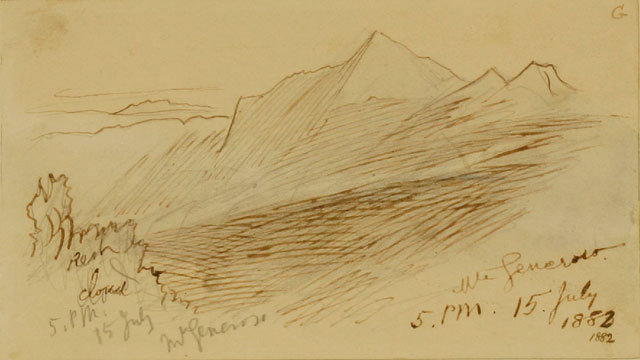
Edward Lear, Mt. Generoso, July 1882.

Amy Wilcockson and Edmund Downey have found a previously unknown poem by Edward Lear, dated 22 September 1882 and enclosed in a lettter to Mary Theresa Mundella (1847–1922), daughter of Liberal politician and friend to Lear, Anthony John Mundella (1825–1897). The poem is a lamentation about the number of tourists on Mount Generoso; the title is “Lays of the Octopods (The Last of the Octopods)” and this is the first of seven stanzas:

1
From Monte Generoso
When the leaves were turning brown
Five hundred thousand Octopods
All painfully came down
And on the back of every one
A Pofflikopp held fast,
And all their faces dark or fair
With sorrow were o’ercast.

You can read the rest on the Notes & Queries website.

Posted in Edward Lear | Tagged , , , | 1 Comment

Edward Lear and Kleptomania

Edward Lear
Was haunted by a fear
While travelling in Albania
Of contracting kleptomania.

W.H. Auden, Academic Graffiti (1971). More here.
I just learned about this clerihew from the latest issue of the TLS.

Posted in Edward Lear | Tagged , , , | Leave a comment

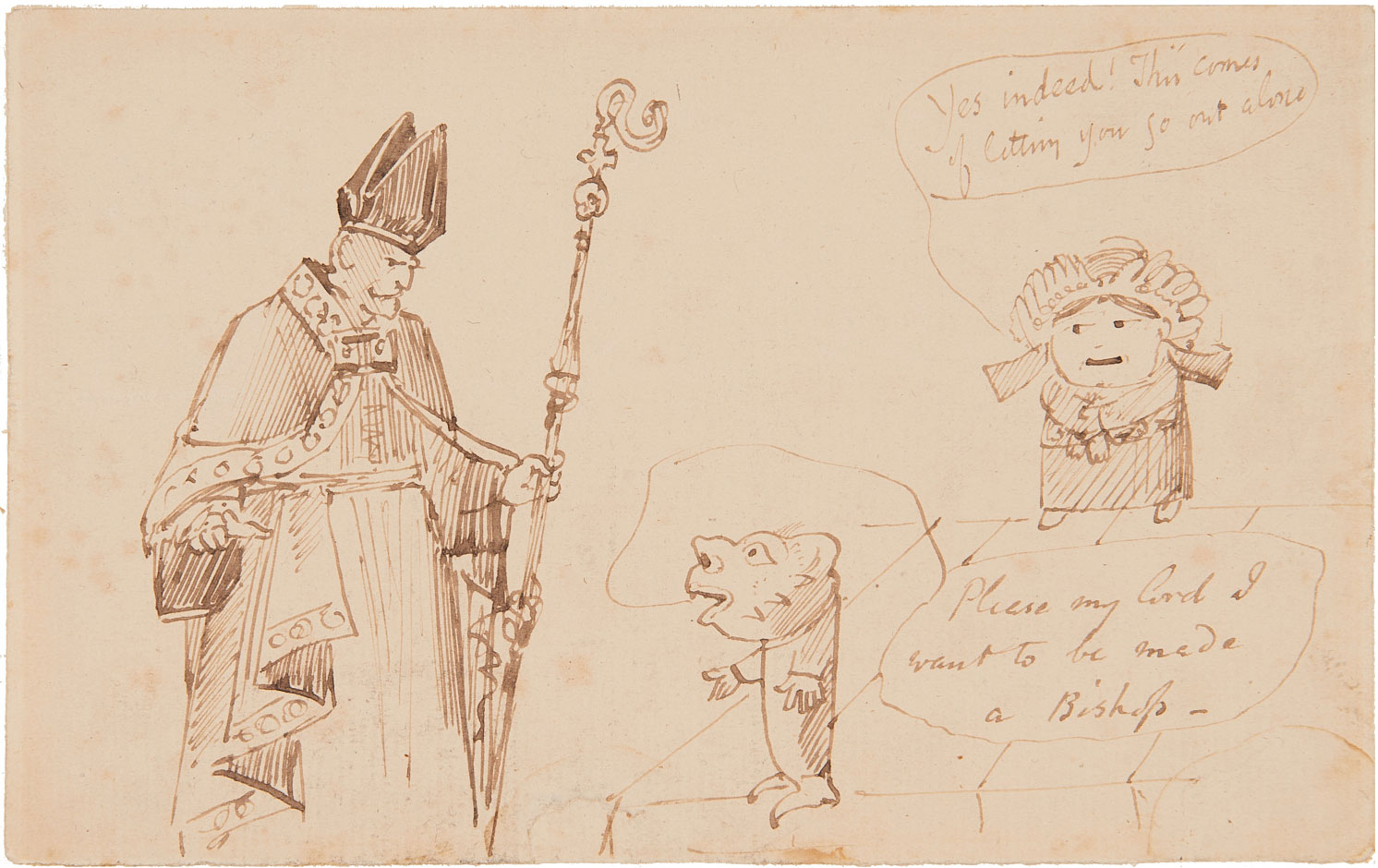
A New Edward Lear Cartoon

Edward Lear (attrib.), drawing, ex. Ford Found., Attributed to Edward Lear (British, 1812-1888), “Please my Lord I want to be made a Bishop”, pen and brown ink caricature drawing on paper, no visible signature, inscribed in pencil verso “Edward Lear”, 4.25″h x 6.75″w (sight), 8.75″h x 11.25″w (frame).

Condition
Good/Fair, minor creases, some areas of light foxing

Provenance
The Ford Foundation Collection

The Saleroom.

A new cartoon, that looks quite Learian to me with its mixture of realism and caricature. It is not mentioned in the Appendix to my article on “Edward Lear: A Life in Pictures.” Unfortunately it cannot be dated, but it must have been made for some special occasion. Lear liked jokes on titles (bishops and kings his favourites) and their pursuit.

Posted in Edward Lear | Tagged , , | Leave a comment