Two more Bavella Pictures by Edward Lear

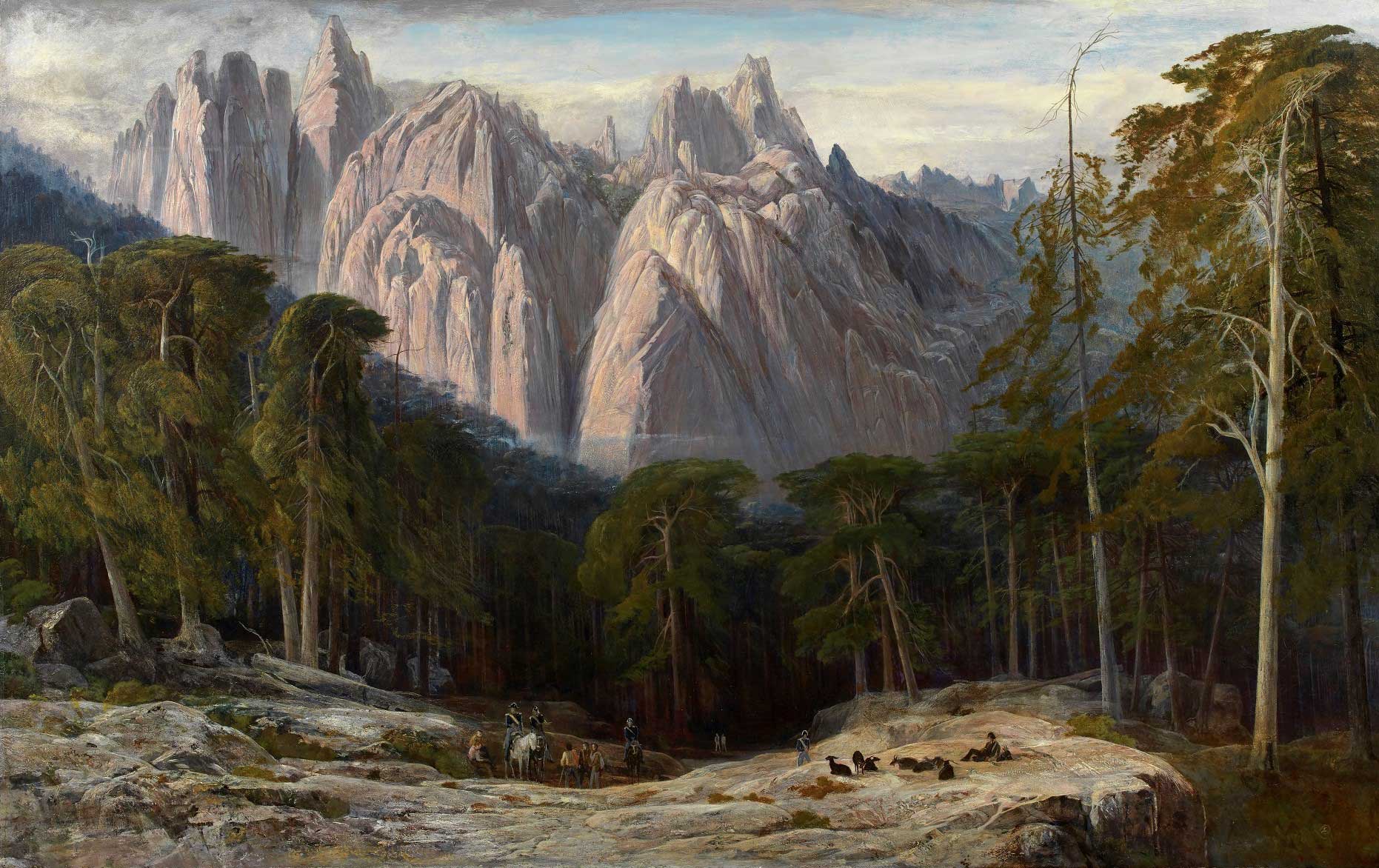
Harvard University, Houghton Library, pga_ms_typ_55_26_1280.

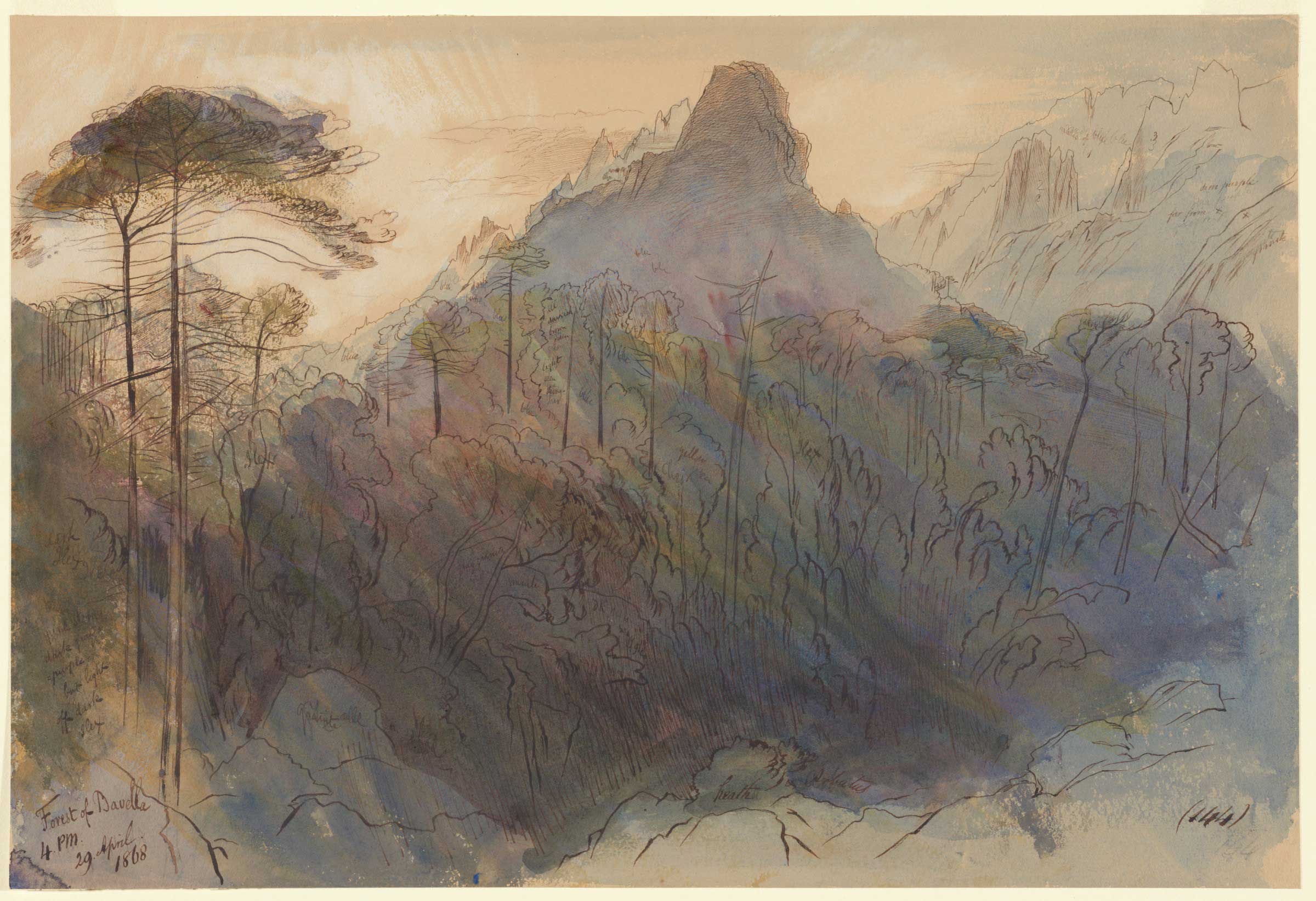
Edward Lear, Forest of Bavella.
4 PM. 29 April 1868.

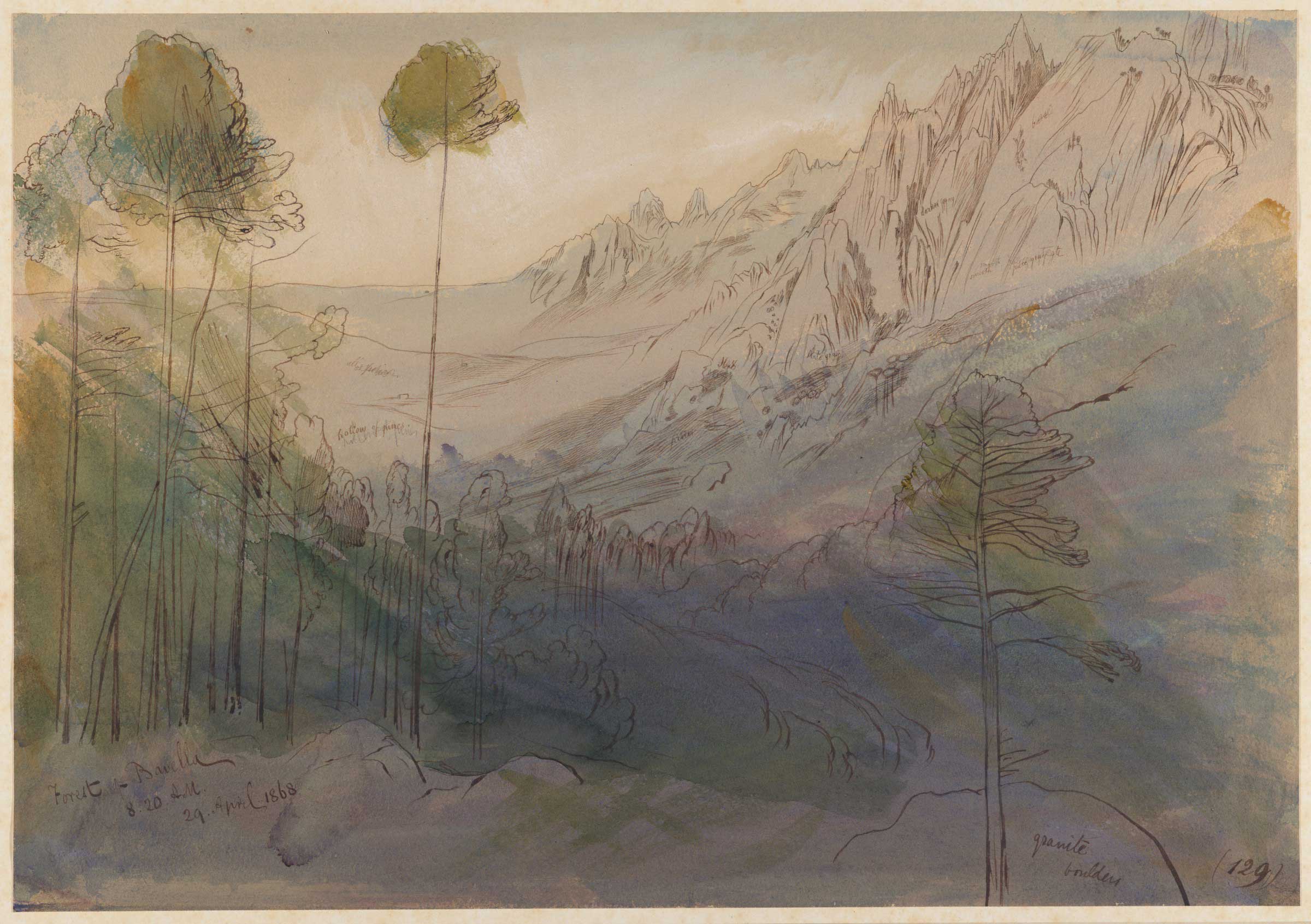
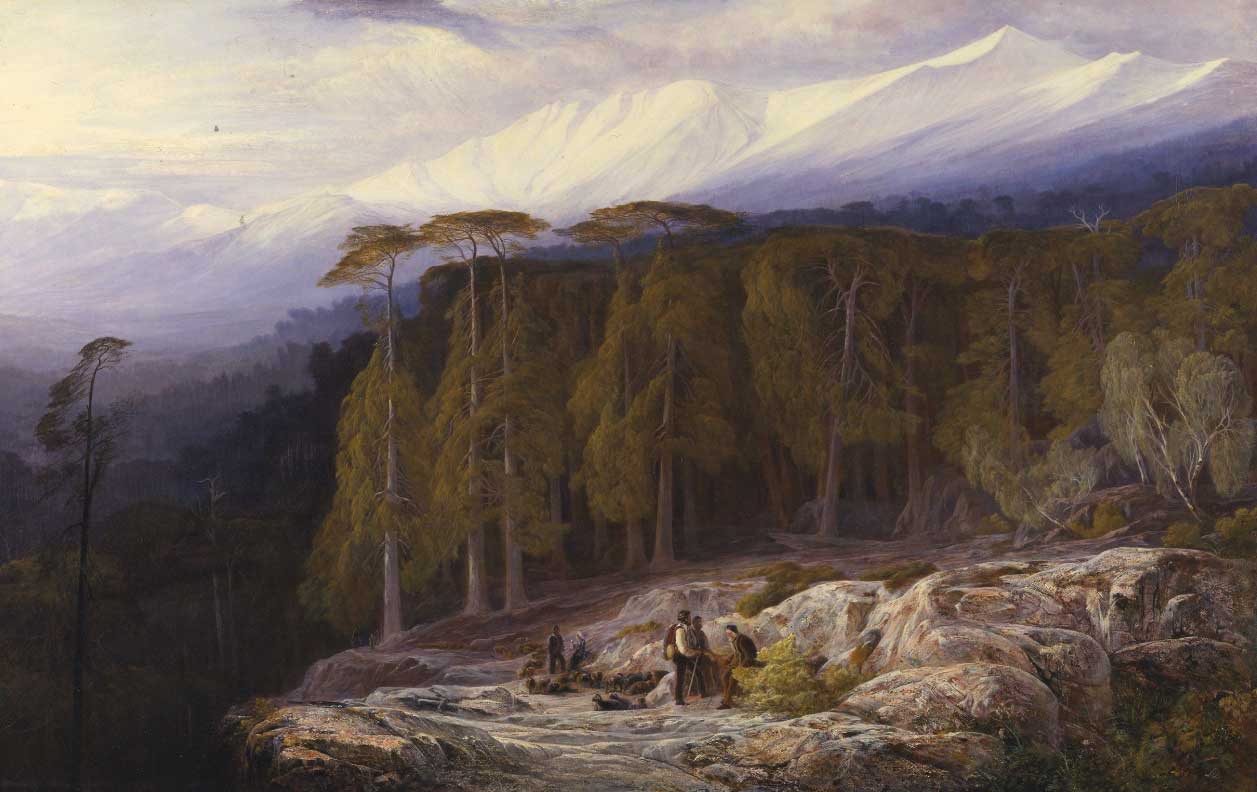
Harvard University, Houghton Library, pga_ms_typ_55_26_1267.

Edward Lear, Forest of Bavella.
8.20 AM. 29 April 1868.

Both pictures, from the Houghton Library, Harvard University, will be on display at the Birmingham Ikon exhibition in autumn.

See Edward Lear’s Bavella Pictures for more information.

Posted in Edward Lear | Tagged , , , , | Leave a comment

Edward Lear’s Bavella Pictures

I receive from the lucky owner of one Bavella sketch and publish (with some editing).

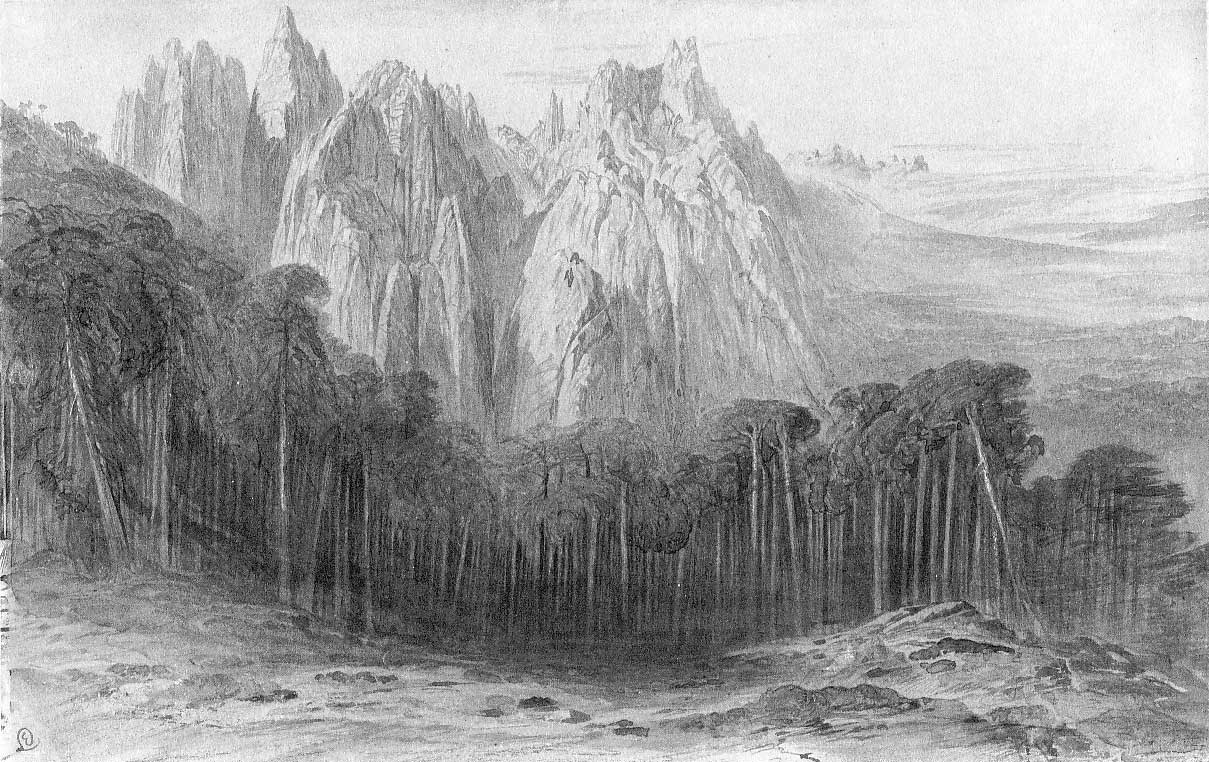
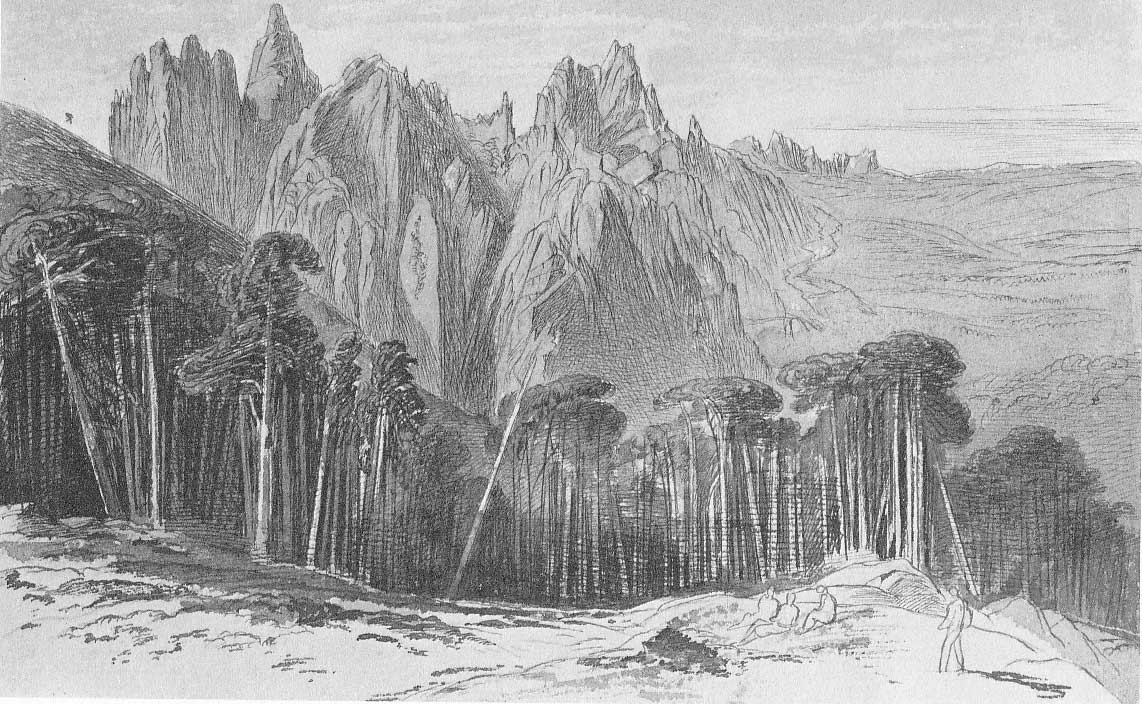
The drawings I am interested in are illustrated in Philip Hofer’s book Edward Lear as a Landscape Draughtsman, plates 72 & 95.
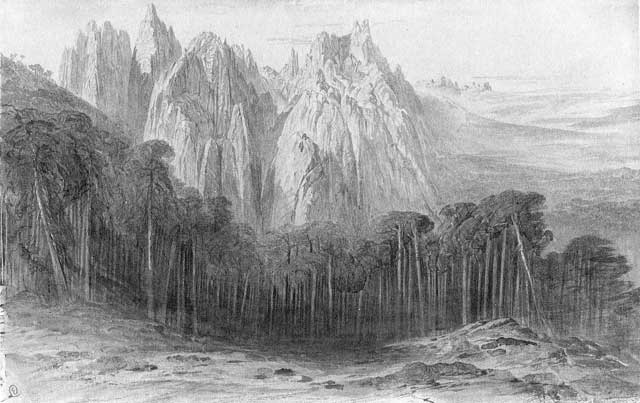
Edward Lear, Forest of Bavella, Corsica, 1868. From Hofer’s Edward Lear as a Landscape Draughtsman, p. 72.

Both these drawings are of the Forest of Bavella, in Corsica, which Edward Lear visited in April 1868.
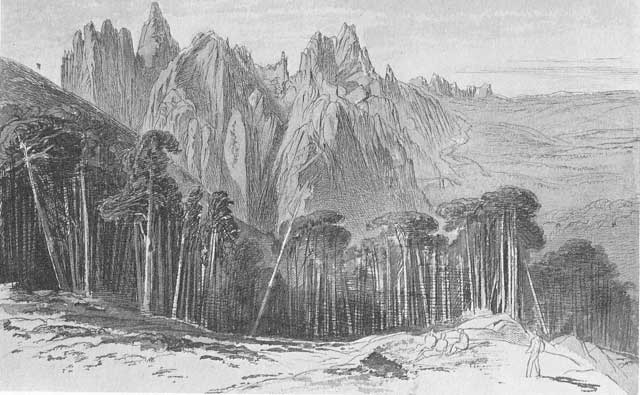
Edward Lear, Forest of Bavella, Corsica, ca. 1869 (?). From Hofer’s Edward Lear as a Landscape Draughtsman, p. 95.

Neither drawing was done on the spot — they do not belong to the sequence of forty-eight numbered drawings made in Corsica between 28 & 30 April 1868, most of which are in the Houghton Library — MS Typ 55.26 NI.R4; & MS Typ 55.26 Oversize Box 8 (for drawing no. 144).

As Hofer explains (p.35), the drawing reproduced as his Plate 95 is a reduced version of his drawing Plate 72, and was made for transfer to the woodblock used as Plate 13 in his published Journal of a Landscape Painter in Corsica (1870). Hofer’s Plate 72 is larger, and, not belonging to the numbered sequence of drawings done on the spot, must be a fully worked up drawing made from a pre-existing sketch.

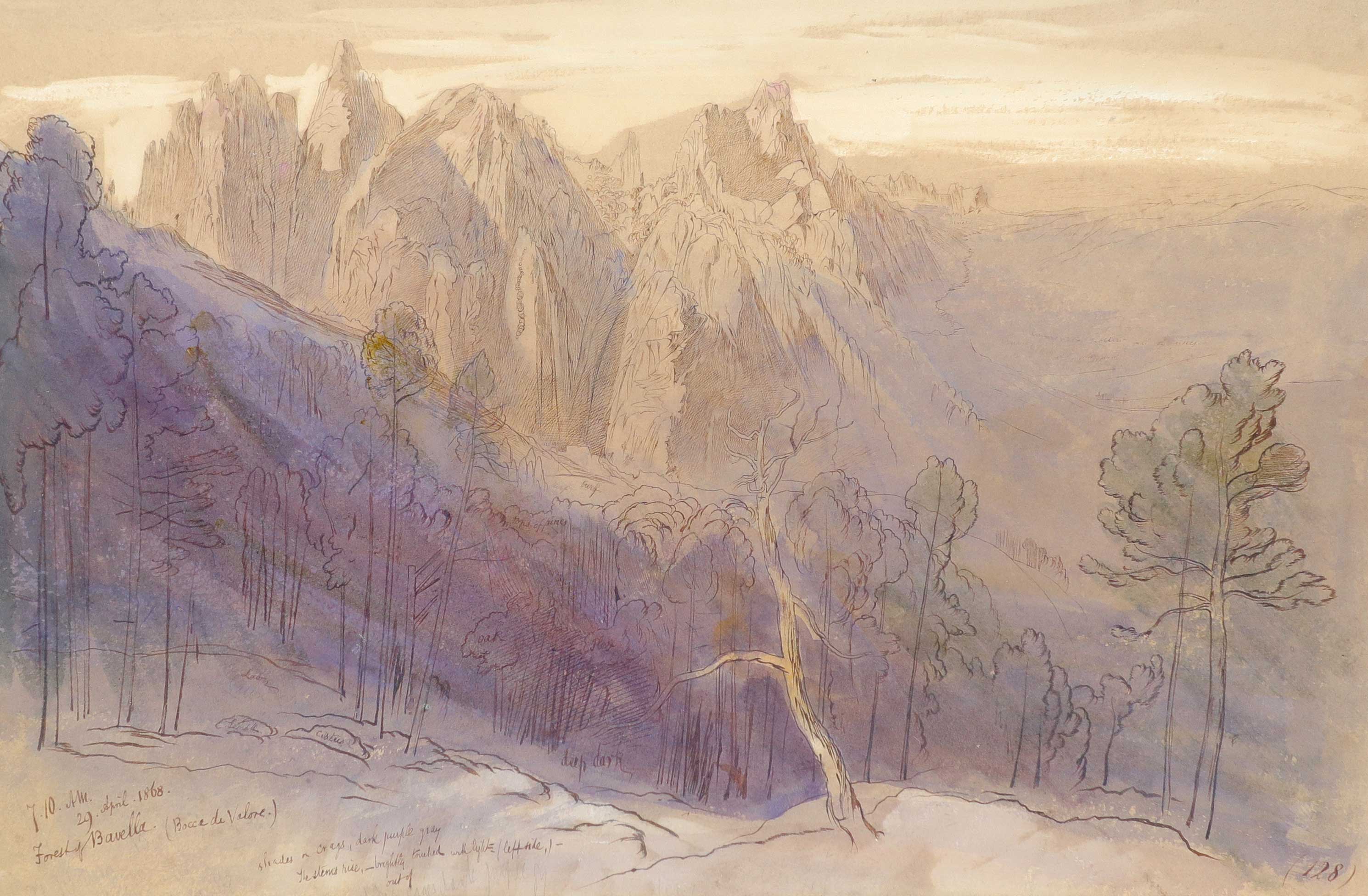
That pre-existing drawing doesn’t exist in the Houghton collection. I am now in a position to say that it is one of the drawings missing from the library’s numbered sequence – in fact number 128, made at 7.10am on 29 April 1868. This drawing belongs to me and I attach a digital image. It is larger than most of the Bavella drawings — at 13¾” x 20¾”. Copyright in this image does not belong to me but the copyright holders have given permission for it to be disseminated to third parties on the understanding that it won’t be used for commercial purposes.
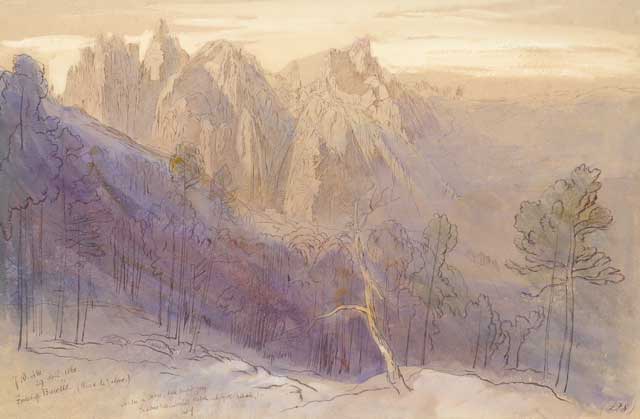
Edward Lear, Forest of Bavella, Corsica, 29 April 1868.

As you will see, the mountain landscape in my drawing is virtually identical to the two versions mentioned above, though the trees in the foreground have been altered.

In December 1869, Lear, now living in Cannes, started painting two large Corsican oil paintings which came to be known as The Forest of Bavella and [The Forest of] Valdoniello. (see Lear’s diary entries for 21 Dec 1869 – 12 March 1870: Houghton Library MS Eng 797.3).

The Valdoniello is now in the Paul Mellon Collection at Yale. But the Forest of Bavella is in private hands in the UK and was for sale by Dickinson’s at TEFAF Maastricht 2020:
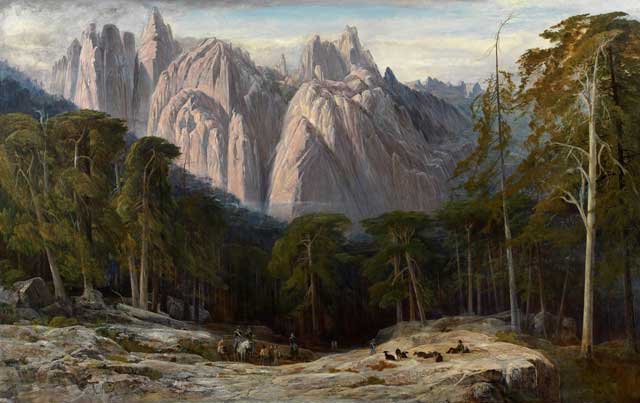
Edward Lear, The Forest of Bavella, Corsica, 1868.

As you can see, the mountain landscape in the oil version of the Forest of Bavella is virtually identical to the finished drawing reproduced by Hofer as his Plate 72 (with the exception of the trees on the r.h. side) and my on-the-spot sketch (no 128).

I wonder do Yale know about the sale of the Forest of Bavella? It is exactly the same size as the Valdionello and the two were painted in tandem at the same time. They were clearly seen by Lear as companion pieces.

Edward Lear, The Forest of Valdoniello, Corsica, 1869. Yale Center for British Art.

On leaving Corsica Lear returned to Cannes and that is where he probably did the ‘penning out’. Then, in December 1869, he began the two oil paintings — The Forest of Bavella and the other [The Forest of] Valdoniello — based on Corsican drawings. They are the same size, indeed a pair, and he worked on them simultaneously over a period of three months, until March 1870, when he sent them to London. The process can be followed through his diaries which are in Harvard and on line. I have extracted the relevant sections (see attached).
Posted in Edward Lear | Tagged , , , , , | 1 Comment

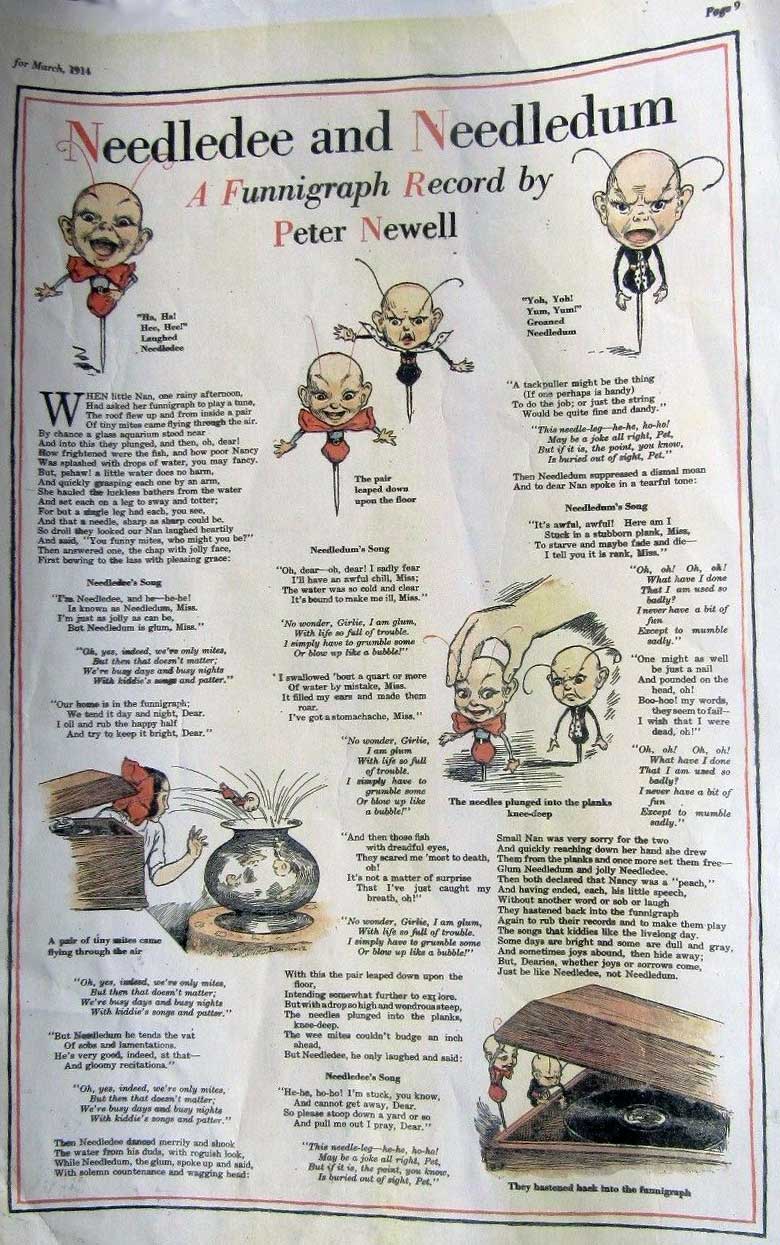
Peter Newell, Needledee and Needledum

When I published the other page with the same title I thought it was a one-shot, but it seems there was another, previous instalment in the March 1914 issue of The Ladies’ World. I do not own this so the scan is taken from the eBay auction; it is not very good, but can be read.

Posted in Peter Newell | Tagged , , | Leave a comment

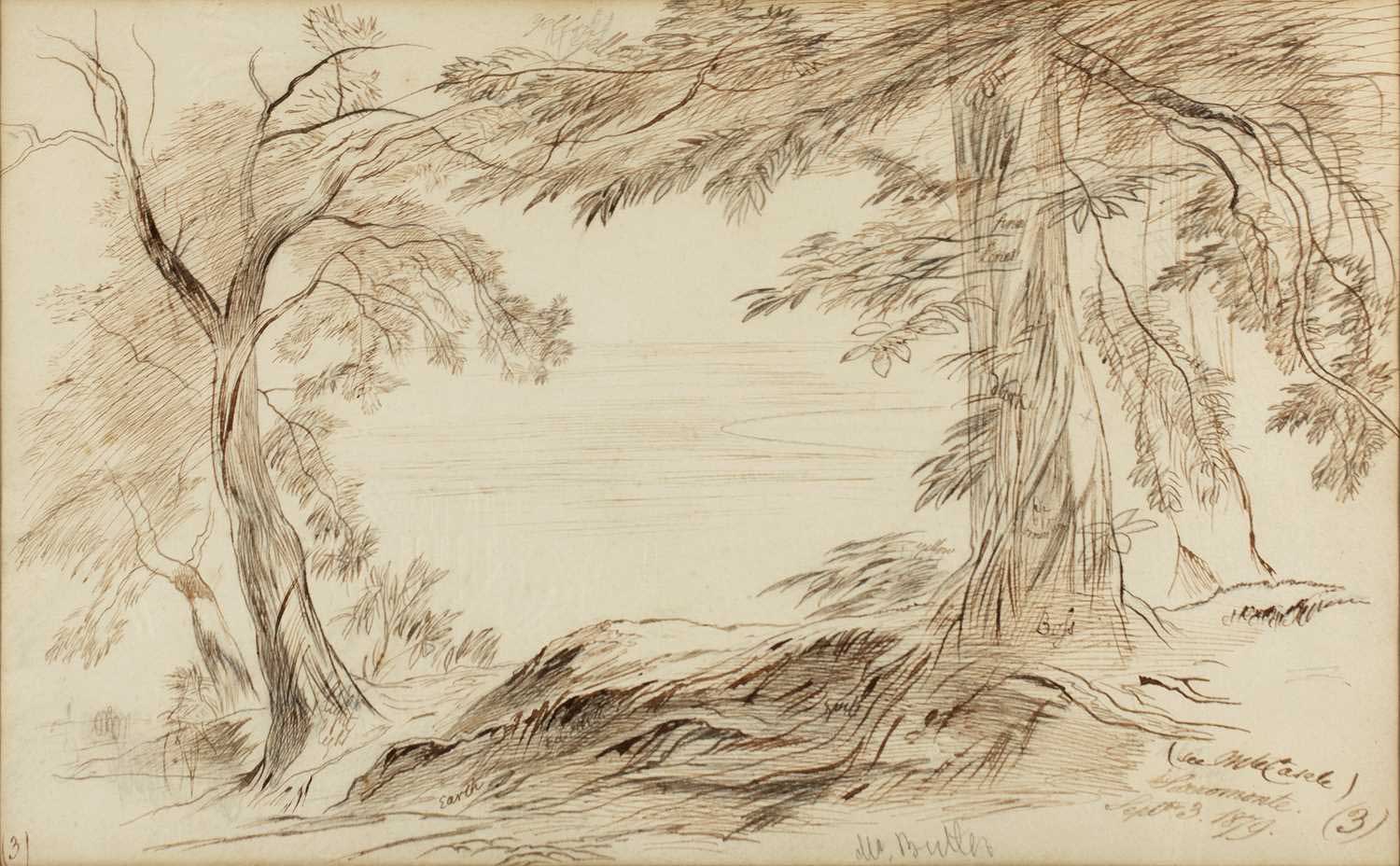
Edward Lear, Monte Casale Sacromonte (1879)

Edward Lear, Monte Casale Sacromonte.
1879, numbered 3, pen and inks, 32 x 49cm.

The Saleroom.

Posted in Edward Lear | Tagged , , , , | Leave a comment

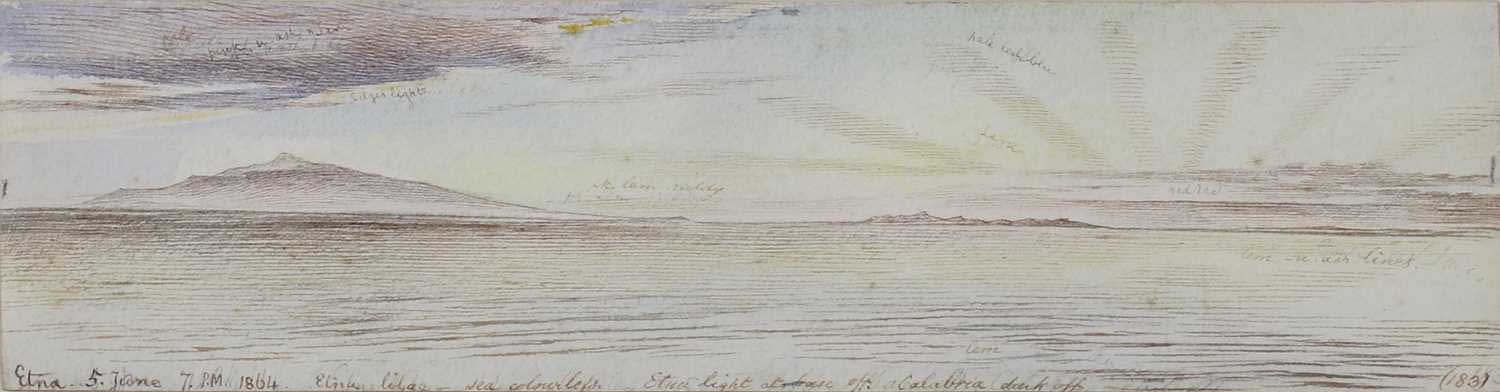
Edward Lear, Mount Etna at Sunset (1864)

Edward Lear, Mount Etna at Sunset.
Inscribed ‘Etna 5 June 7pm 1864’ and with colour notes, numbered (183) l.r., pen and brown ink and watercolour. 6.7 x 27cm.

Provenance
With the Fine Art Society, London, 1962.

Probably drawn while getting back from Crete as the numbering continues from that series.

Posted in Edward Lear | Tagged , , , , | Leave a comment

Edward Lear, Castel Giubileo (?)

Edward Lear, Castel Giubileo (?).
Dated, Jan 7th 1845/brown ink, 21.5cm x 38cm.

The Saleroom.

Posted in Edward Lear | Tagged , , , , | Leave a comment

La taupe suspendue

Félix Bracquemond (Paris 1833–1914 Sèvres), Les Taupes, 1854.
Etching; sixth state of seven. Sheet: 19 1/8 × 12 1/16 in. (48.6 × 30.7 cm) Plate: 10 5/8 × 7 5/8 in. (27 × 19.4 cm).
Inscribed in plate, lower right: “Bracquemond sculp.”
Inscribed in plate, bottom center: “LES TAUPES / Paris, Publié par CADART & LUQUET, Editeurs, 79, Rue Richelieu.”
Inscribed in plate, lower right: “Imp. Delâtre, Rue St. Jacques, 303, Paris.”

Aux ramilles du peuplier
Danse la taupe suspendue,
Et vers la ferme le Taupier
Va réclamer la somme due.

The Met.

Was Edward Lear inspired by this? See his first collection of “Botanies” (1871):

Posted in Edward Lear | Tagged , , , | Leave a comment

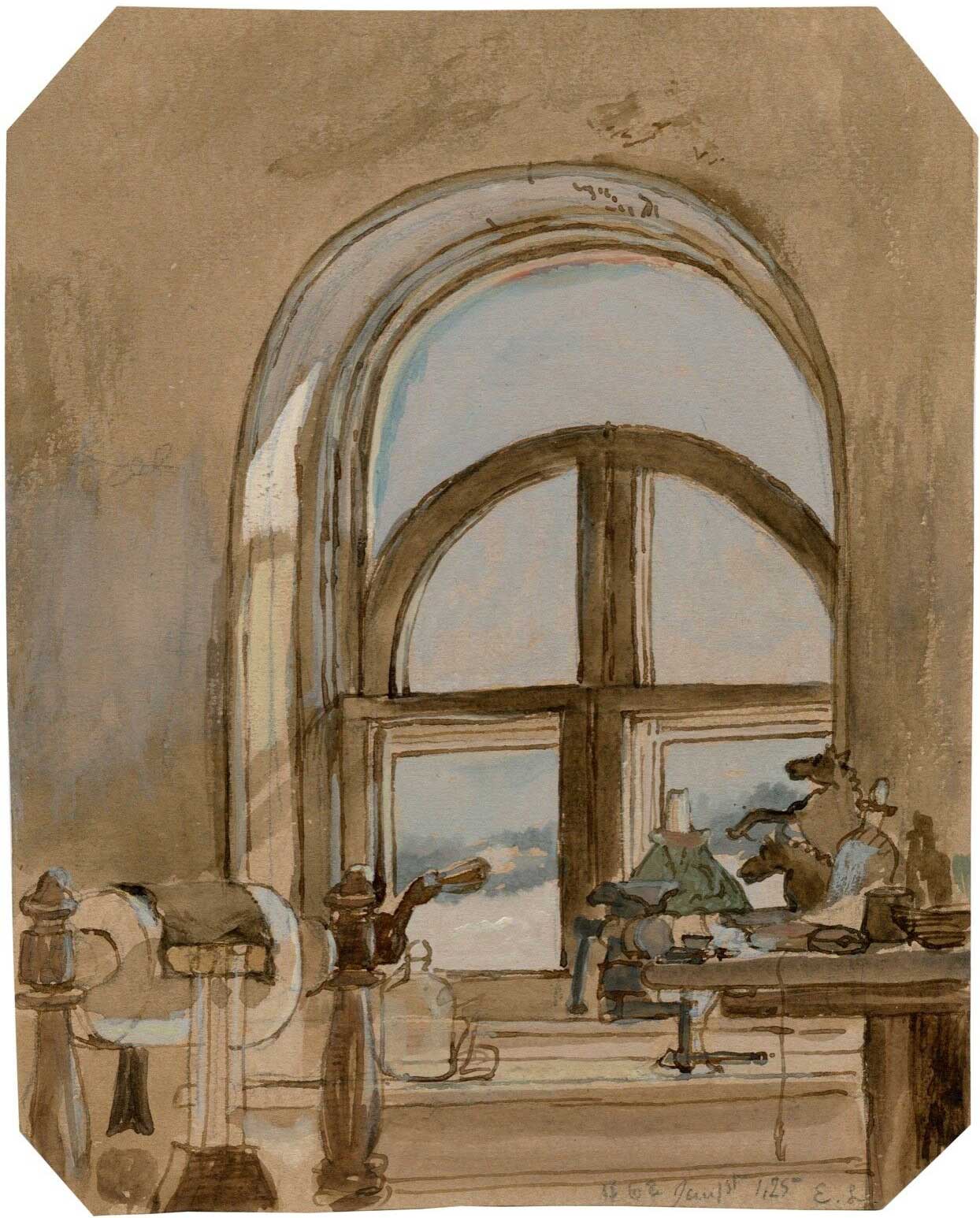
Two Edward Lear Pictures on eBay

Edward Lear, An Antique British Interior Sketch Signed E.L. Dated Jan 1st 1868.
6.75 x 5.55 inches the sheet.

[I think I should know, but can’t remember what the object on the left is; can anyone remind me? Marco]

eBay.

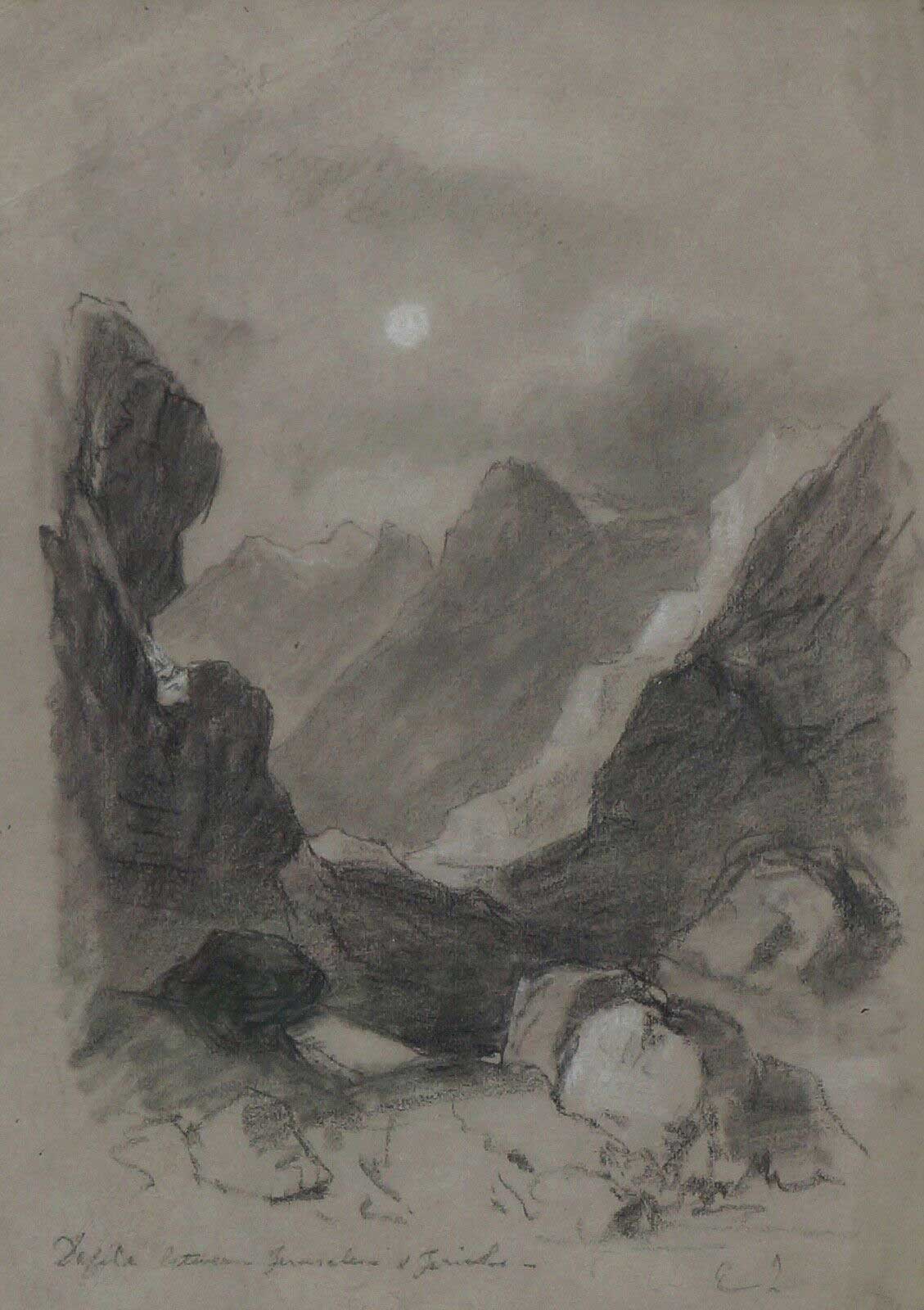
Edward Lear, Defile between Jerusalem & Jericho.
Charcoal on paper, c.1837/1838. Inscribed l.l. ‘Defile between Jerusalem & Jericho’ and l.r. ‘EL’, 25.6 x 18.3 cm.

Provenance
The Little Gallery (5 Kensington Church Walk, London) – sold 5/6/82;
Collection of Miss Gertrude Lushington, daughter of Lear’s executor;
Collection of Dr Edward Brett.

References
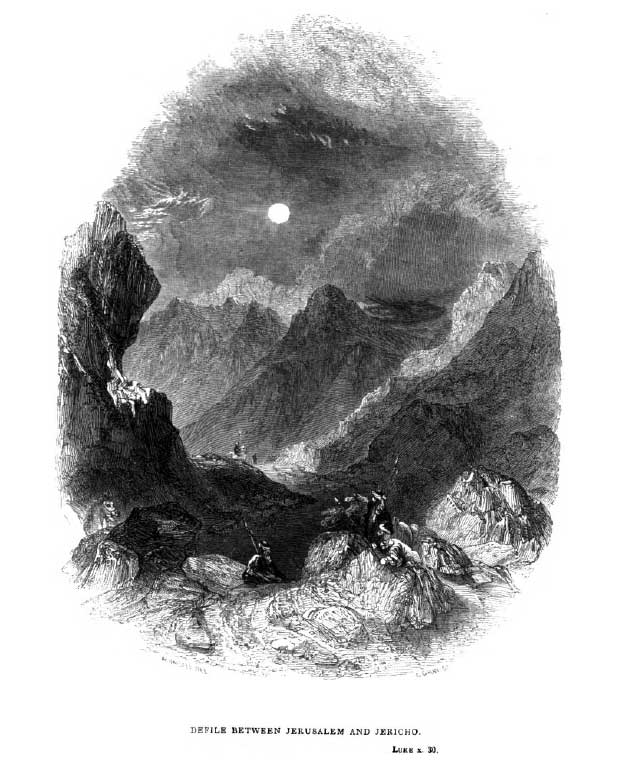
Rev. John Antes Latrobe. Scripture Illustrations; being a series of Engravings on steel and wood. London, 1838. See page 201 for engraving ‘Defile between Jerusalem and Jericho’ that is inscribed to William Harvey.
Vivien Noakes (ed.). Edward Lear 1812-1888. Exhibition Catalogue, Royal Academy of Arts: London, 1985.

Rev. John Antes Latrobe. Scripture Illustrations; being a series of Engravings on steel and wood. London, 1838. 201

Reverend John Antes Latrobe (1799-1878) was the author of ‘Scripture Illustrations’ in 1838 that included various biblical locations. The introduction states that original drawings were made by ‘travellers’ (including Sir Robert Kerr Porter) and then were worked up by the artists William Harvey and Samuel Williams. A work labelled ‘Defile between Jerusalem and Jericho’ looks remarkably similar to our drawing except for the fact that it includes figures. The engraving is inscribed W HARVEY and offers an intriguing link with Lear who worked under Harvey when he was first employed at London Zoo in 1829. In fact, they both worked on the illustrations for a book ‘The Gardens and Menagerie of the Zoological Society Delineated’ (1830-31) but only Harvey was credited with the drawings in the publication itself. Since Harvey was the senior artist at this point in Lear’s career this may have also been the case for Latrobe’s 1838 book with Lear not receiving any public recognition.

Harvey may have asked Lear to provide a landscape sketch to fit the description Latrobe asked for and then added the figures himself to depict the story of the Good Samaritan from Saint Luke’s Gospel, Chapter 10. This would explain why Lear’s landscape is not quite the same as the one used for the publication and rules out a direct copy. The other theory is that Lear may have wanted drawings of the Holy Land to take with him for his visit to Palestine in 1858. However, it would have been easier for him to take engravings and David Roberts’ extensive lithographic works on Egypt and the Holy Land were widely available having been released to wide acclaim in the 1840s. Furthermore, Lear was known to have experimented with charcoal early in his career. Vivien Noakes’s 1985 exhibition catalogue (p.93) mentions that ‘Lear’s earliest surviving landscape drawings date from 1834. The vigorous use of soft, dark line and white chalk highlights is characteristic of much of his work until the early 1840s, and shows an awareness of the work of J.D. Harding.’ Therefore, producing the landscape for Harvey’s engraving in 1838 would certainly fit this timeline.

A label next to the picture states that this work was in the collection of ‘Miss Gertrude Lushington, Lear’s executor.’ This intriguing link back to the artist is worth briefly exploring. On a voyage to Malta in the spring of 1849 Lear met Franklin Lushington (1823-1901) who became one of his closest friends. Lushington wrote that ‘I have never known a man who deserved more love for his goodness of heart & his determination to do right; & I don’t think any human being knew him better than I did. There never was a more generous or more unselfish soul’ (Noakes, p. 199). After Lear’s death Lushington was appointed the executor of Lear’s estate. He was left all of the artist’s papers and paintings, and the profit from selling the Villa of Tennyson along with its contents went to Franklin’s eldest daughter, [Louisa] Gertrude.’ Lear was Gertrude’s godfather and wrote ‘The Owl and the Pussy Cat’ for her.

eBay.

Posted in Edward Lear | Tagged , , , , , | 7 Comments

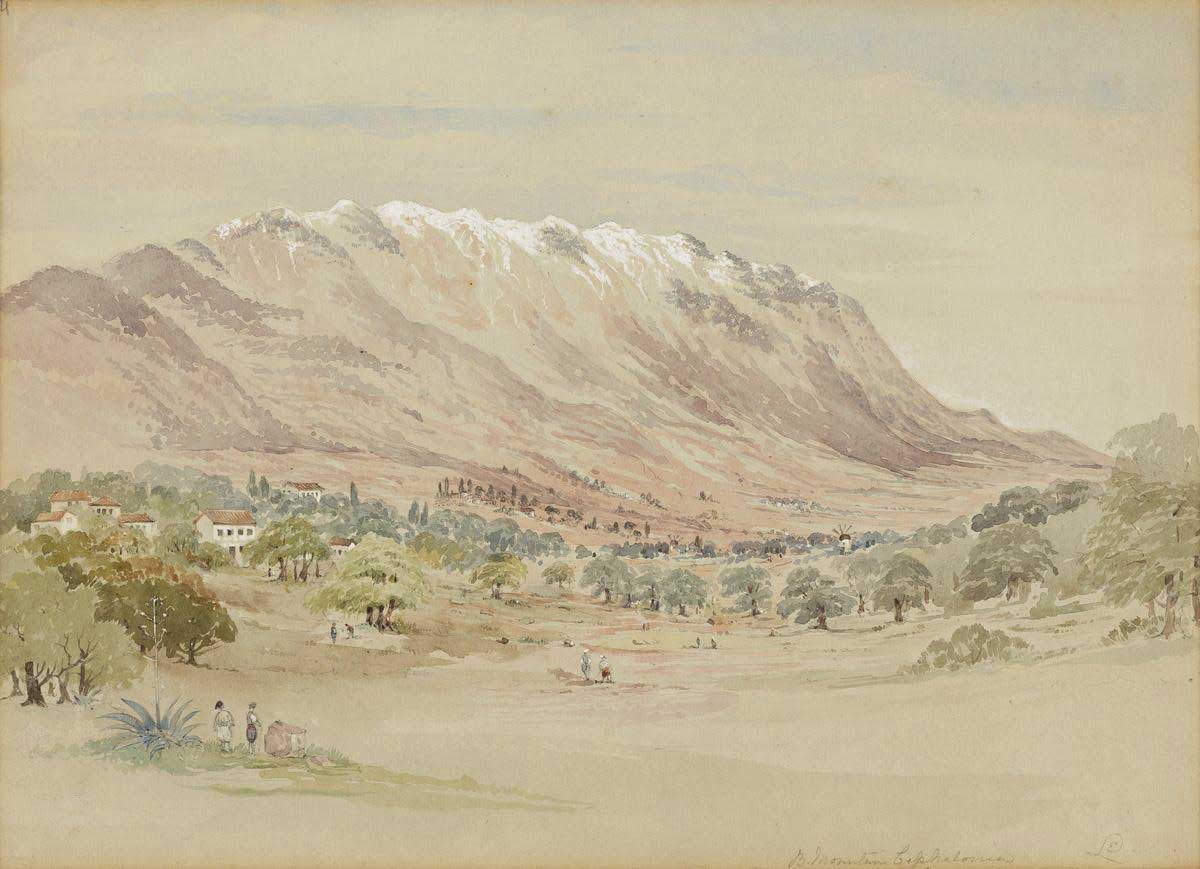
Edward Lear, Black Mountain, Cephalonia

Edward Lear, Black Mountain, Cephalonia.
Watercolor on wove paper, circa 1863. 260×360 mm; 10 1/4×14 1/4 inches. Initialed and titled in pencil, lower right recto, and annotated “4” in pencil, upper left recto.

Provenance
Private collection, Massachusetts.

invaluable.

Posted in Edward Lear | Tagged , , , , | 1 Comment

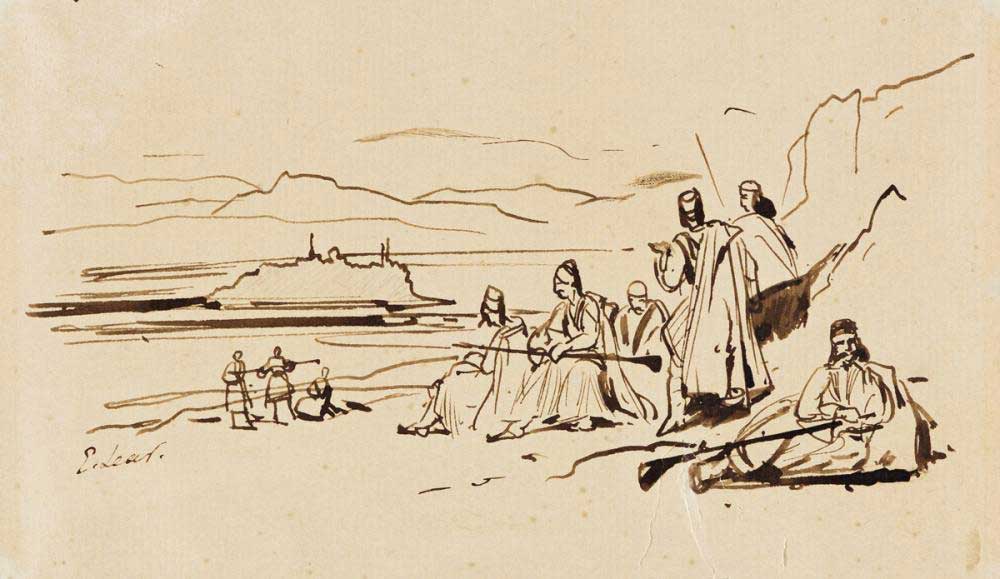
Edward Lear. Bedouin Soldiers on a Hillside

Edward Lear, Bedouin Soldiers Resting on a Hillside.
Pen and brown ink on wove paper. 117×188 mm; 4 3/4×7 1/2 inches. Signed in ink, lower left recto.

Provenance
Private collection, Chicago.

invaluable.

Posted in Edward Lear | Tagged , , , | 1 Comment