
Edward Lear, Paxo.
Inscribed and dated 5 April 1863 and numbered 5, pen and sepia ink with colour washes, 12.5 x 18.5cm.
Edward Lear, Paxo.
Inscribed and dated 5 April 1863 and numbered 5, pen and sepia ink with colour washes, 12.5 x 18.5cm.
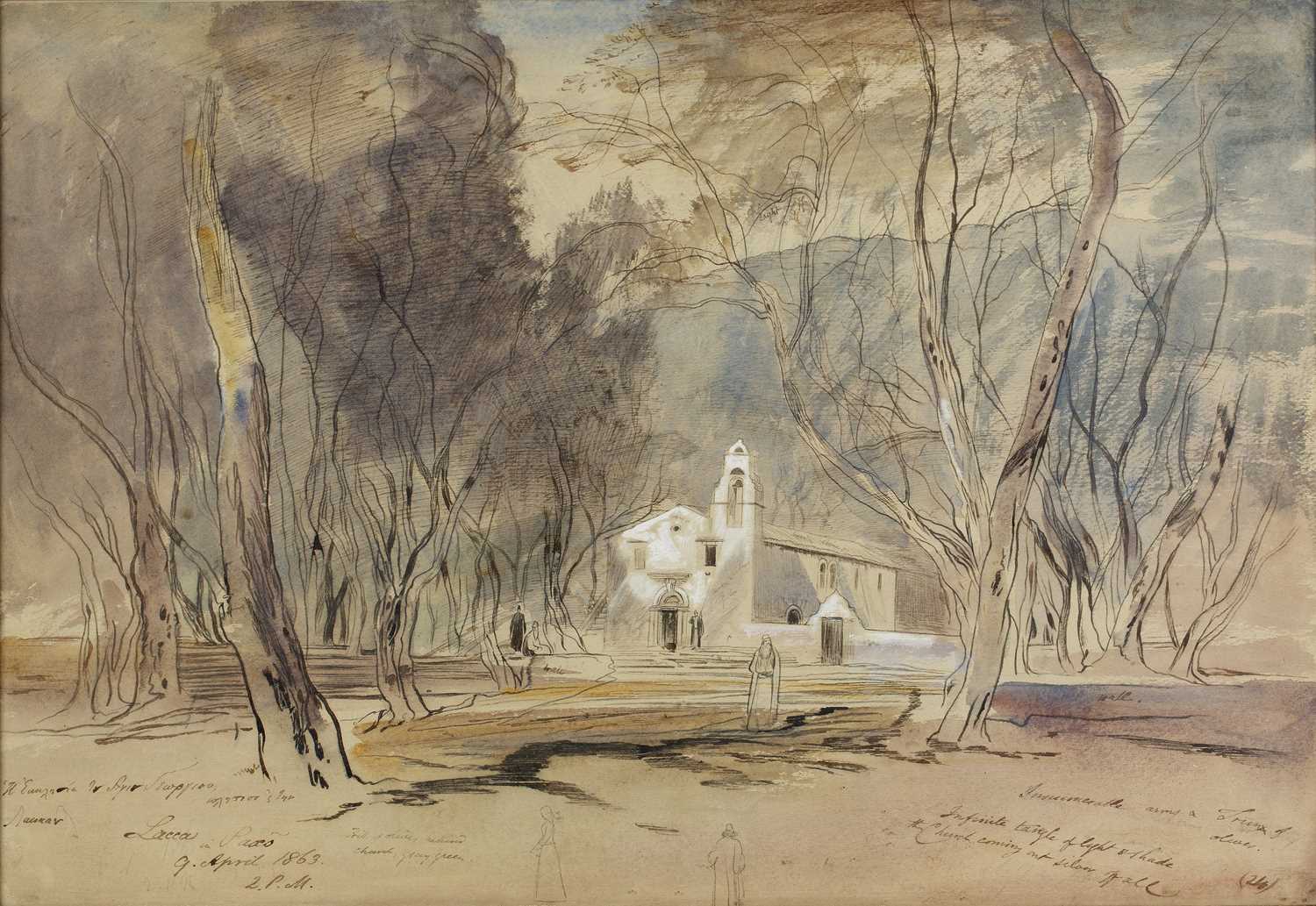
Edward Lear, Lacca in Paxo.
Inscribed and dated 9 April 1867 [actually 1863, 2 P.M.], pen and sepia ink with colour washes and white, 35 x 52cm.
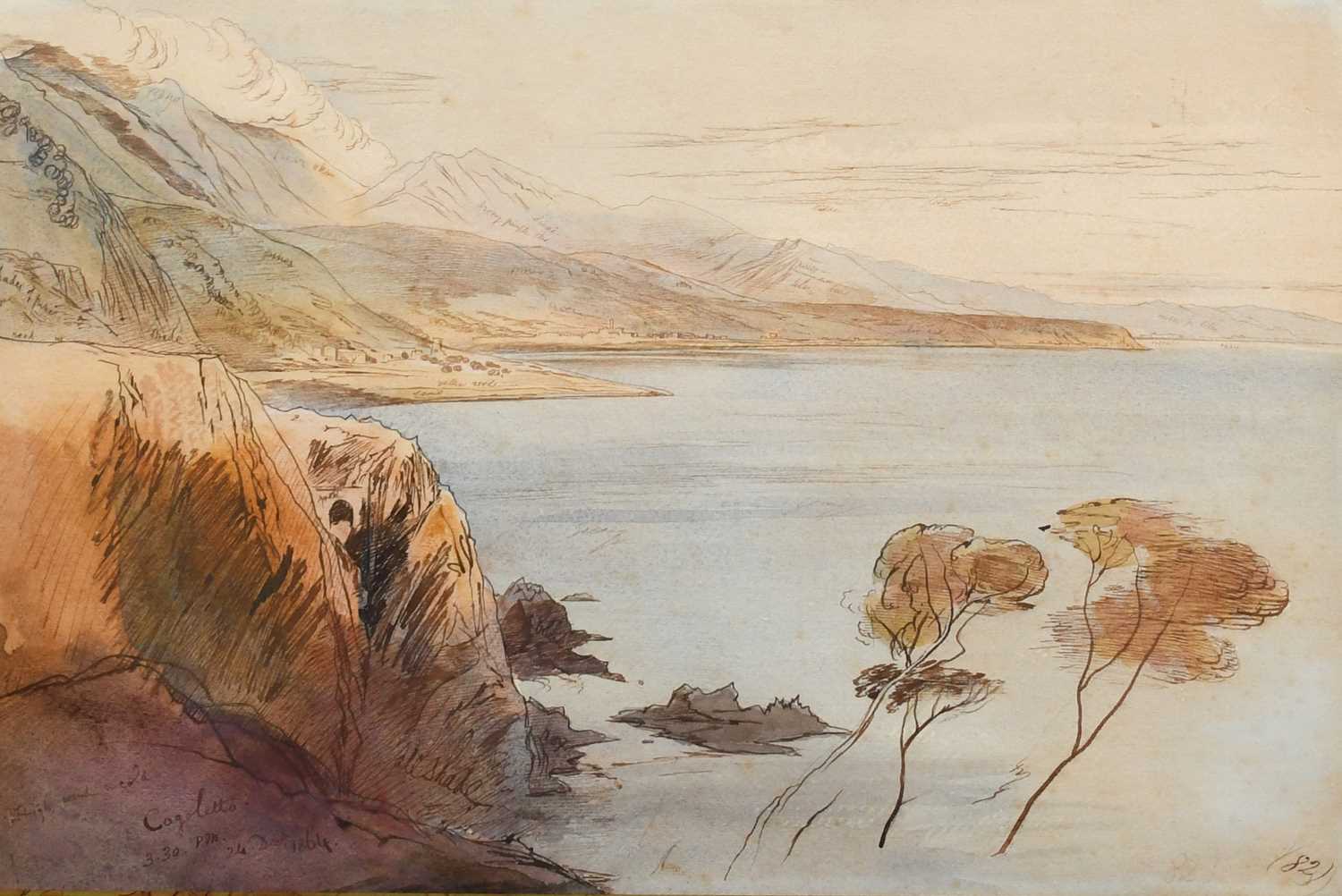
Edward Lear, View of Cogoleto, Italy.
Inscribed and dated High wind & cold/Cogoletto [sic]/3.30pm/24 Dec 1864 (lower left), numbered (82) (lower right), and further inscribed elsewhere with colour notes. Pen and brown ink, and watercolour. 36.7 x 54.6cm; 14½ x 21½in
In November 1864 Edward Lear left England to spend the winter in the Riviera. He and his mansevant Giorgio Kokali then undertook a walk to Genoa, before returning to Nice on New Years Eve. Cogoleto is close to Genoa. According to his diaries, Lear drew two views of Cogoleto on 24th December, and the other was sold at Christie’s, King Street, British Art on Paper, 16 November 2006, lot 166.

Edward Lear, View of Porto Maurizio, Italy.
Dated and inscribed Porto Maurizio/9 AM/29 December 1864 (lower left), numbered (114) (lower right) and further inscribed throughout with colour notes. Pen and ink, and watercolour, heightened with white. 32.9 x 49cm; 13 x 19¼in
In November 1864 Edward Lear left England to spend the winter in the Riviera. He and his mansevant Giorgio Kokali then undertook a walk to Genoa, before returning to Nice on New Years Eve. According to his diaries, on the day he drew the present work Lear travelled from Oneglia to Porto Maurizio and then onto San Remo.
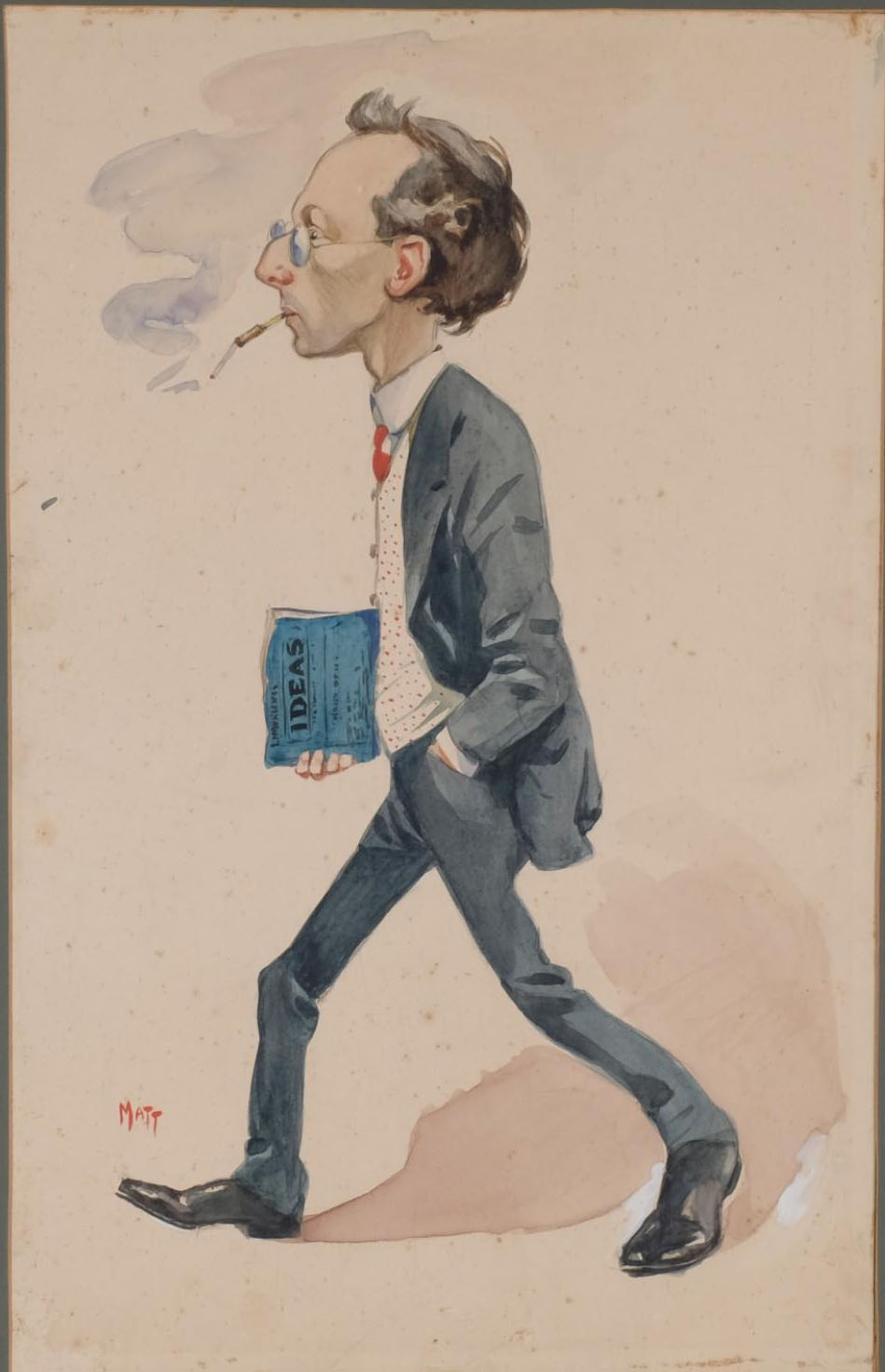
The above item is to be auctioned in the next few days with the following description:
An original watercolour caricature of Edward Lear, by original cartoonist of Punch magazine, Matthew (Matt Somverille Morgan), circa 1850, 65cm x 48cm overall, framed.
I suppose the idea that this is a caricature of Edward Lear derives from the fact that the “IDEAS” booklet the person is holding lso contains the word “limericks.” The subject caricatured is nothing like Edward Lear, apart from having a big nose, but not the right shape: I think that at circa 1850 Lear was not famous enough to deserve a caricature and certinly did not look or dress like that.
Moreover, the attribution to Matthew Somerville Morgan (1837-1890) seems impossible, apart from the fact that Morgan did not work for Punch (Richard Scully, p. 9, writes that “he never broke into the hallowed Punch circle”) — he was part owner of Tomahawk and worked for Fun as well as The Illustrated London News in England before emigrating to America — he always signed himself “Matt Morgan” and his style is completely different.

“The Big Black Boom” Her Majesty’s Theatre, Westminster c. 1878. The Big Black Boom, entertainment by black musicians. Minstrels.,Image taken from A collection of pamphlets, handbills, and miscellaneous printed matter relating to Victorian entertainment and everyday life. Originally published/produced in London, 1800 – 1895.
His signature did not change when he worked for the American Frank Leslie’s Illustrated Newspaper, nor did hi style.
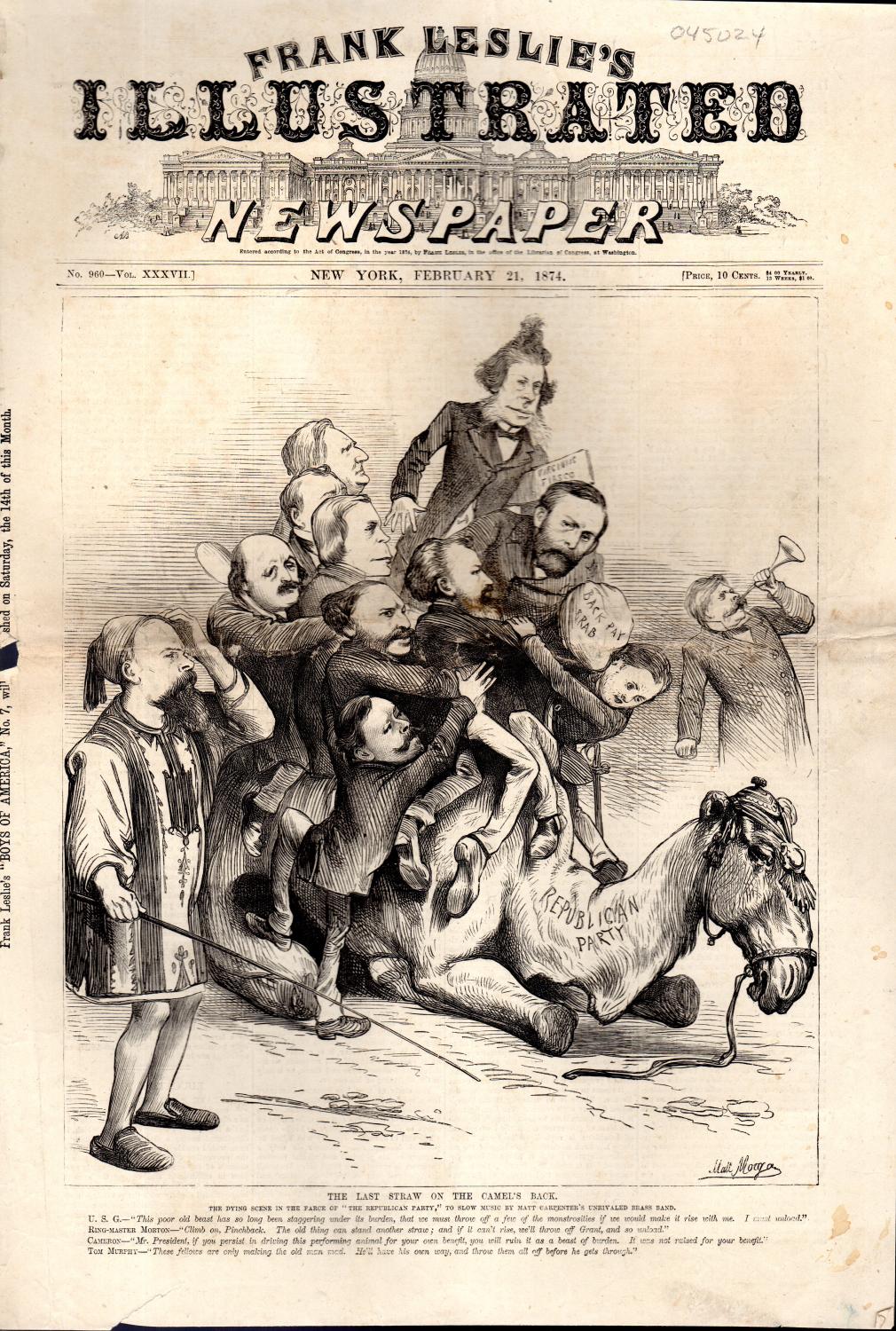
On Morgan, Richard Scully’s “The Bohemian Upstart: Matthew Somerville Morgan (1837-1890),” in his own Eminent Victorian Cartoonists. Vol. II. The Rivals of ‘Mr Punch’. London: Political Cartoon Society, 2018. 8-50.
The caricature of “Edward Lear” might rather be by another artist who signed himself “MATT” though in slightly different way. This Matt worked in the first thirty years of the Twentieth century and produced caricature portraits of famous people. A couple of examples:
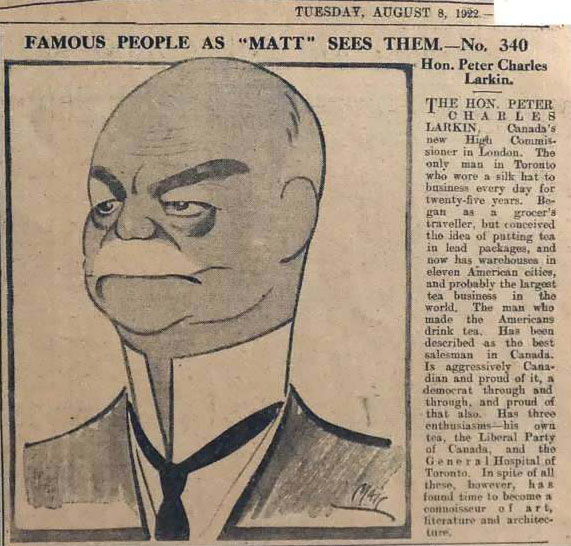
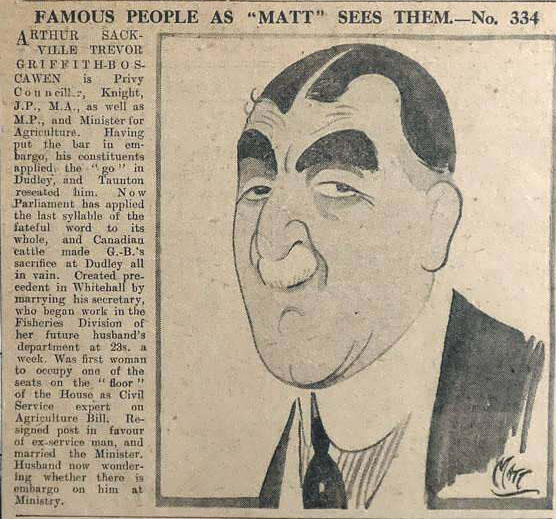
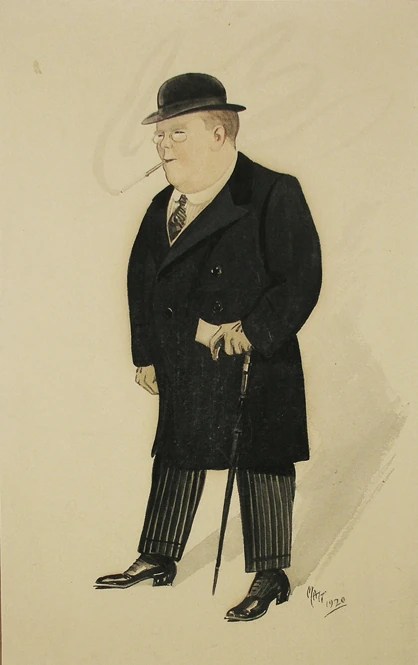
This would be the Irish Matt Sandfort (1877-1943), who in 1922 published Sixty Daily Sketch Cartoons of Famous People as “Matt” Sees Them. Is the above cartoon in the book? Can anyone check? Or has a suggestion as to whose caricature this was?
Another one by the same:
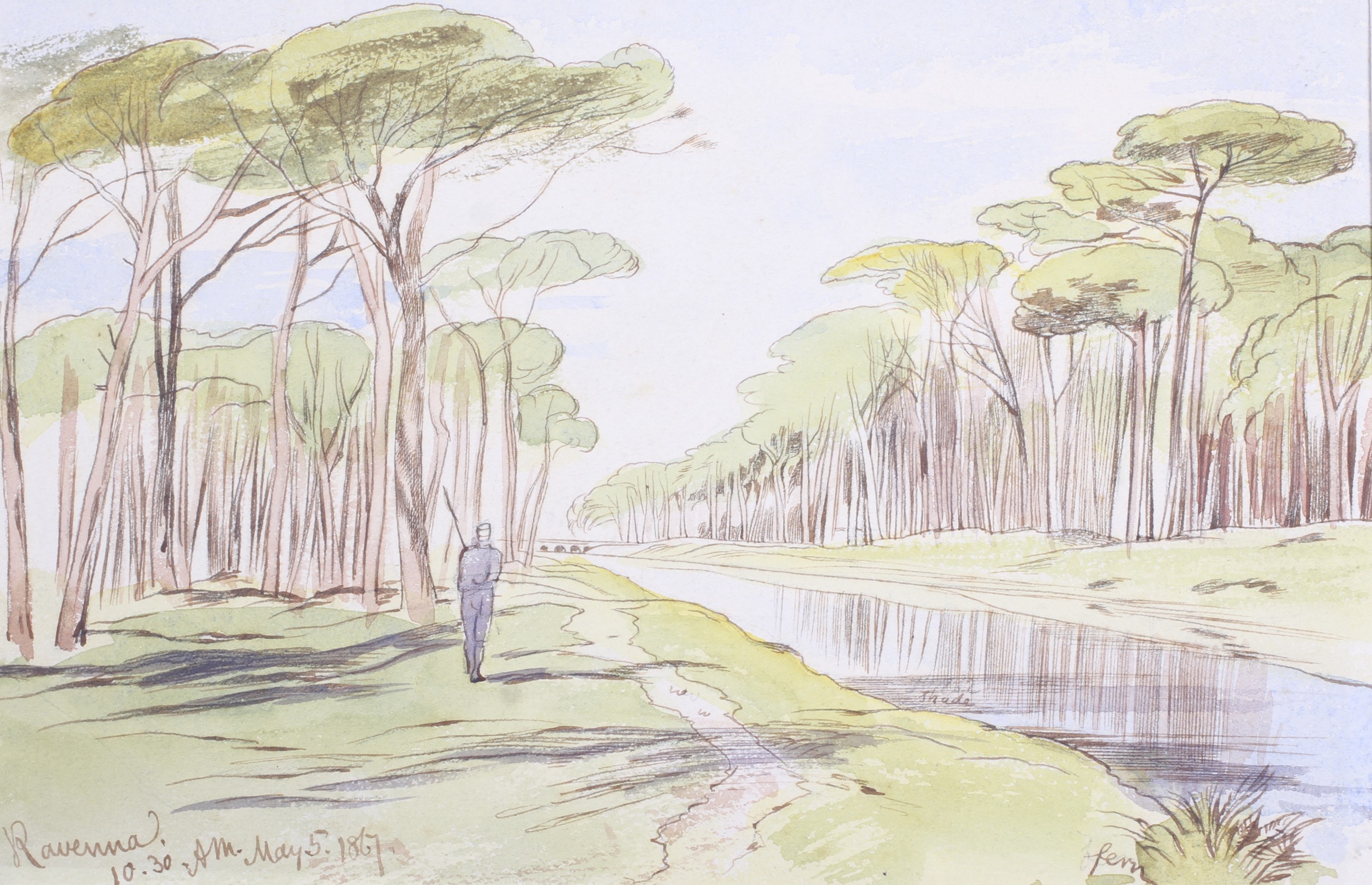
Edward Lear, Ravenna.
Watercolour sketch, ‘Ravenna 10.30 AM May 5 1867’, marked in pencil verso. 16.4cm x 24.9cm.
Lear is known to have done another, almost from the same spot (different light), which was sold at Bonhams lot 71 on the 9 June 2015. The present picture shows Lear’s man servant Giorgio and this one also has sketching instructions and the same date, style and brown ink writing, with the time of 10.30am (the Bonhams example ‘8 am’ and sold for £3750)
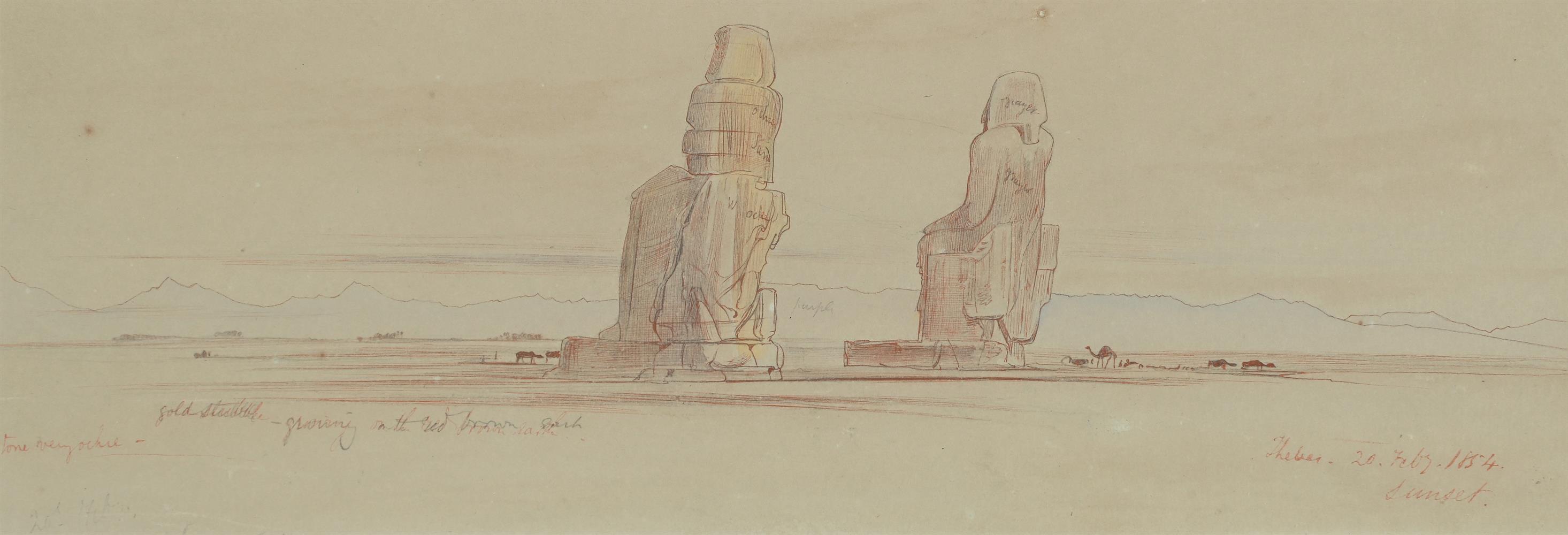
Edward Lear, The Colossi of Memnon.
Pen, coloured ink and coloured wash. Inscribed and dated ‘Thebes, 20 Feb 1854’ (lower right), colour notes throughout. 11 x 32.5cm (4¼ x 12¾ in.)
Edward Lear travelled to Egypt in 1854, following the Nile south. During his travels he was astonished by the beauty of the landscapes and the villages, which he described as ‘fairy islands’, each of which capable ‘enough to occupy an artist for months’. Albeit in his letters he lamented about the difficulty of painting, for ‘the colours dry fast, and sand injures them,’ the climate did not stop him analysing and painting what he saw; when informing his elder sister Ann about his daily routine he wrote: ‘I have been at work every day throughout the whole daylight, and so charming is the place and the climate that I shall be very sorry to leave it’.
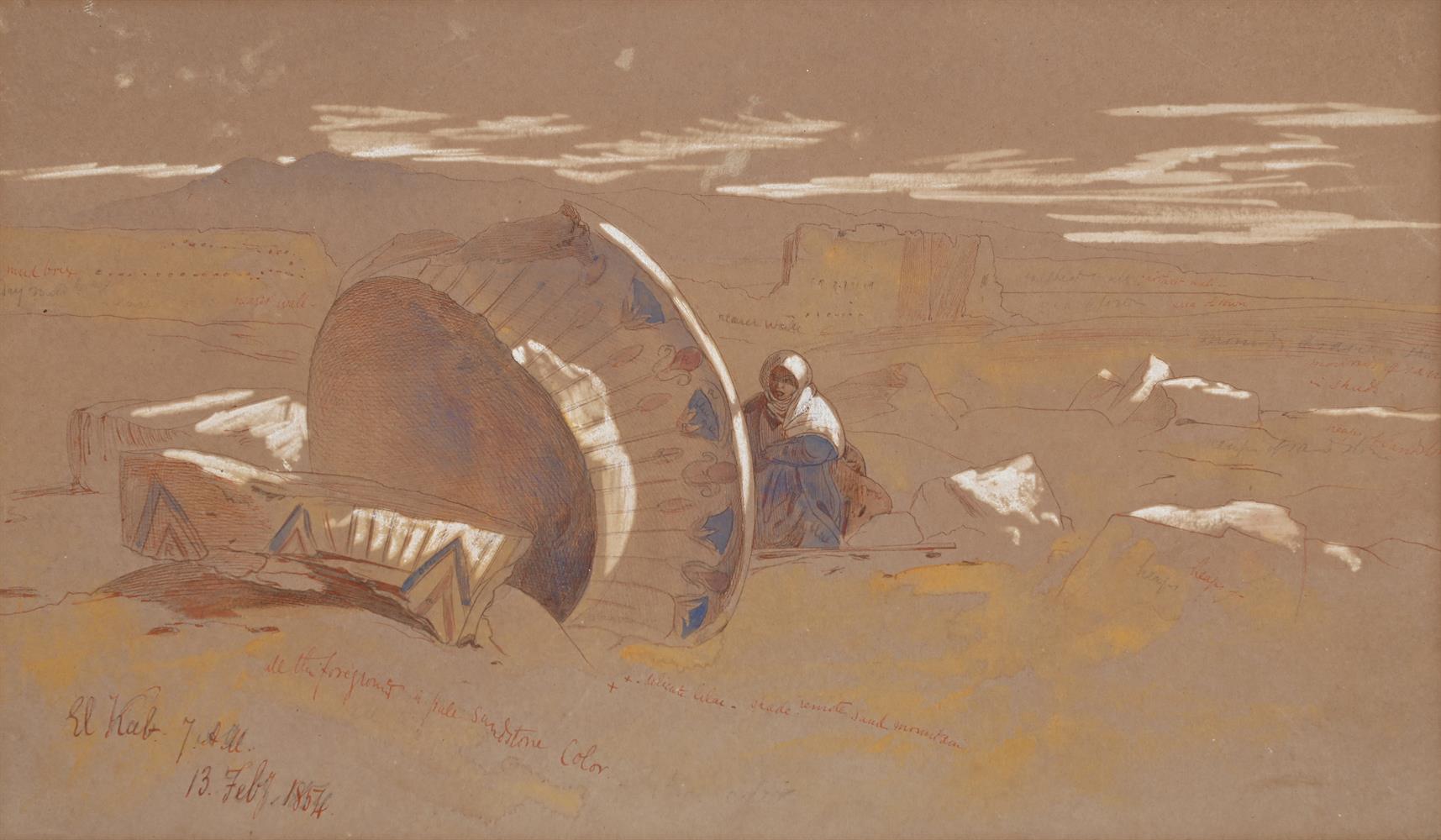
Edward Lear, El Kab, Egypt.
Pen, ink, and watercolour, heightened with white. Inscribed with title and dated ’13 Feb 1854′ (lower left), colour notes throughout. 20 x 33.5cm (7¾ x 13 in.)
Provenance
Leger Galleries, London, November 1970
Edward Lear travelled to Egypt in 1854, following the Nile south. During his travels he was astonished by the beauty of the landscapes and the villages, which he described as ‘fairy islands’, each of which capable ‘enough to occupy an artist for months’. Albeit in his letters he lamented about the difficulty of painting, for ‘the colours dry fast, and sand injures them,’ the climate did not stop him analysing and painting what he saw; when informing his elder sister Ann about his daily routine he wrote: ‘I have been at work every day throughout the whole daylight, and so charming is the place and the climate that I shall be very sorry to leave it’.
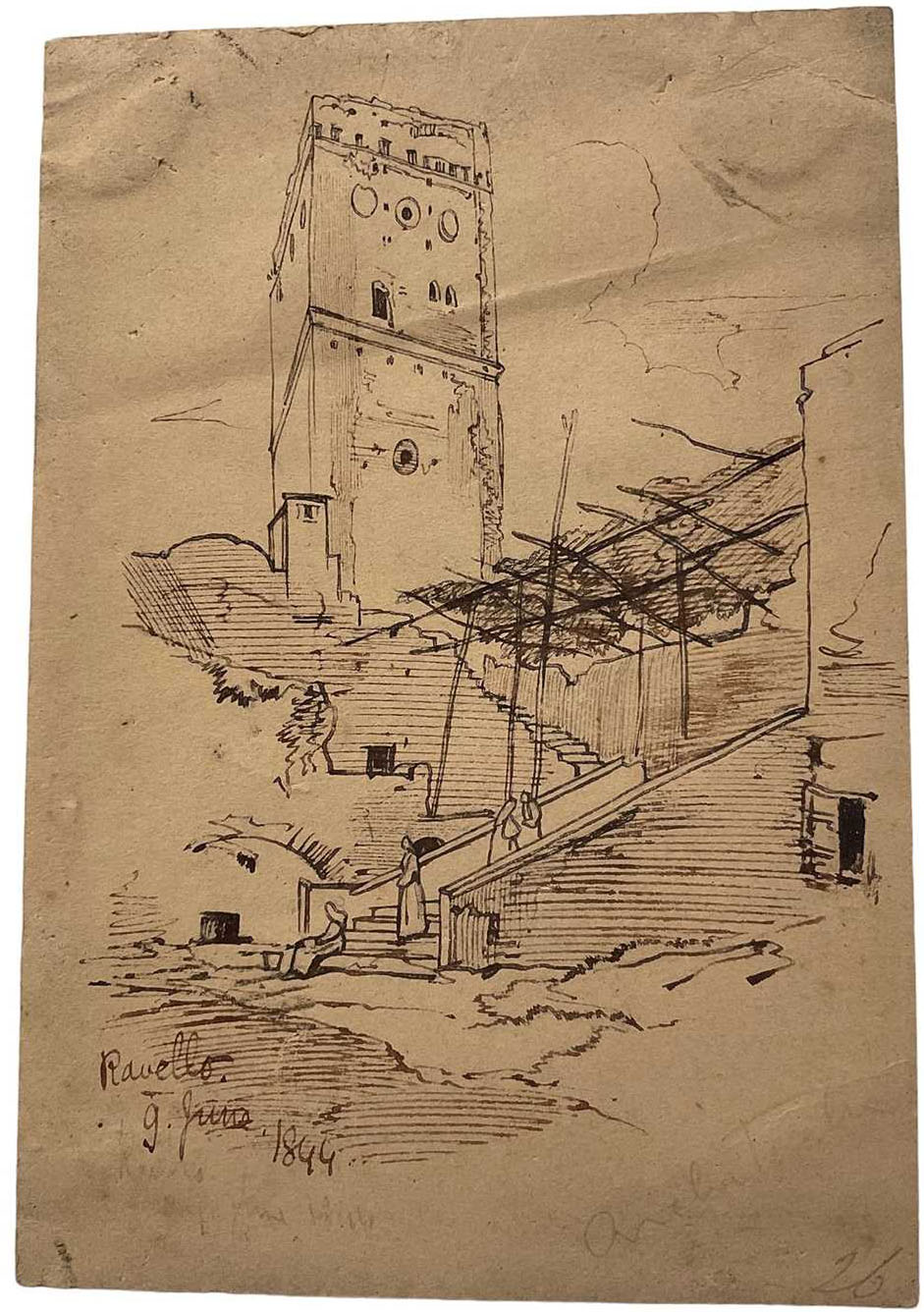
Edward Lear, ‘Ravello, 9 June 1844’.
Pen and ink, 16 x 12cm, mounted but unframed.
Lear was in the area on Ravello on this date, evidenced by other works from June 1844 including pen sketch of Amalfi inscribed and dated ‘Amalfihi/8. June. 1844’ sold Bonhams, Knightsbridge, 21 March 2017, lot 15. Harvard University hold a sketch undertaken at Positano dated 12 June 1844.
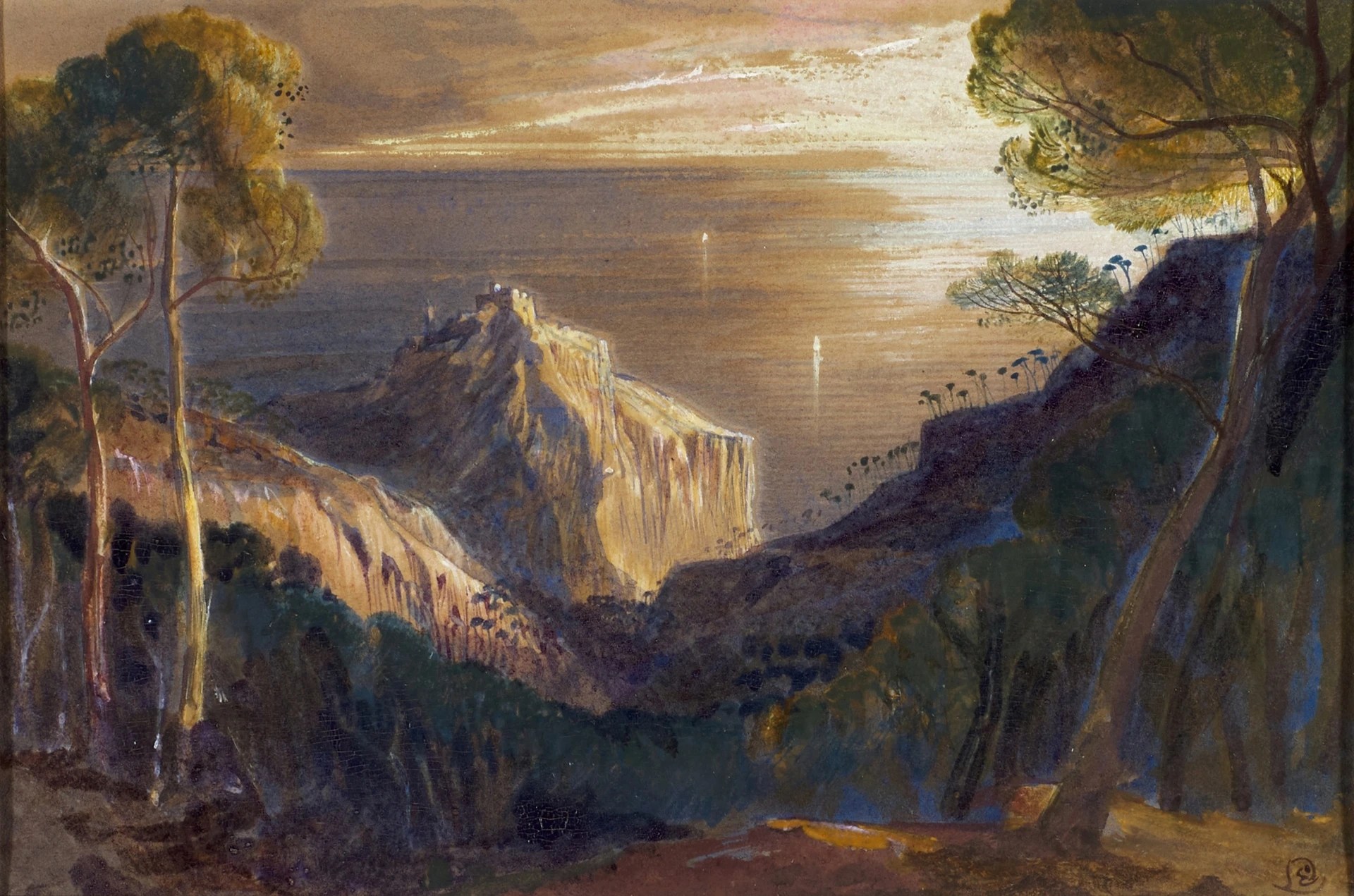
Edward Lear, Èze, Southern France.
Watercolor and bodycolor, heightened with white and gum arabic. 122 by 186 mm; 4⅞ by 7⅜ in.
 A Blog of Bosh