Edward Lear, Ioannina (1856-1857)

EL_ioannina-s


Edward Lear, Ioannina, Greece.
Pen and brown ink with watercolour over traces of pencil; inscribed lower right in pen: Ἰωάννινα / Aug.. 1856 April 1857; and again in pencil: Aug 1856. Apr. 1857. 145 by 228 mm.

Edward Lear travelled extensively throughout Greece in the 1850s and 1860s and his watercolours are an important visual record of a nation in a state of transition from the period of Ottoman rule to that of the country known today. This sketch, which depicts a group of mounted travellers on the plains before the northern city of Ioannina, shows a scene which had all but disappeared by the end of the nineteenth century.

Sotheby’s.

Posted in Edward Lear | Tagged , , , , | Leave a comment

Edward Lear, Figures on Road, Tivoli Beyond (1839)

EL_figures-tivoli-s


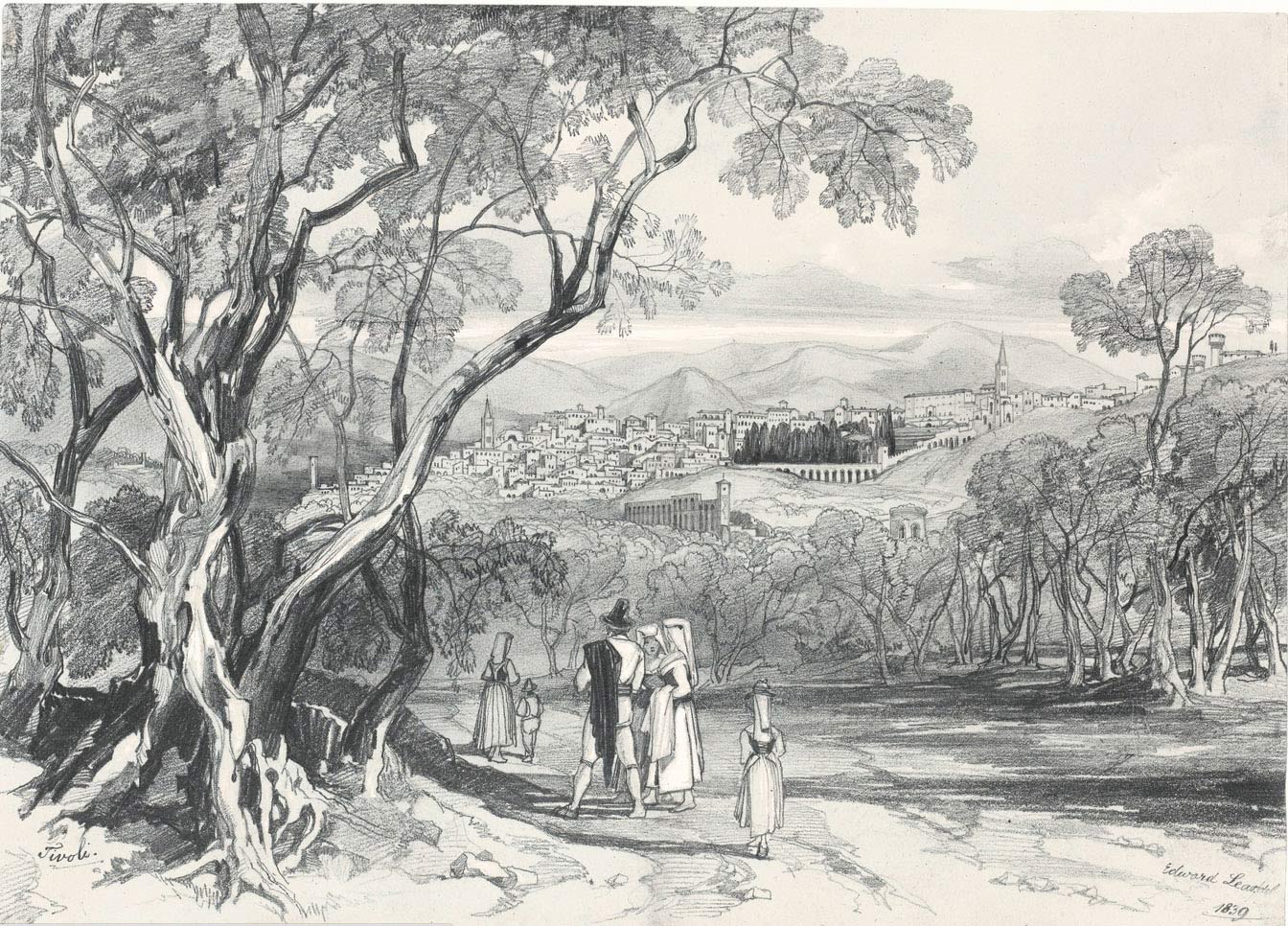
Edward Lear, Figures on the Road, Tivoli Beyond.
Pencil, heightened with white and touches of brown wash, on grey paper; signed lower right: Edward Lear / 1839; and inscribed lower left: Tivoli. 240 by 340 mm.

In a letter to his sister Ann, Lear describes the landscape at Tivoli with rapture and reveals ‘all the rich ancients had villas there. You now pass a vast tract of ruins – Cypresses etc., towers etc…Then you commence a long pull up to the town through the most beautiful olive wood! – such trees! – and every now and then you see bits of the ancient villas – all that is left of once vast buildings – now only a few arches with the curious Roman brick-work – covered with large aloes – or roofs of olives.’1
Lear was so enthralled by the beauty of Tivoli that, after his first visit in 1838, he returned there many times and there are two different views of the town in his Views in Rome and its Environs, 1841, plates 23 and 24.
1. V. Noakes, Edward Lear Selected Letters, 1988, p. 42

Sotheby’s.

Also: View of Tivoli, Tivoli (1839), Villa d’Este, Tivoli (1840).

Posted in Edward Lear | Tagged , , , , | Leave a comment

Edward Lear, Falla near Strongoli, Corfu (1862)

EL_falla-s


Edward Lear, Falla near Strongoli, Corfu.
Pen and brown ink over pencil on blue paper; inscribed lower left with the title in Greek and dated: 4 May. 1862, numbered lower right: 49 + 2, and further inscribed with artist’s notes. 215 by 445 mm.

In December 1855, after his friend Franklin Lushington was appointed Judge to the Supreme Court of Justice in the Ionian Islands, Lear decided to settle in Corfu.  He made the island his home until 1863 when Prince William of Denmark accepted the throne and the majority of British residents left the island.

Sotheby’s.

Posted in Edward Lear | Tagged , , , , | Leave a comment

Edward Lear, Distant View of the Citadel, Corfu

EL_citadel-s


Edward Lear, A Distant View of the Citadel, Corfu.
Watercolour over pencil, heightened with touches of bodycolour and gum arabic; signed lower right with the artist’s monogram and inscribed: Corfu. 285 by 450 mm.

Lear was first introduced to Corfu, then under British Protectorate, by Sir George Ferguson Bowen (1821-1899). He arrived by boat from Naples via Malta on 19th April 1848 and was immediately entranced by the beauty of the island, revealing to his sister, Ann, ‘I wish I could give you any idea of the beauty of this island, it really is a Paradise. The extreme gardeny [sic] verdure – the fine olives, cypresses, almonds and oranges, make the landscape so rich – and the Albanian mountains are wonderfully fine. All the villages seem clean & white, with here & there a palm tree overtopping them.’1
During his first trip Lear only spent a few days on Corfu before he left to explore Zante, Cephalonia and Ithaca. However, despite the brevity of his stay, he developed a strong attachment to the island and, in December 1855, after his friend Franklin Lushington (1823-1901) was appointed Judge to the Supreme Court of Justice in the Ionian Islands, he took the opportunity to settle there. He made the island his home until 1863, when Prince William of Denmark accepted the throne and the majority of British residents left the island. He returned there only once more in 1877, but it was a place that never ceased to inspire him, for he believed ‘no other spot on earth can be fuller of beauty & of variety of beauty.’2
1. V. Noakes, Edward Lear: The Life of a Wanderer, London 1968, p. 86
2. V. Noakes, op. cit., 1968, pp.195-6

Sotheby’s.

Also: The Citadel from Ascension.

Posted in Edward Lear | Tagged , , , , | Leave a comment

Edward Lear, Gebel Serbal (1849)

EL_gebel-serbal-s


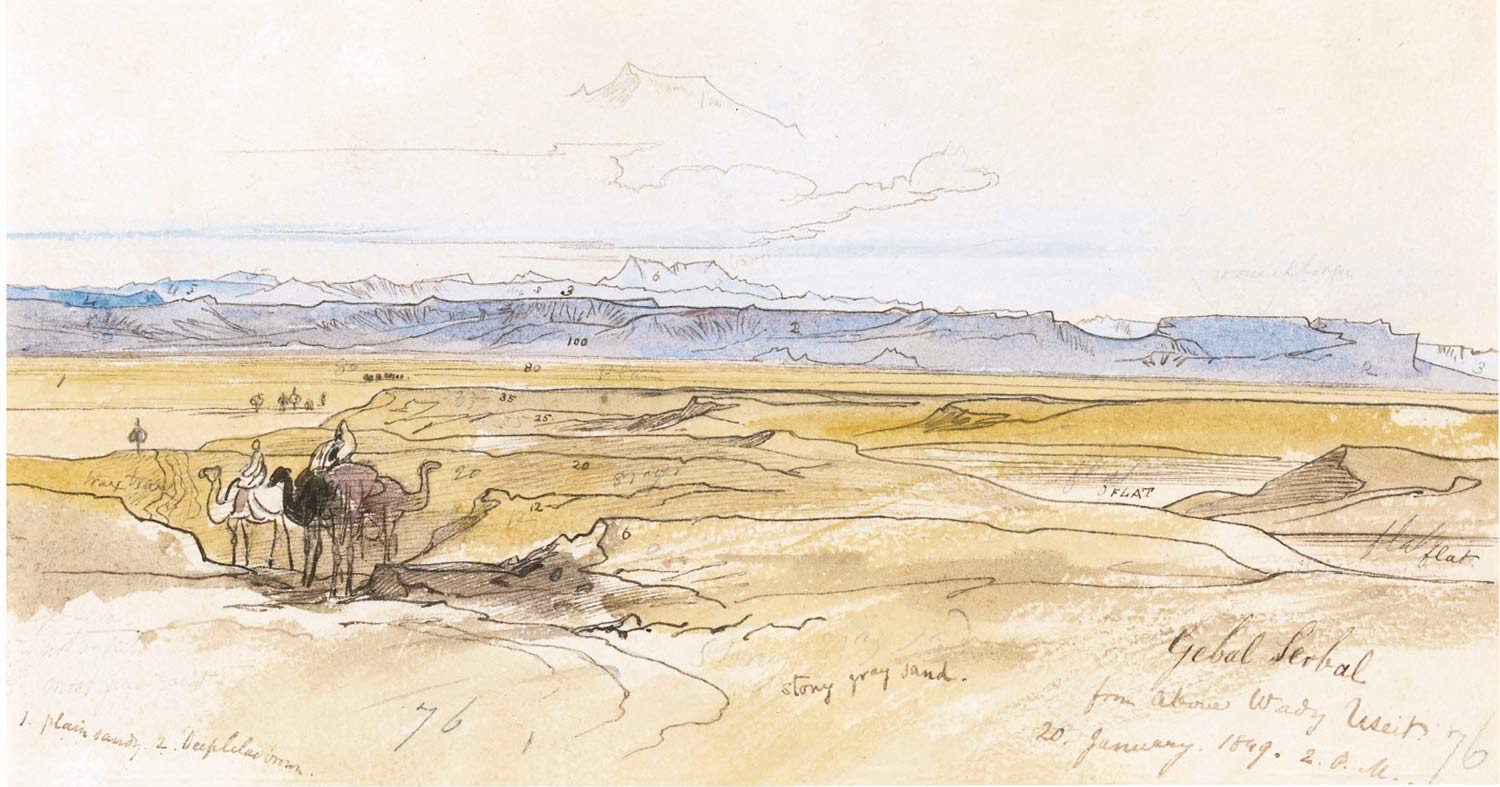
Edward Lear, Gebel Serbal from above Wadi Useit, Egypt.
Pen and brown ink and watercolour over traces of pencil; inscribed lower right: Gebal [sic] Serbal / from above Wady [sic] Useit / 20. January. 1849. 2. P.M.., and further inscribed with artists notes. 120 by 225 mm.

Sotheby’s.

Posted in Edward Lear | Tagged , , , , | 1 Comment

Edward Lear, View of Tivoli

EL_Tivoli-183-s

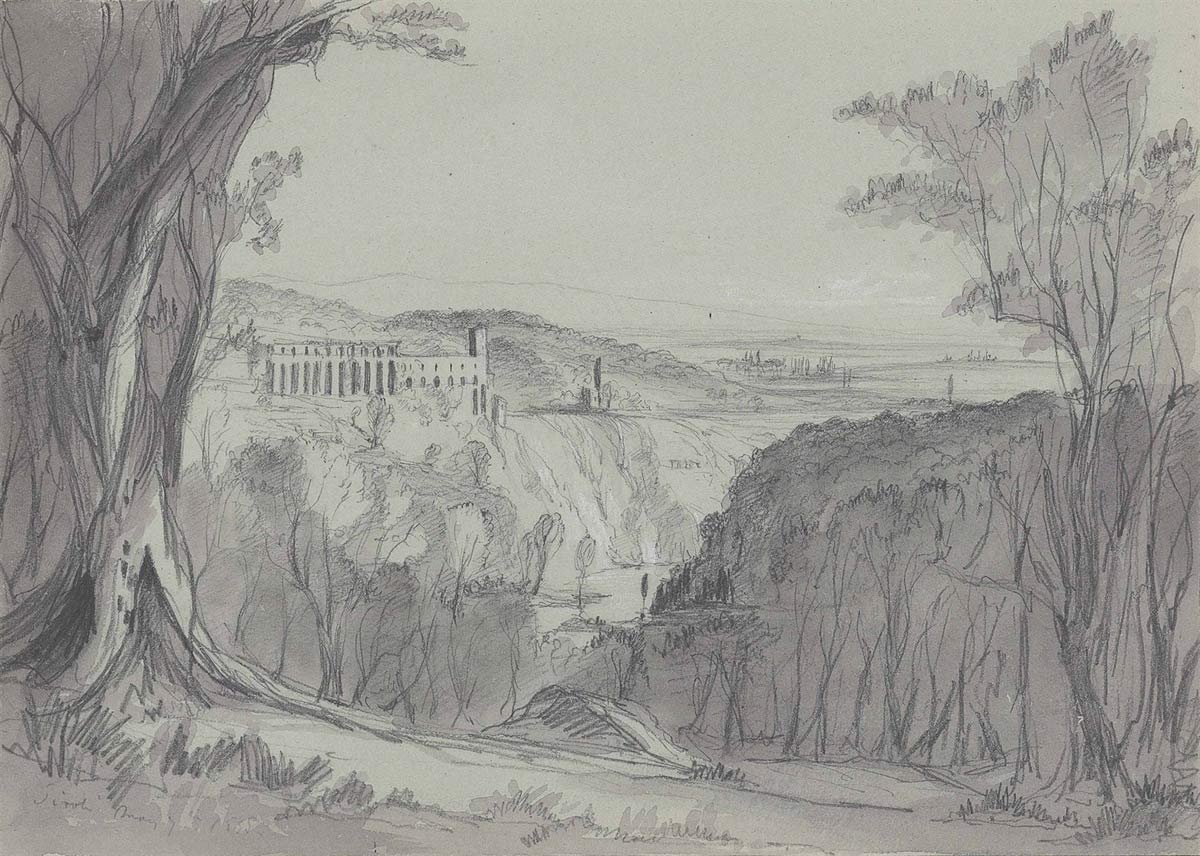
Edward Lear, View of Tivoli.
Indistinctly inscribed and dated ‘Tivoli May 7 …183.'(lower left). Pencil and grey wash heightened with white on light grey paper. 7 1/8 x 10 in. (18.2 x 25.4 cm.).

With financial backing from Lord Derby, Lear set out for Italy in the summer of 1837. For most of the next ten years Lear wintered in Rome and toured other parts of Italy during the summer. This visit to Tivoli is referred to by Lear in a letter dated 3rd May 1838 to his sister Ann; ‘I, and Uwins and Mr Acland set off on Saturday – staying some days at many beautiful places all (of) which I will tell you about. I must now describe my dear Tivoli as I promised the height of landscape perfection’ (V. Noakes, Edward Lear, Selected Letters, Oxford, 1988, p. 41). ‘Mr. Acland’ (Leopold Dyke Acland) was one of Lear’s travelling companions who after Tivoli went on to the Bay of Naples in the summer of 1838. Later Acland joined Lear for a tour of Sicily in the spring of 1842. Leopold was the son of Sir Thomas Dyke Acland , tenth baronet (1787-1871), a politician and philanthropist.

Christie’s.

Posted in Edward Lear | Tagged , , , , | 1 Comment

Edward Lear, Jerusalem, A View from the South

EL_Jerusalem-south-s


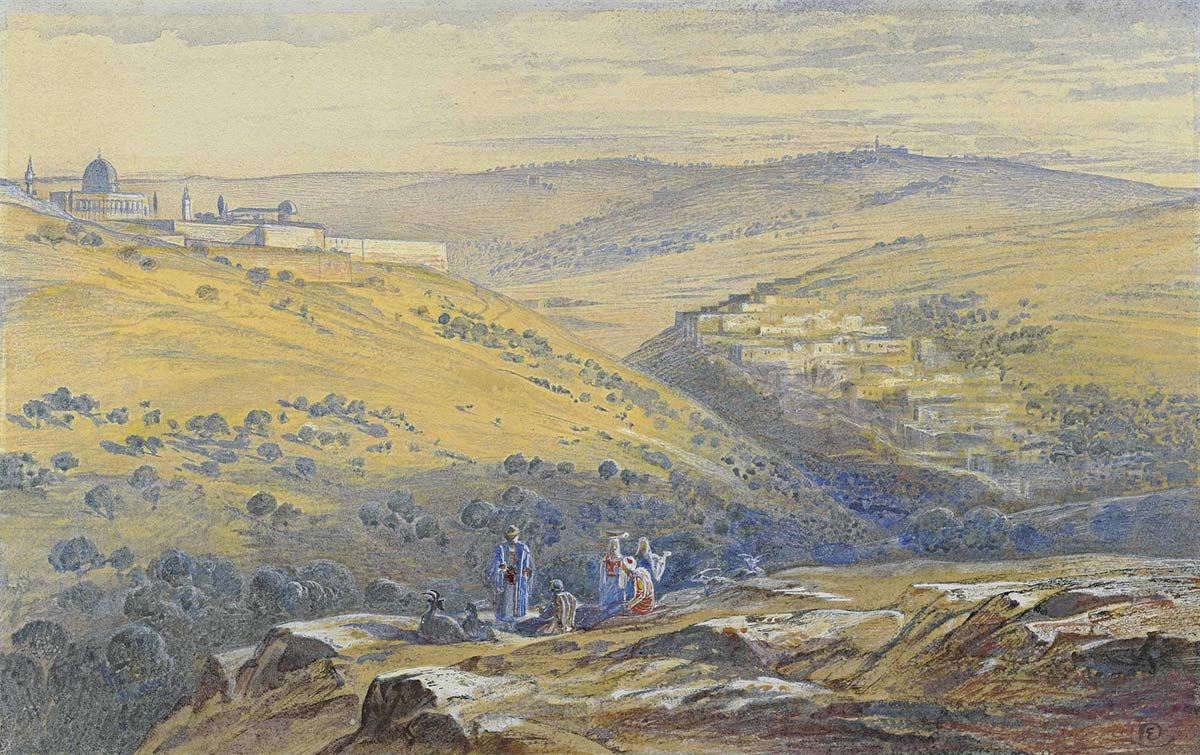
Edward Lear, Jerusalem; a view from the South looking towards the Dome of the Rock.
Signed with monogram (lower right). Pencil and watercolour and bodycolour heightened with white. 6 3/8 x 10¼ in. (16.2 x 26 cm.).

Lear first visited Jerusalem in the Spring of 1858 arriving in Holy Week, having been commissioned to paint the city by Lady Waldegrave (1821-1879). He went out each morning making preparatory drawings and wrote to his sister Ann ‘… just before sunrise the view of the city is most lovely, all gold and white beyond the dark fig and olive trees’. Lear returned to Jerusalem in 1867 setting off on camels across the desert, eventually arriving in Jerusalem in mid-April.

Christie’s.

Posted in Edward Lear | Tagged , , , | 1 Comment

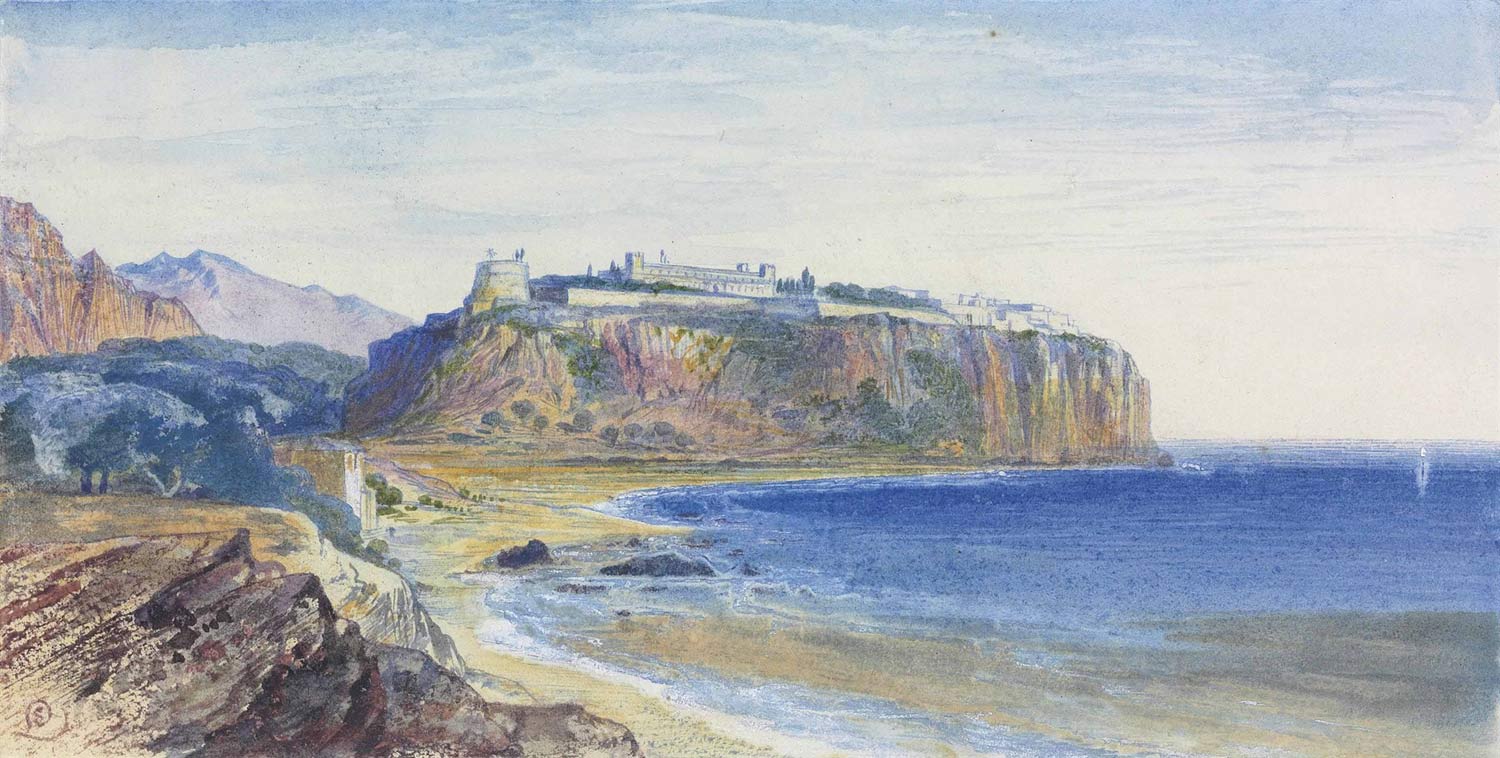
Edward Lear, Monaco (1865)

El_monacp-s


Edward Lear, Monaco.
Signed with monogram (lower left). Pencil and watercolour heightened with touches of bodycolour. 4 1/8 x 8 in. (10.5 x 23 cm.).

The present work is drawn from Cap D’Ail, in 1865 and looks towards the Prince’s palace on the left of the peninsular with the cathedral, since rebuilt, a little to the right. Lear wrote to his friend Chichester Fortescue (1823-1898) on 13 November 1864 when he was in the south of France; ‘had no idea the Cornice was so magnificent in scenery; Eza [sic Eze] and Monaco are wondrously picturesque, and Mentone very pretty’ (Lady Strachey, ed., Later Letters of Edward Lear, London, 1911, p. 51).

Christie’s.

Posted in Edward Lear | Tagged , , | Leave a comment

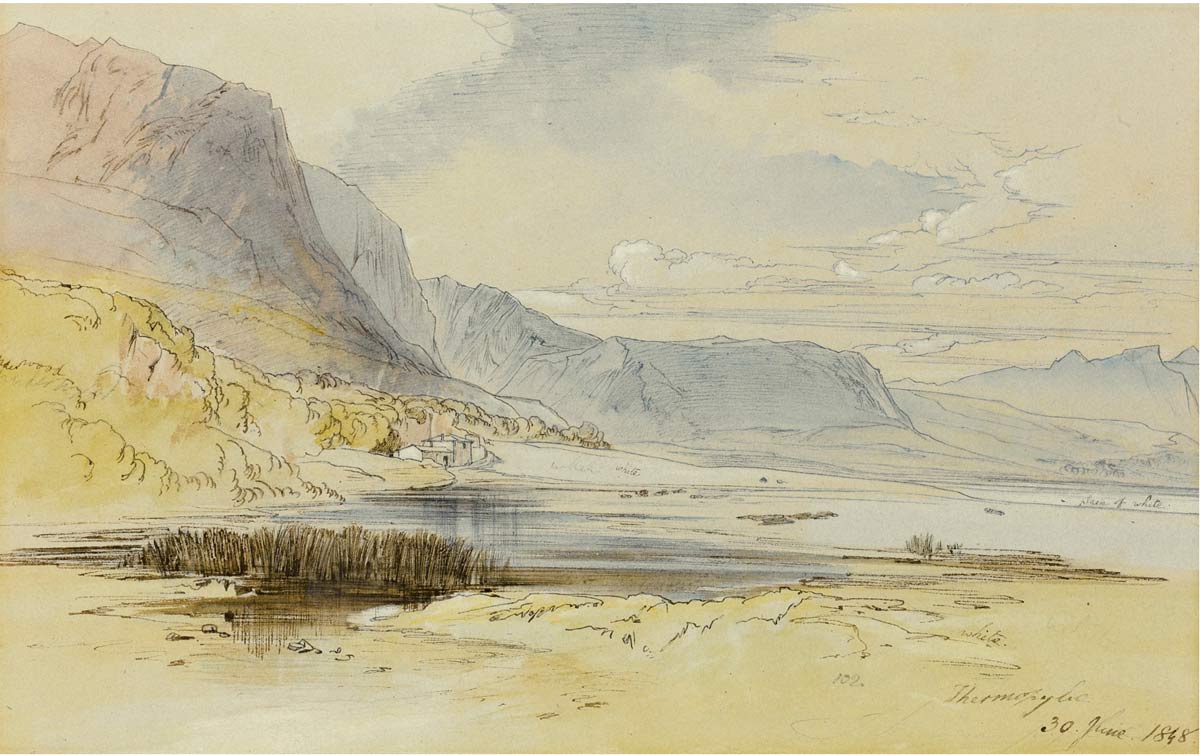
Edward Lear, Thermopylae, 30 June 1848

1848-06-30_Thermophilae-s


Edward Lear, Thermopylae, 30 June 1848.
Pen and brown and blue ink with watercolour over pencil, heightened with white on grey paper; inscribed lower right: 102 / Thermopylae / 30 June 1848; further inscribed with artist’s notes. 175 by 28 mm.

Edward Lear arrived in Greece on 1st June 1848 before setting out on a tour of the central part of that country with his friend and patron, Charles Church. Unfortunately, their journey was beset by misfortune and Lear was thrown from his horse on the first day. Despite a sprained shoulder he refused to turn back and they visited Chalcis, Euboea, Eretia, Aliveri, Kumi, Lamia and Patragik before reaching ‘the celebrated pass of Thermopylae’1on the 30th. By the time they reached Thebes however Lear had developed a fever and, dangerously ill, he had to be brought back to Athens ‘by four horses on an indiarubber bed.’2

1. V. Noakes, Edward Lear Selected Letters, London 1988, p. 80.

Provenance

Sale, London, Sotheby’s, 20 November 1986, lot 188;
with Spink’s, London;
John, Lord D’Ayton (1922-2003);
thence by decent to the present owners

Exhibited

London, Sotheby’s, Edward Lear, An Exhibition of Works by Edward Lear from the D’Ayton International Collection, assembled by John D’Ayton, 2004, no. 9

Sotheby’s Old Master & British Drawings including French Masterworks from the Dormeuil Collection.
2. Lady Constance Strachey, Letters of Edward Lear, London 1907, p. 11.
Posted in Edward Lear | Tagged , , , | Leave a comment

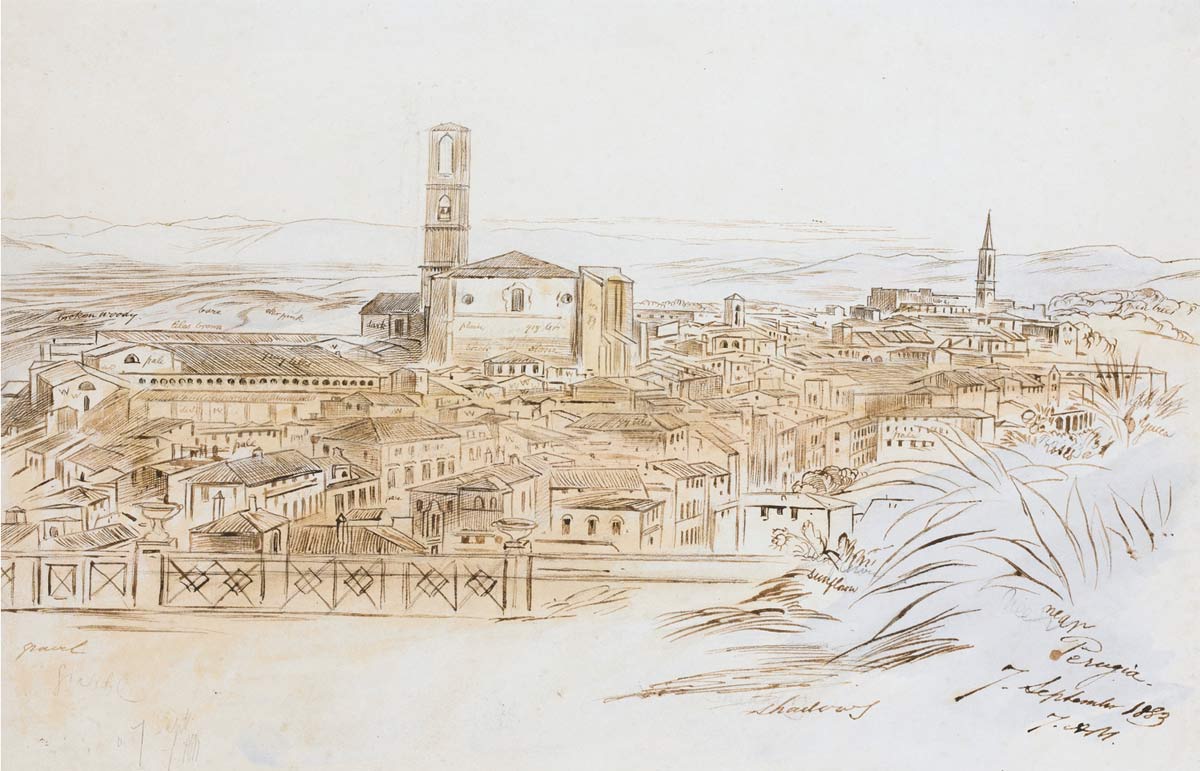
Edward Lear, Perugia, 7 September 1883

1883-Perugia-s

Edward Lear, Perugia, Italy.
Pen and brown ink and watercolour over pencil; inscribed lower right: near / Perugia / 7. September 1883 / 7.AM.; further inscribed with artist’s notes. 325 by 505 mm.

Lear drew this large pen and ink study during a visit to Perugia in September 1883. A late work, he skilfully depicts the ancient city with its patchwork of small streets and tiled roofs. Towering above the other buildings is the Basilica San Domenico, while in the distance the Umbrian hills can clearly be seen.

Provenance

With Agnew’s, London;
John, Lord D’Ayton (1922-2003);
thence by descent to the present owners

Exhibited

London, Sotheby’s, Edward Lear, An Exhibition of Works by Edward Lear from the D’Ayton International Collection, assembled by John D’Ayton, 2004, no. 8

Sotheby’s Old Master & British Drawings including French Masterworks from the Dormeuil Collection.

Posted in Edward Lear | Tagged , , , , | Leave a comment